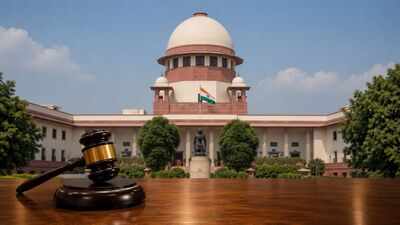
NEW DELHI: The Supreme Court has refused to scrap hanging as the method of executing the death penalty, but said the issue can be looked at again if new scientific or medical evidence shows that another method causes less pain. The court also said the Centre can set up an expert panel to examine whether another method of execution would reduce pain and protect the dignity of death row prisoners.Why was a plea filed against hanging as a method of execution?The petition was filed by senior advocate Rishi Malhotra, who challenged the law that provides for hanging as the method of executing a death sentence, according to a LiveLaw report.Section 354(5) of the Code of Criminal Procedure says that a person sentenced to death should be “hanged by the neck till he is dead”.Malhotra’s plea sought to replace hanging with other methods, including lethal injection, shooting, electrocution or a gas chamber. He argued that hanging can cause prolonged pain and suffering and violates a person’s right to die with dignity under Article 21 of the Constitution, according to LiveLaw.The petition was filed in 2017. During the hearings, the Supreme Court had also considered whether an expert panel should examine other ways of carrying out the death penalty.In March 2023, the court asked Attorney General R Venkataramani to collect information on the pain caused by hanging, how long it takes for a person to die and other issues related to the method, according to LiveLaw.The Attorney General later told the court that he had recommended setting up an expert panel to examine whether there were better ways to carry out the death penalty.Why did the Supreme Court refuse to scrap hanging?A bench of Justices Vikram Nath and Sandeep Mehta said the petitioner had not given enough reason to reconsider the earlier Supreme Court decision upholding the use of hanging.“We are not persuaded that a case has been made out for referring the decision of the three-judge bench in Dina to a larger bench,” the court said, as quoted by Bar and Bench.However, the court made it clear that its decision does not mean the issue can never be considered again.It said the question of whether hanging is constitutional can be looked at in the future if strong scientific, medical or other evidence shows that the facts behind the earlier decision have changed, according to Bar & Bench.The court also said the Constitution must be interpreted keeping in mind changes in science and new developments.The Supreme Court further said the Centre can conduct a detailed review of the existing method of execution through an expert panel. The panel could include experts in law, forensic medicine, neuroscience, criminology and other related fields, according to the report.The panel can examine whether another method of execution would cause less unnecessary pain while protecting the dignity of death row prisoners.During the hearing, Project 39A also gave its views on alternatives to hanging. It said lethal injection, which has been used widely in the US, has itself faced problems and has not always been successful, according to LiveLaw.The Supreme Court ultimately dismissed the petition but left open the possibility of examining the issue again if new scientific or medical evidence becomes available.For now, hanging will continue to be the method of execution for death sentences, while the Centre remains free to examine whether another method would cause less pain and suffering.