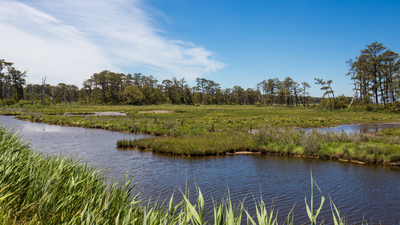
A severe storm in 2015 flooded and destroyed a recreational beach parking lot at Chincoteague National Wildlife Refuge in Virginia, exposing the growing difficulty of maintaining visitor facilities on a shifting barrier island. According to the US Fish and Wildlife Service, the refuge is now relocating the recreational beach and its parking facilities about 2.5 miles north to a more stable location. The new site is designed to maintain roughly the existing parking capacity while reducing repeated storm-repair costs and allowing the old developed area to return to natural beach, dune and saltmarsh habitat. The relocation is intended to work with the island’s natural movement rather than continually rebuilding infrastructure in an increasingly vulnerable location.
A parking lot repeatedly flooded
Chincoteague National Wildlife Refuge sits on Assateague Island, a barrier island that is constantly reshaped by wind, waves, storms and other natural processes.The island is gradually moving toward the mainland at an estimated rate of 10 to 13 feet each year. Major storms can accelerate that process, pushing ocean water through dunes and into areas once considered suitable for roads and parking facilities. The 2015 storm demonstrated the problem dramatically. The Atlantic Ocean breached the dunes and completely flooded the recreational beach parking lot.This was not an isolated maintenance issue. According to the US Fish and Wildlife Service, more than $15 million had been spent on storm recovery at the refuge since 2003, including as much as $400,000 annually on repeated maintenance. The damaged facilities also affected public access. The refuge and the nearby recreational beach attract more than one million visitors each year, meaning storm-related closures can affect both recreation and opportunities for visitors to experience the area’s wildlife and landscapes.
Why officials are moving the beach
Rather than continuing to rebuild the same facilities after every major storm, federal agencies spent years examining alternatives and gathering public input. Their conclusion was that moving the recreational beach farther north was the most practical long-term option. The new beach will be located approximately 2.5 miles north of the existing site.The new recreational area is planned to be about a mile long, similar to the current beach, and will maintain approximately 961 parking spaces along with RV spaces. The project received $17.7 million in federal funding in 2022 through a Federal Highway Administration programme supporting significant projects on federal and tribal lands.Construction began in earnest in 2025, with assistance from the Air National Guard through the Department of Defense’s Innovative Readiness Training Program. By 2026, parking material had been installed in four of the five planned lots, while road-base material had been laid along approximately one mile of the 2.25-mile road.
Letting nature reclaim the old site
The most unusual part of the project is what will happen to the existing beach and parking lot after the new facilities open. Instead of rebuilding the old site, officials plan to allow it to return to natural conditions. The former recreational area will eventually be managed as beach, dune and saltmarsh habitat.As per the US Fish and Wildlife Service, allowing natural barrier-island processes to resume could create habitat for threatened and at-risk species while also providing greater protection to the surrounding community from future storms. The restored area could also benefit several beach-nesting birds, including the American oystercatcher and piping plover. In other words, the relocation is not simply about moving visitors farther away from an erosion-prone site. It is also an attempt to give the landscape room to change naturally.The new visitor facilities will include multiple boardwalk trails connecting parking areas to the beach. The trails will pass through woods, scrub and dune meadow habitats, with at least one route designed to meet accessibility requirements.
A different approach to a changing coast
The relocation reflects a broader challenge facing barrier islands: infrastructure built on a naturally shifting landscape can eventually become increasingly expensive and difficult to maintain. At Chincoteague, officials have chosen to move the recreational infrastructure rather than repeatedly defend it against storms and erosion. The existing beach is expected to remain open while construction continues, with the new recreational beach potentially opening in spring 2027, depending on the progress of construction.Once visitors move to the new location, the old parking lot and beach will no longer be maintained as a developed recreational area. Instead, dunes, saltmarsh and other coastal habitats will be allowed to reclaim the space.The project therefore represents a shift from trying to hold a vulnerable piece of coastline in place to adapting infrastructure around the island’s natural movement, giving both wildlife and the landscape more room to change.