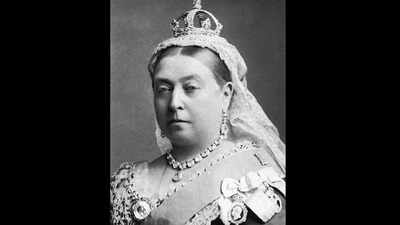
Two people can be handed sudden, unwanted responsibility and respond to it in completely different ways. One treats their own inexperience as a disqualifying weakness, something to apologise for or hide behind until they feel fully ready. The other names the inexperience plainly, out loud or in private, and commits to the responsibility anyway, treating readiness as something to be built gradually on the job rather than a precondition that has to be satisfied before starting at all. Victoria wrote this line in her own private journal on June 20, 1837, the very day she became Queen at eighteen years old, following the sudden death of her uncle, William IV. She did not pretend to already have every answer, and she did not wait for confidence to arrive first. She simply stated, on the first day of what would become a sixty-three-year reign, that she intended to meet the role fully, regardless of how unready she might reasonably have felt to hold it.
Quote of the day by Queen Victoria
“Since it has pleased Providence to place me in this station, I shall do my utmost to fulfil my duty towards my country.”
Written on the very first day of a sixty-three-year reign
What gives this line extra weight is the account, immediately surrounding, of how she actually behaved that same day. Victoria’s childhood had been shaped by what became known as the Kensington System, a deliberately restrictive upbringing imposed by her mother and her advisor Sir John Conroy, designed to keep the young princess isolated, closely supervised, and dependent on them well into adulthood. She was rarely allowed to be alone, was kept apart from other children, and had little opportunity to develop independent judgment or public confidence before the crown arrived, suddenly, when William IV died without a surviving legitimate heir.Despite that sheltered start, observers at her first Privy Council meeting, held on the same day as this journal entry, were reportedly struck by her composure, describing an eighteen-year-old who conducted herself with unexpected calm and self-possession, immediately establishing distance from the mother and advisor who had spent years trying to keep her dependent on them. The journal entry captures the private version of what the Council witnessed in public: a young woman naming her own inexperience honestly, then choosing duty over doubt anyway, on the very first day she had any real choice in the matter at all.
A simple way to actually use this idea
The useful move here is separating the honest acknowledgement of inexperience from the decision about whether to act despite it, since the two get treated as though they must go together, when they don’t. It is entirely possible to admit, clearly and without exaggeration, that you are unprepared in certain respects, and still commit fully to the responsibility in front of you, doing your best with the judgment you currently have rather than waiting for a readiness that may never arrive on its own schedule.A fair test, when a new responsibility arrives before you feel ready for it, is to ask whether the honest response is to wait for confidence to appear first, or to state the gap plainly and begin anyway. That question won’t manufacture experience overnight. It usually reveals how much of the hesitation was really about readiness, and how much was simply about comfort.
Other famous quotes by Queen Victoria
- “I am very young and perhaps in many, though not in all things, inexperienced, but I am sure that very few have more real good will and more real desire to do what is fit and right than I have.”
- “Great events make me quiet and calm; it is only trifles that irritate my nerves.”
- “We are not amused.”