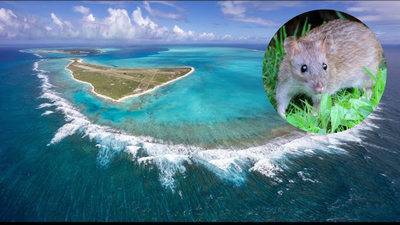
The successful removal of invasive black rats from Midway Atoll led to an extraordinary recovery of the local Bonin petrel population, which grew from fewer than 5,000 nesting pairs to more than 135,000 pairs. According to long-term conservation research and field reports from the U.S. Fish and Wildlife Service, the rat eradication removed a major threat that had pushed the island’s burrowing seabird colonies close to collapse.
Invasive rats destroy seabird colonies
Midway Atoll is a small, isolated group of islands in the North Pacific Ocean. It was once one of the world’s most important seabird breeding areas. Before non-native mammals arrived, hundreds of thousands of Bonin petrels (Pterodroma hypoleuca) returned to the atoll every year. The birds dug deep burrows in the sand, laid their eggs, and raised their young there. Federal wildlife records show that before 1943, more than 500,000 Bonin petrels nested across Sand Island and Eastern Island. This changed during the Second World War. In 1943, black rats (Rattus rattus) accidentally escaped from military cargo and supply ships that arrived at the atoll’s new naval facilities. With few natural mammal predators, the rats quickly spread across both major islands. The arrival of black rats was disastrous for birds that nested on the ground or underground. Bonin petrels dig tunnels in soft sand and lay only one egg each year. They had no natural defenses against mammal predators. Rats could easily enter the underground burrows, where they ate petrel eggs, killed chicks, and attacked adult birds caring for their nests. Over the following decades, constant rat attacks destroyed entire breeding colonies. By the late 1980s, wildlife surveys found fewer than 5,000 breeding pairs of Bonin petrels on Midway. The rats also ate native plant seeds, fruits, and insects. This damaged coastal vegetation and increased soil erosion across the fragile atoll.
The rat eradication campaign
As the island’s unique bird populations faced serious decline, the U.S. Navy worked with the U.S. Fish and Wildlife Service and the U.S. Department of Agriculture’s Animal and Plant Health Inspection Service (APHIS-Wildlife Services) to develop a large-scale rat removal program. In 1995, field teams began an island-wide operation using rodenticide bait on Sand Island and Eastern Island. Workers created detailed grid systems to make sure bait reached possible rat hiding places, including abandoned military buildings, thick vegetation, and coastal dunes. The operation had to be carefully managed. Teams needed to kill the entire rat population while reducing the risk to native birds, including resident shorebirds and migratory waterfowl. After two years of detailed monitoring, using tracking tunnels, motion-activated cameras, and physical searches, federal wildlife managers declared Midway Atoll free of black rats in 1996.
A dramatic population recovery
Once the black rats were gone, the ecosystem began to recover quickly. Adult Bonin petrels could again use their underground nests without their eggs and chicks being attacked. This greatly improved breeding success. As young birds grew up, they returned to the places where they were born and created new burrows. The colonies expanded rapidly. By 2008, wildlife surveys by the U.S. Fish and Wildlife Service showed that more than 135,000 pairs of Bonin petrels were breeding on Midway. This was more than a 27-fold increase from the population’s lowest recorded level in the late 20th century. Removing the rats also improved the island’s habitat. Native coastal plants, including ground-cover plants and native grasses that had been eaten by rodents, began to recover naturally. The returning vegetation helped hold the sandy dunes in place. This gave petrels stronger ground for building deeper and safer nesting burrows. Other native birds, including Laysan albatrosses, black-footed albatrosses, and several tern species, also had better nesting success after rat predation was removed.
New threats and continued protection
Although removing the rats helped restore the Bonin petrel population, managers of the Midway Atoll National Wildlife Refuge still face new ecological challenges. Later, conservationists found that invasive house mice (Mus musculus), which had been kept under control by the presence of rats, began taking advantage of the newly available food and habitat. The mice started attacking adult albatrosses. In response, the U.S. Fish and Wildlife Service developed additional pest-control and eradication plans to protect the refuge’s seabirds. To protect the recovery, refuge staff also maintain strict biosecurity measures for research vessels, supply ships, and aircraft arriving at Midway. Inspection teams check incoming cargo and monitor port facilities to prevent rats and other invasive species from returning to the isolated Pacific sanctuary.