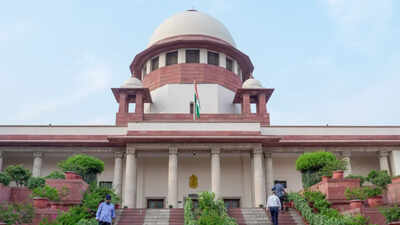
NEW DELHI: Expressing concern that many engaging in the practice of dowry are not getting punished, Supreme Court has passed a series of directions to streamline and expedite trial in such cases.A bench of Justices Sanjay Karol and Augustine George Masih said there was a need for time-bound completion of trial in dowry cases and directed the high courts to periodically review pending criminal appeals.“Many who openly seek and give dowry go scot-free. It has been noted time and again, in various judicial pronouncements, that Dowry Prohibition Act, 1961, suffers from various difficulties in its implementation. This Court further acknowledged that when it comes to the giving and taking of dowry in particular, this practice unfortunately has deep roots in society; hence, it being not a matter of swift change, a concentrated effort is needed on the part of all the involved parties, be it Legislature, Judiciary, law enforcement agencies, civil society organisations, etc,” the apex court said.It said that all trial courts shall endeavour, as far as is practicable and subject to compliance with statutory safeguards under CrPC/BNSS, to secure prompt appearance of the accused after the filing of a chargesheet, and thereafter, consider the framing of charges within 60 to 90 days.“Trial Courts/High Courts shall discourage unnecessary adjournments and ensure that adjournments are granted only after recording reasons in writing. Where counsel for the accused repeatedly remains absent without sufficient cause, appropriate Legal Aid Counsel or Amicus Curiae may be appointed to ensure that proceedings are not unnecessarily delayed. Additionally, where the Investigating Officer has been transferred or has retired, a substitute or holding officer shall be nominated sufficiently in advance to avoid adjournments,” it said.
Share your thoughts in the comments
Be respectful · TOI community guidelines
The bench also directed states/Union territories and high courts to conduct periodic training and sensitisation programmes for judicial officers, police officials, prosecutors, protection officers, counsellors through judicial academies, police training institutions and other appropriate bodies.