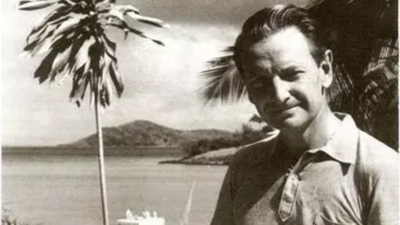
What if one of America’s most beautiful national parks began with a wealthy conservationist simply looking at an undeveloped island from a boat? In 1952, Laurance Rockefeller sailed past St. John in the U.S. Virgin Islands and was struck by its untouched landscape. At the time, the island had no proper roads, cars, electricity or dock, according to the National Park Service. Rockefeller believed the island’s natural beauty was worth preserving before development transformed it. Over the following four years, his conservation organisation, Jackson Hole Preserve, acquired approximately 5,000 acres of St. John and transferred the land to the federal government. That donation became the foundation for Virgin Islands National Park, which Congress established in 1956. The National Park Service credits Rockefeller’s land donation as a major factor in the creation of the park.
A chance encounter
When Rockefeller first approached St. John in 1952, the island was still largely undeveloped. According to the National Park Service, it had no proper roads, cars, electricity or dock. Those conditions made an impression on Rockefeller, who considered St. John one of the most beautiful places he had ever seen. He had also come across a 1939 report exploring the possibility of establishing a national park on the island. Rockefeller was already involved in conservation by this point. The National Park Service describes him as an influential conservationist and philanthropist who played a major role in promoting the preservation of natural areas and expanding opportunities for outdoor recreation. His interest in St. John therefore developed into something more substantial than admiration for the landscape. He began looking for a way to ensure that the island’s undeveloped areas could remain protected.
Buying land for preservation
Rockefeller and the nonprofit Jackson Hole Preserve began purchasing property on St. John. Over roughly four years, they acquired approximately 5,000 acres. The land was then transferred to the federal government to help establish a national park. At the time, St. John covered about 12,500 acres, meaning the donated land represented a substantial portion of the island.The National Park Service’s historical account documents the connection between Rockefeller’s 1952 visit, the subsequent land purchases and the eventual creation of the park. The U.S. Department of the Interior has likewise stated that Virgin Islands National Park was established largely through Rockefeller’s initial land donation through Jackson Hole Preserve. Congress formally authorised Virgin Islands National Park on August 2, 1956. The park opened to the public on December 1 that year.
The park grows
Rockefeller’s original donation provided the foundation, but the protected area eventually expanded beyond those first 5,000 acres. In 1962, Congress added 5,650 acres of submerged waters surrounding St. John to the park. Additional areas were incorporated over the following decades, including land on Hassel Island in St. Thomas Harbor in 1978.Today according to the National Park Service, Virgin Islands National Park encompasses 7,259 acres of land on St. John, representing more than half of the island. The park protects tropical forests, beaches, coral reefs and other coastal environments, while also preserving historic sites connected to the island’s past. The Department of the Interior reported in 2008 that the park encompassed nearly 13,000 acres of land and water within its boundaries. The conservation story continued in 2001 when President Bill Clinton established the Virgin Islands Coral Reef National Monument, protecting thousands of acres of submerged land and marine habitat adjacent to the national park.
A lasting legacy
Rockefeller’s contribution to St. John became one of the defining achievements of his long conservation career. He spent decades supporting efforts to protect natural resources, historic places and opportunities for public recreation. In 1991, President George H. W. Bush awarded Rockefeller the Congressional Gold Medal in recognition of his leadership in natural resource conservation and historic preservation.But his connection to St. John remains particularly striking because of how it began. In 1952, Rockefeller encountered an undeveloped island from the water. Within a few years, he and Jackson Hole Preserve had acquired thousands of acres and transferred them to the federal government. That land became the foundation of a national park that continues to protect much of St. John’s natural landscape today. What began as a view from a boat ultimately helped ensure that the island’s forests, beaches and surrounding waters would remain protected for generations.