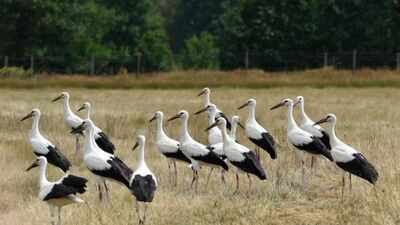
White storks once formed a familiar part of the landscape in southern Sweden, but by 1954 the species had disappeared as a breeding bird from the country. Their decline was closely linked to dramatic changes in the countryside, where wetlands were drained and other habitats altered over generations. In response, ‘Naturskyddsföreningen Skåne’(Swedish Society for Nature Conservation Skåne) and its partners began a long-running effort to bring the birds back while also drawing attention to the damaged wetlands they depend on. The work has grown into more than a programme to increase stork numbers. It has become a wider restoration effort built around the idea that recovering the bird and recovering its habitat should go together. Today, the project aims to create wetlands of sufficient quality to support at least 100 breeding pairs of white storks in Southern Sweden, giving an old symbol of the region a chance to return.
White stork as an ambassador of wetland restoration in Southern Sweden
The disappearance of the white stork was not simply the loss of a single species. According to a study titled ‘The Swedish White Stork Reintroduction Programme,’ the last breeding attempt by a white stork in Sweden failed in 1954. The bird was subsequently declared extinct from the Swedish fauna. The study explains that several factors contributed to the loss, including changes to habitats, increased mortality and a wider decline in European white stork populations. However, the transformation of the landscape was particularly important. Wetlands in southern Sweden had been severely affected by drainage, with the study noting that as much as 90% of them had disappeared from the area. That loss mattered because wetlands provide the kind of feeding grounds storks need. The bird therefore became a highly visible reminder of what had disappeared from the countryside.Since 1989, a reintroduction programme has worked to establish a naturally breeding white stork population in Scania, or Skåne. The programme has involved breeding birds and releasing them, but the wider ambition has always extended beyond that. As the study describes, the white stork has also been used as a flagship species for restoring Sweden’s wetlands. The bird, in other words, became an ambassador for a much larger ecological problem.The main goal of the project, known as ‘White Stork as an Ambassador for Wetlands,’ is to restore wetland habitats capable of supporting a healthy population of white storks. According to the Society for Ecological Restoration(SER), white storks living in areas with high-quality habitat can produce about 40% more young ones that successfully leave the nest than those in poorer habitats. The ideal outcome for storks in the restored landscape is to raise at least two juveniles each year. Over time, this could help create a stable and self-sustaining population rather than one permanently dependent on human intervention.
Can a captive-bred population become truly wild again
Bringing the stork back has not been a straightforward process. Lund University study shows that, by 2012, the project had established 34 free-breeding pairs in Scania. Yet these birds did not necessarily behave like a wild population. Many of the captive-raised birds remained in the region throughout the year because they had become accustomed to being fed in captivity. Their offspring, however, showed an important difference. They were capable of migrating. This created a new possibility for the project. Young birds born within the programme could leave Sweden and, if they later returned as adults to breed, help form a genuinely migratory population.The study reports that changes to the programme had led to approximately 80% of captive-bred juveniles migrating annually since 2010. Their eventual return was identified as an important measure of whether a naturally behaving population could become established. The SER has set an objective that at least 20% of migrating juvenile storks will return to the nesting area as adults to breed. To support that process, the organisations plan to create at least 20 new nesting sites over the course of the project.
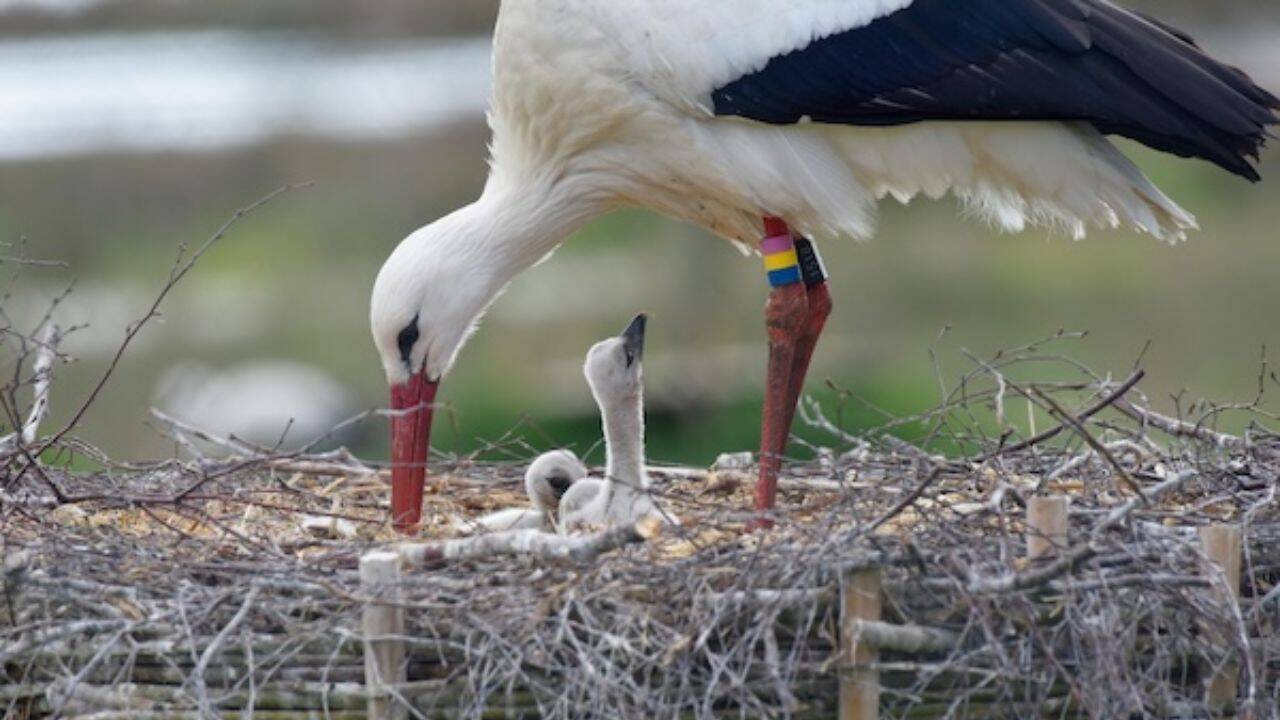
A family of White Storks in a nesting site. Image Credit: Society for Ecological Restoration(SER)
The future of the stork depends on the landscape
The white stork’s story in southern Sweden shows why restoring an animal cannot always be separated from restoring the place where it lives. Releasing birds may help rebuild a population, but the long-term future of that population depends on whether the surrounding countryside can provide enough food, nesting opportunities and suitable habitat. Lund University study also documented challenges within the reintroduction programme, including low breeding success and competition for food when birds concentrated around release sites. These difficulties reinforced the importance of spreading the population and improving the wider habitat rather than concentrating conservation efforts in a few locations.The SER’s target of 100 breeding pairs is tied directly to the condition of Southern Sweden’s wetlands. By rebuilding wetlands and creating space for a naturally breeding, migrating population, the project hopes that the white stork will eventually need less help from people. If that happens, the return of the white stork may become one of Southern Sweden’s clearest signs that its lost wetlands are beginning to recover.
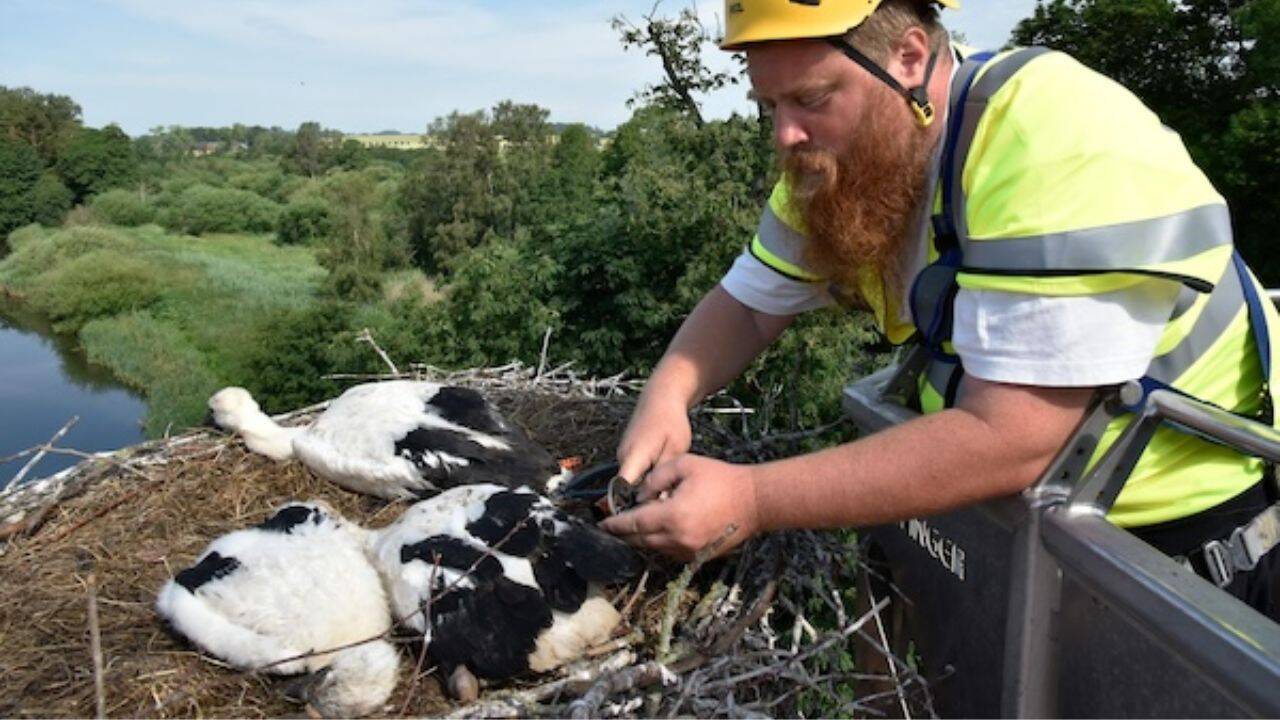
A nest of fledging White Storks being banded for tracking purposes. Image Credit: Society for Ecological Restoration(SER)