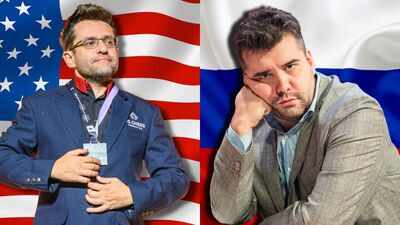
BENGALURU: For most of the 20th century, the Chess Olympiad was one of the few arenas where the Cold War actually played out on a board. The Soviet Union treated the biennial team event as a matter of state prestige, fielding lineups stacked with world champions and winning eighteen gold medals between 1952 and 1990.The United States, briefly dominant in the 1930s behind Frank Marshall’s golden generation, spent the second half of the century chasing that shadow. They came closest in 1976, when it won gold only because the Soviets and their Eastern Bloc allies boycotted the tournament in Haifa, Israel, over FIDE’s refusal to move the venue. Bobby Fischer’s defeat of Boris Spassky in Reykjavik in 1972 remains the sport’s most mythologised individual clash, but the Olympiad was always the collective version of the same rivalry. Both sides were present.Fifty years on, the framing has flipped entirely. Russia inherited the Soviet Union’s chess machine after 1991 and kept winning through the 2000s, eventually matching the United States with six Olympiad golds apiece.But as the 46th Chess Olympiad approaches in Samarkand from September 15–27, it is the United States sending a stacked five-man roster chasing team glory, and Russia, for a third consecutive cycle, are not able to send anyone at all.Levon Aronian will play for Team USA this September, alongside Fabiano Caruana, Wesley So, Hans Niemann and Awonder Liang, with IM John Donaldson captaining and GM Grigory Oparin as trainer.It will be Aronian’s third Olympiad since he switched federations from Armenia, a country for which he won gold as part of three separate Olympiad-winning teams, to the United States in late 2021. He debuted for the US in Chennai in 2022, won team silver on board four in Budapest in 2024, and now arrives in Samarkand with an unusually specific ambition.“I was thinking that it would be a good time to win an Olympiad because I don’t know if there are many people who have won four Olympiads,” Aronian told TimesofIndia.com during an exclusive interaction. “I haven’t checked. I would like to join that club.”
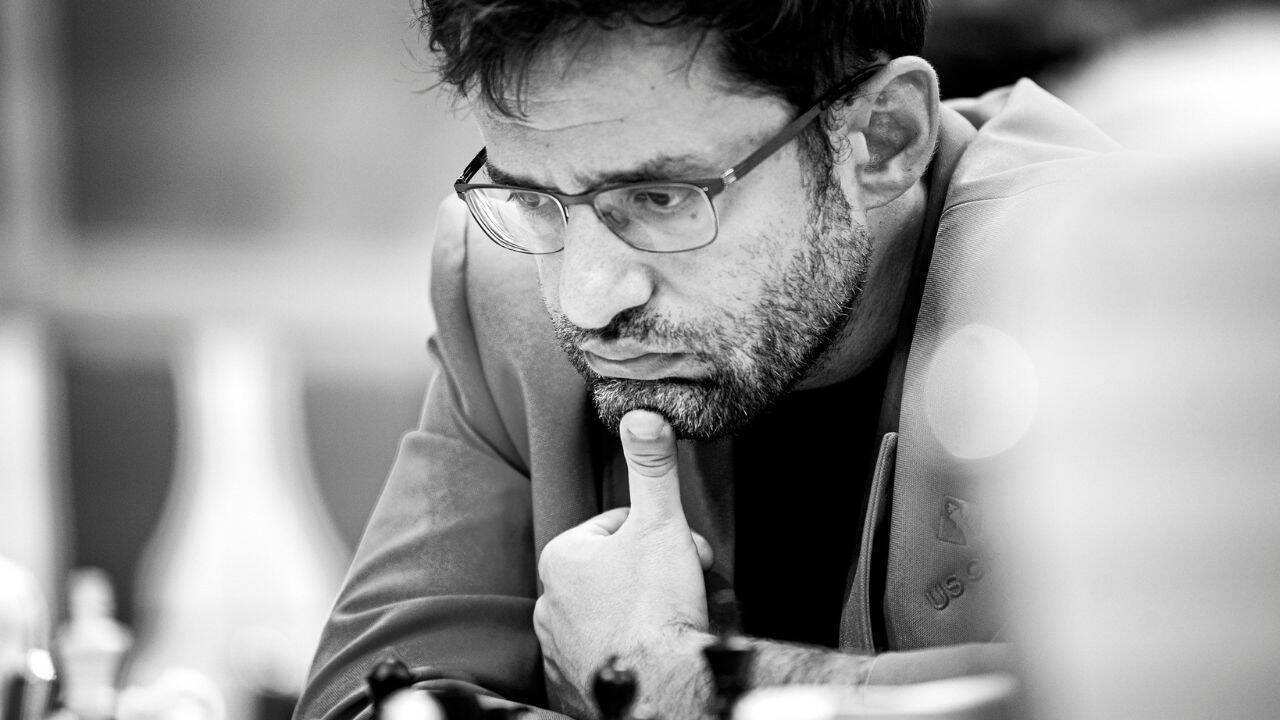
Asked which teams stood in the way beyond the obvious contenders besides India, Aronian didn’t hesitate to name a few.“It’s going to be tough against Uzbekistan. I also think China can be very strong; they always have underrated players,” the veteran Grandmaster opined. “Traditionally, Armenia can play well, and this time, I think Germany is also a good team.”Currently playing for Ganges Grandmasters at the Global Chess League (GCL), he feels the league could be a useful rehearsal for exactly the kind of pressure he will be facing at the Chess Olympiad.“There’s always tension in this tournament. Teams want to play well. It’s good to simulate that situation where everything depends on you. It always happens,” the 42-year-old veteran Grandmaster added.On the other hand, though, there will be no equivalent build-up for Ian Nepomniachtchi. The current Russian No. 1 and a two-time World Championship challenger will not be in Samarkand, after the Court of Arbitration for Sport (CAS) ordered FIDE to suspend the Russian Chess Federation following a complaint from Ukraine’s federation over tournaments staged in occupied territory.FIDE’s Council complied only partially with the ruling, prompting protests from several national federations. The politics reached the top of the sport itself in July, when FIDE president Arkady Dvorkovich, a former Russian deputy prime minister, voluntarily stepped aside from his duties after being added to the European Union’s sanctions list.“It’s very unfortunate,” the 36-year-old Russian Grandmaster told this website exclusively on the sidelines of GCL. “What makes it even worse is that we had very high hopes. Russian sport is getting back this year, with a lot of teams in other sports participating in World Championships. We would expect chess to be one of those too.“But maybe the fact that Dvorkovich got onto the sanctions list early this summer brought some changes. There was also the unfortunate CAS case, which didn’t go well for the Russian Chess Federation. Even after that, we expected Russia to participate, maybe in neutral status,” Nepo added. However, the wish to play under a neutral flag has not been granted.Not being too critical of the situation, he just hopes that everything gets sorted out for the sake of the sport. “Belarus is playing, and Russia is not. Hopefully things will get better; for sport, and not just for sport,” the Ganges Grandmaster icon player remarked.Set side by side, the two situations barely resemble the same sport.One player is refining a personal record, treating a franchise league as a dress rehearsal for a tournament he expects to win.Also Read: 8 months, Moscow-to-Munich flights, but now he is ‘fed up’: Behind Russia No. 1 Ian Nepomniachtchi’s tattoosThe other is watching a competition happen without him, for reasons that have nothing to do with how he plays chess.It’s a reminder that the Olympiad, for all its history as a proxy battlefield between Washington and Moscow, was at least always a battlefield both sides got to enter. In Samarkand this year, just like the previous two editions, only one of them will.