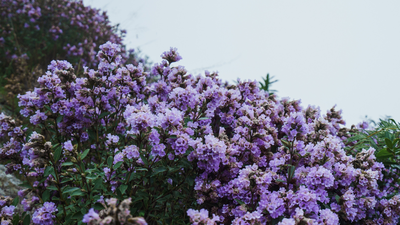
Nature is endowed with a huge variety of plants, each of which is special in itself, but there’s something poetic about a flower that only blooms once every twelve years.It doesn’t rush, and when it finally blooms, the entire hillsides turn a shade of blue-violet you don’t really see anywhere else in nature.Such is the story of Munnar’s famous Neelakurinji blooms that happen in Kerala, just once in 12 years.Munnar stands amid the full bloom of the Neelakurinji flowers this year, but it is speculated that the blooms that were supposed to happen in 2030 have surprisingly happened this year itself.So, is all of it true, or is there more to the story?
Munnar hills get plunged into Neelakurinji blooms after nearly 12 years
After nearly 12 years, Neelakurinji has begun flowering in large numbers across the Korandakkad and Chokramudi hills near Mattupetty in Munnar. According to an ANI report, the season started in August, with the Chokramudi area opened to visitors on August 24.Forest officials expect the bloom to spread further across higher slopes, including parts of Meesapulimala, as September progresses. The flowering is also being reported on tea estate land belonging to Kanan Devan Hills Plantations around Korandakkad and Mattupetty, at roughly 6,000 feet above sea level.
Why the flower waits 12 years to bloom
Neelakurinji, scientifically called Strobilanthes kunthiana, is known for its interesting synchronised flowering pattern, where entire populations bloom together after about a 12-year gap. The plant flowers, sets seed, and then dies, with the next generation taking root and growing over the following years before repeating the cycle. Botanists call this a pleiotropic or semelparous flowering pattern, which is one reason the spectacle is so rare and anticipated.
So, has the bloom arrived early or is there some other reason behind this
Different populations of the same species across the Munnar region don’t all flower on the same calendar. The population around Chokramudi and Mattupetty last flowered in 2014, which makes 2026 its expected year.The population at Eravikulam National Park, the one most associated with Munnar’s famous Neelakurinji tourism season, last bloomed in 2018. According to Kerala Tourism, the next major flowering there is expected only in 2030.So this year’s bloom and the well-known 2030 bloom are simply two separate populations running on two separate clocks.
The flower is a vulnerable species
Neelakurinji’s high-altitude shola-grassland habitat in the Western Ghats has been shrinking due to plantation conversion, urbanisation, invasive species and tourism pressure.In 2024, the species was assessed for the first time for the IUCN Red List and classified as Vulnerable under criterion A2c, which means that it is facing a declining population and that the need to protect the remaining habitat remains.