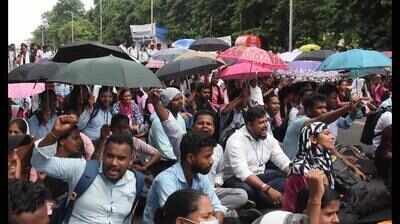
Bhubaneswar: Contending that they were recruited to teach degree-level students, the State Selection Board (SSB) lecturers in aided colleges have decided to stop taking Plus II (higher secondary) classes from Nov 2. The decision came following a resolution by the Odisha SSB Lecturers’ Association (OSLA), which said its members should not be assigned duties meant for higher secondary teachers.In a statement issued on Saturday, OSLA said SSB lecturers were appointed to teach undergraduate (Plus III) students specifically, not the higher secondary students under the school and mass education department. Assigning them Plus II classes, they argued, went against their recruitment terms and prescribed eligibility norms.The SSB lecturers in aided colleges also submitted representations to their respective principals on Saturday, requesting them not to assign them Plus II classes in accordance with the OSLA resolution.The association pointed out that the state govt had separated higher secondary institutions from degree colleges in 2016. Despite this administrative separation, the SSB lecturers in aided composite colleges were being made to teach at all three levels — Plus II, undergraduate and postgraduate — adding to their workload.It also questioned the deployment of lecturers for higher secondary classes on eligibility grounds. National Council for Teacher Education prescribes separate qualifications, including a BEd degree, for teaching at the higher secondary level. Lecturers who do not possess the prescribed qualification should not be compelled to take Plus II classes, the association said.Citing govt’s acknowledgement of the requirement for 2,383 postgraduate teachers in aided composite colleges, OSLA said that the shortage should be addressed through appropriate recruitment rather than by assigning higher secondary teaching duties to the SSB lecturers.Seeking immediate withdrawal of all Plus II teaching duties assigned to its members, the association said the move was necessary to protect their recruitment conditions and safeguard the quality of higher education in the state.