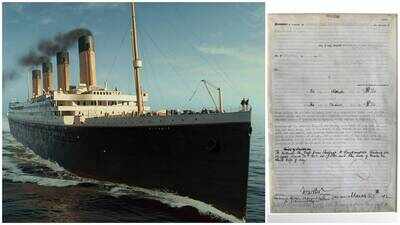
More than a century after the Titanic sank in the Atlantic Ocean, an extraordinary piece of history has resurfaced. An original insurance document covering the ill-fated luxury liner for a “total loss” of $5 million is set to go under the hammer at an auction in the UK later this month. The document, which dates back to just two weeks before the ship’s tragic sinking in April 1912, is expected to fetch between $40,000 and $67,000.According to PEOPLE, the historic document will be auctioned by Henry Aldridge and Son, a UK-based auction house specialising in Titanic memorabilia, in Devizes, England, on November 21.Andrew Aldridge, managing director of Henry Aldridge and Son, described the document as an exceptionally rare piece of maritime history, claiming that it is the only surviving insurance document relating to the Titanic.“This is the one and only document that exists today relating to the insurance for Titanic,” Aldridge said in a statement shared with PEOPLE.He further explained that despite its ordinary appearance, the document holds considerable historical and financial significance. “To our knowledge, it is without equal, as we have been unable to locate any other such documents,” he said, adding, “It is an unremarkable piece of A4 paper but it holds the key to $5m.”Reflecting on the timing of the insurance policy, Aldridge added, “Looking back, the words ‘total loss’ seem slightly prophetic given just how soon after the policy was taken out that the ship was lost.”
Titanic’s insurance policy was taken out two weeks before the disaster
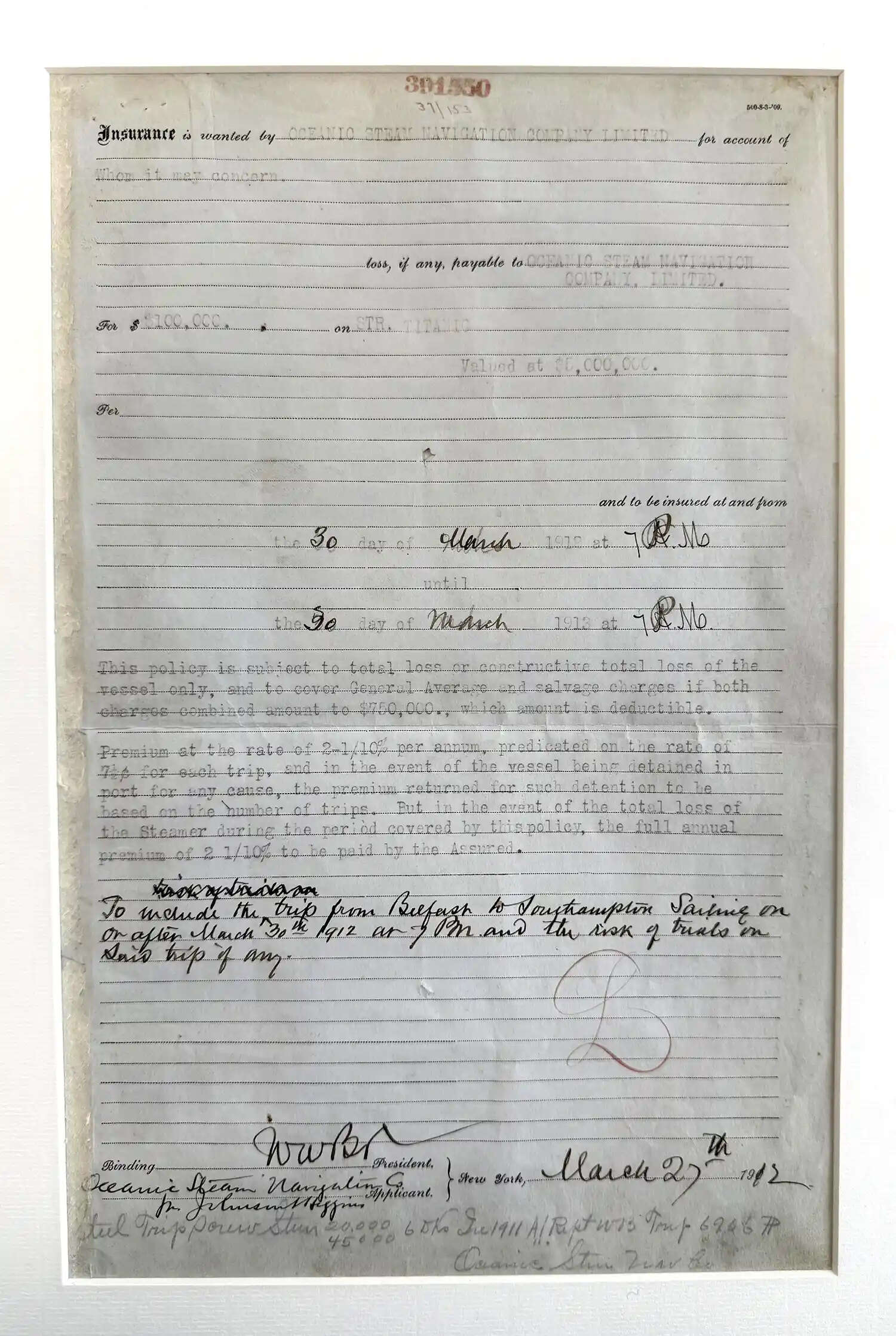
The historic insurance policy was issued just two weeks before the Titanic struck an iceberg in April 1912. (Photo: Henry Aldridge and Son)
The insurance document was issued to the Titanic’s parent company, the Oceanic Steam Navigation Company Limited, approximately two weeks before the ship embarked on its maiden voyage. The company had arranged a policy with a group of insurers, with each taking on a share of the financial risk.The document specifically states: “This policy is subject to total loss or constructive total loss of the vessel.”Following the disaster, the company reportedly received the entire $5 million insurance payout within 30 days. According to the auction house, that amount would be worth approximately $173 million today.Aldridge described the speed of the settlement as remarkable, particularly given the scale of the tragedy and the circumstances surrounding the claim.“It is quite extraordinary that the owners of Titanic received the pay out within a month of the disaster, barely after the funerals of the victims had taken place,” he said. “Today that process would take months if not years.”Among the 77 insurers involved, Atlantic Mutual was one of the largest contributors, paying $100,000 towards the claim, equivalent to approximately $3.5 million today.The insurance company was liquidated in 2011, following which historical documents from its archives were included in an exhibition in New York. According to Henry Aldridge and Son, a dealer purchased the Titanic insurance document during that period.
What happened when the Titanic sank in 1912?
The Titanic was a British luxury passenger liner widely described as unsinkable. Its maiden voyage began in Southampton, England, on April 10, 1912, with New York City as its destination.However, just four days into the journey, on the night of April 14, the ship struck an iceberg in the North Atlantic. The massive vessel sank in the early hours of April 15, killing approximately 1,500 people in one of the deadliest peacetime maritime disasters in history.Among the survivors was Margaret Tobin Brown, popularly known as the Unsinkable Molly Brown, who escaped aboard a lifeboat. Recalling the horrifying experience in an account published by The Newport Herald, she described the desperation and anguish of those aboard the sinking vessel.“The splash of the oars partly drowned the voices of the perishing men on the doomed steamer. The ladies all seemed terrified,” she wrote, according to the Molly Brown House Museum.She also recalled how women who had lost their husbands, sons and fathers struggled to cope with the tragedy.
Titanic auction will also feature original shipbuilding plans
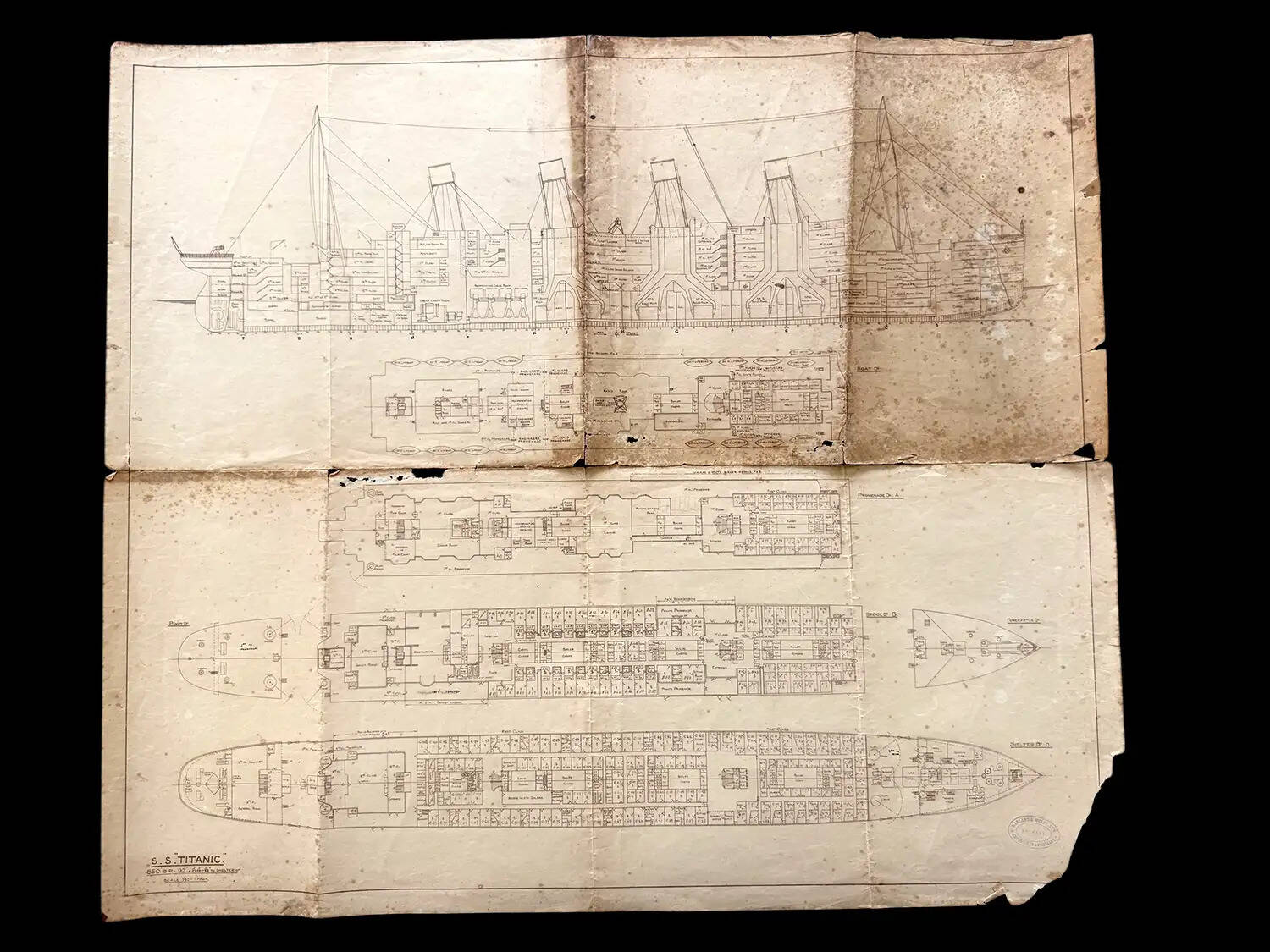
The upcoming auction will also feature an original Titanic shipbuilding plan used by Harland & Wolff, the company that constructed the ill-fated ocean liner. (Photo: Henry Aldridge and Son)
Alongside the insurance document, the upcoming auction will feature an original plan of the Titanic used by its shipbuilders, Harland & Wolff.With an estimated value of $40,000 to $67,000, the insurance document offers a rare glimpse into the financial arrangements surrounding one of history’s most infamous maritime disasters.Aldridge also reflected on how the legal and financial consequences might have unfolded had the Titanic disaster occurred in modern times.While the ship’s owners received their insurance settlement within weeks, families of victims who pursued negligence claims reportedly had to wait four years for compensation, eventually receiving a combined $663,000.“If the disaster happened today, the owners would very likely be charged with criminal manslaughter and have to pay out millions and millions of pounds in compensation,” Aldridge said.More than 114 years after the Titanic’s sinking, the document serves as a remarkable reminder of the business arrangements surrounding the doomed voyage and the extraordinary speed with which its owners received compensation following the tragedy.