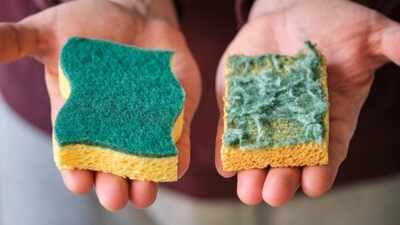
It sits by the sink all day, soaks up food bits and stays damp for hours. No wonder your kitchen sponge is one of the germsiest things in the house. Wiping your counters with a dirty sponge can spread bacteria instead of removing it. The good news is that a few simple habits keep it clean and your kitchen safer.
Rinse and squeeze after every use
Make this a habit. After washing up, rinse the sponge under running water and squeeze out as much liquid and food residue as you can. A sponge that dries quickly gives bacteria much less room to grow.
Soak it in a vinegar solution
Mix equal parts white vinegar and water in a bowl and soak the sponge for about five minutes. Rinse well afterwards. Vinegar helps loosen grime and cut odours, though it’s a freshening step rather than a complete disinfectant.
Try a diluted bleach soak
For a deeper clean, mix about three-quarters of a cup of bleach into a litre of water and soak the sponge for five minutes. Rinse thoroughly and let it dry. Never mix bleach with vinegar or any other cleaner, as the fumes are dangerous.
Use the microwave carefully
Wet the sponge until it’s thoroughly damp, then microwave it for about one minute. The heat helps kill many germs. Let it cool before taking it out, since it will be very hot. Never microwave a dry sponge or one with metal scrubbing fibres, as it can catch fire.
Run it through the dishwasher
If you have a dishwasher, place the sponge on the top rack and run a hot cycle with a drying setting. The heat and detergent do the work, and it’s one of the easiest options.
Good habits that make a difference
Let your sponge dry completely between uses. Keep it on a raised holder, not sitting in a puddle of water.Use separate sponges for dishes and for wiping surfaces.Never use the same sponge on raw meat juices and then on countertops.Clean it every few days, depending on how often you use it.
When to replace it
Even with regular cleaning, sponges don’t last forever. If it smells sour, looks slimy, feels worn out or is falling apart, it’s time to let it go. As a rule of thumb, replace it every one to two weeks. Sponges are cheap, and a fresh one is better than a tired, germy one.
Why it matters
A clean sponge means cleaner dishes, cleaner counters and fewer chances for germs to travel around your kitchen. It takes only a minute or two, and it’s one of the simplest ways to look after your family’s health.
Disclaimer:
This article is for general household information only. Cleaning methods may not suit every sponge or kitchen, and no method guarantees the removal of all bacteria. Never mix bleach with vinegar or any other cleaning product, and keep bleach away from children and pets. Microwave your sponge only when it is fully wet and contains no metal fibres, and let it cool before handling. Follow the manufacturer’s instructions on your sponge, appliances and cleaning products. When in doubt, replace the sponge.