Combat readiness and effectiveness depend on a multitude of factors. One of the most important aspects of ensuring readiness is to ensure that equipment in service, from pistols to aircraft carriers and everything in between remains serviceable. That is why maintenance, repair and overhaul (MRO) quietly decides how ready a military really is, and why India is working to do more of it at home. The aim is to keep equipment ready, cut reliance on overseas facilities and eventually service the platforms of other countries as well, trying to take a bigger bite of the USD 180 billion dollar market, which is expected to grow to about USD 300 billion by 2034.
Keeping the services ready
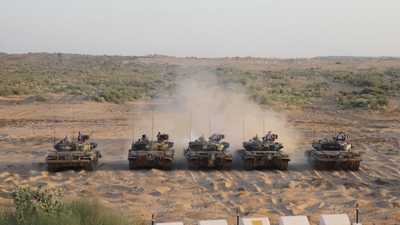
The Indian Navy depends on the Indian Naval Ship Maintenance Authority (INSMA), and the Indian Air Force (IAF) on its Base Repair Depots (BRDs). The IAF has also identified about 4,000 lines of spares for indigenisation, a figure it gave in 2021. Hindustan Aeronautics Limited (HAL) remains central to this, and its Koraput division has overhauled more than 9,000 engines, according to a Defence Ministry announcement in October 2026.The newer projects reach into more complex areas. GE Aerospace signed a contract with the IAF on April 13, 2026, to help set up an IAF-run depot for the F404-IN20 engines that power the Tejas. On May 6, 2026, MBDA agreed with the IAF to build a capability for mid-life overhaul of MICA missiles. In March 2026, the Ministry of Defence signed a Rs 413-crore contract with Boeing India Defence for depot-level maintenance of the Navy’s P-8I fleet.The armoured vehicles nigam limited has recently conducted the ground breaking ceremony for a facility in which both the T-90 and T-72 main battle tanks of the army will be overhauled. The overhauling of these vehicles, will improve the serviceability of the army’s armoured punch in a conflict.
Looking beyond India
The most important step towards serving foreign operators is the C-130J Super Hercules facility being set up by Tata Advanced Systems and Lockheed Martin, whose groundbreaking was announced on December 8, 2025. It is meant to handle depot-level and heavy maintenance for the IAF and for regional and global C-130 operators. Construction was expected to finish by the end of 2026, with the first aircraft due in early 2027.At sea, the Master Shipyard Repair Agreement signed in April 2023 qualified Larsen & Toubro’s Kattupalli shipyard to compete for US Navy voyage-repair work. India has also refitted foreign vessels, including Mauritius Coast Guard Ship Victory and the Myanmar Navy’s UMS Miye Theinkhatu.Smaller private firms such as Airbornics Defence & Space Limited (ADSL) are also looking abroad, the defence arm of the JCBL Group, has signed a memorandum of understanding with Nigus Hercules Limited of Nigeria to develop MRO for armoured vehicles, engines and air-defence equipment used by Nigeria’s armed forces.
The road ahead
Foreign platforms often need proprietary manuals, diagnostic software, tools and manufacturer authorisation, and governments can restrict access to sensitive systems. India will also face competition from established hubs. The distinction that matters most is between facilities that serve India’s own forces, projects built with foreign customers in mind, and contracts actually won from foreign militaries. So far, only a few projects fall in the last category.