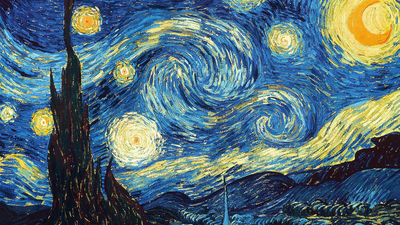
Vincent van Gogh was a Dutch painter who tried working as an art dealer, a teacher, and a preacher before he turned to art at about 27. In less than ten years, he made nearly 2,100 artworks, including famous paintings like The Starry Night, Sunflowers, and The Potato Eaters.Apart from art, he also wrote many letters to his brother Theo, many of which offer profound words of wisdom that still resonate today.He once talked about a profound idea: when almost all of us put something down and think, “What’s the point?” Be it for a hobby, a dream, a course, or a project nobody seemed to care about. That thought is heavy, and all of it usually happens quietly, when we simply stop trying, and days turn into months.Yet many beautiful things exist only because someone chose to pick up what they had dropped.Let us read further to know what he exactly meant.
Quote of the day
In spite of everything I shall rise again: I will take up my pencil, which I have forsaken in my great discouragement, and I will go on with my drawing
Vincent Van Gogh
What does the quote mean?
Van Gogh wrote these words in the autumn of 1880, in a long letter to his younger brother Theo. He was 27 and living in the coal-mining region of the Borinage in Belgium. He had failed at several careers and felt cut off from purpose.In it he says that even in deep misery he felt his energy come back, and he decided to pick up the pencil he had abandoned and go on drawing, and adds that from that moment everything seemed changed to him.These words are a source of motivation for restarting. Van Gogh doesn’t claim to feel confident or say success is near. He says he will rise “in spite of everything”: the failure, the doubt and the loneliness. The pencil here is quite important too. It is small and cheap, and he doesn’t promise a masterpiece, only the next small step. That step became his life’s direction.According to BrainyQuote, Vincent Van Gogh wrote this quote in a letter to his brother, and the original manuscript is kept at the Van Gogh Museum in Amsterdam.However, the words might also vary slightly, because Van Gogh didn’t write in English and every version we read is a translation.
How are his words relevant today?
Burnout, comparison on social media, and the fear of starting late are among the prevalent feelings today. Many people drop their creative work because it isn’t “good enough” or isn’t paying off. Van Gogh’s words offer a gentler way to think. You don’t need to wait for motivation or recognition. You only need to pick the tool to back up, whether that is a pencil, a guitar, a keyboard, or a book.His story is also a stark example which shows that progress is rarely straight. He began serious drawing late, struggled for years, and sold almost nothing, yet he kept going.