
An 87-year-old disabled California wildfire survivor says a dispute with a contractor rebuilding his home has left him homeless and financially drained, months after losing his house in the devastating Eaton Fire. Peter Brown, an Army veteran from Altadena, Los Angeles County, claims he has paid hundreds of thousands of dollars towards rebuilding his wheelchair-accessible home, only to be told that he needs to pay another $51,000 to get the project completed.Brown lost his home in the 2025 Eaton Fire, one of two major wildfires that devastated parts of Los Angeles County and displaced an estimated 205,000 people in Altadena and Pacific Palisades. Hoping to return to a safe and accessible home, he hired modular home building company Menu Homes to construct a replacement within a year.According to Brown, he paid the company $538,000 for the project but eventually had to shell out another $90,000 in additional costs. Despite the extra payment, he says the contractor is now demanding another $51,000 to finish the house.“I’ve run out of money. He’s drained me. I just don’t have the $51,000,” Brown told CBS News. “He’s just taking everything. And that was going to be my savings.”
87-year-old says he has run out of insurance money and is paying rent
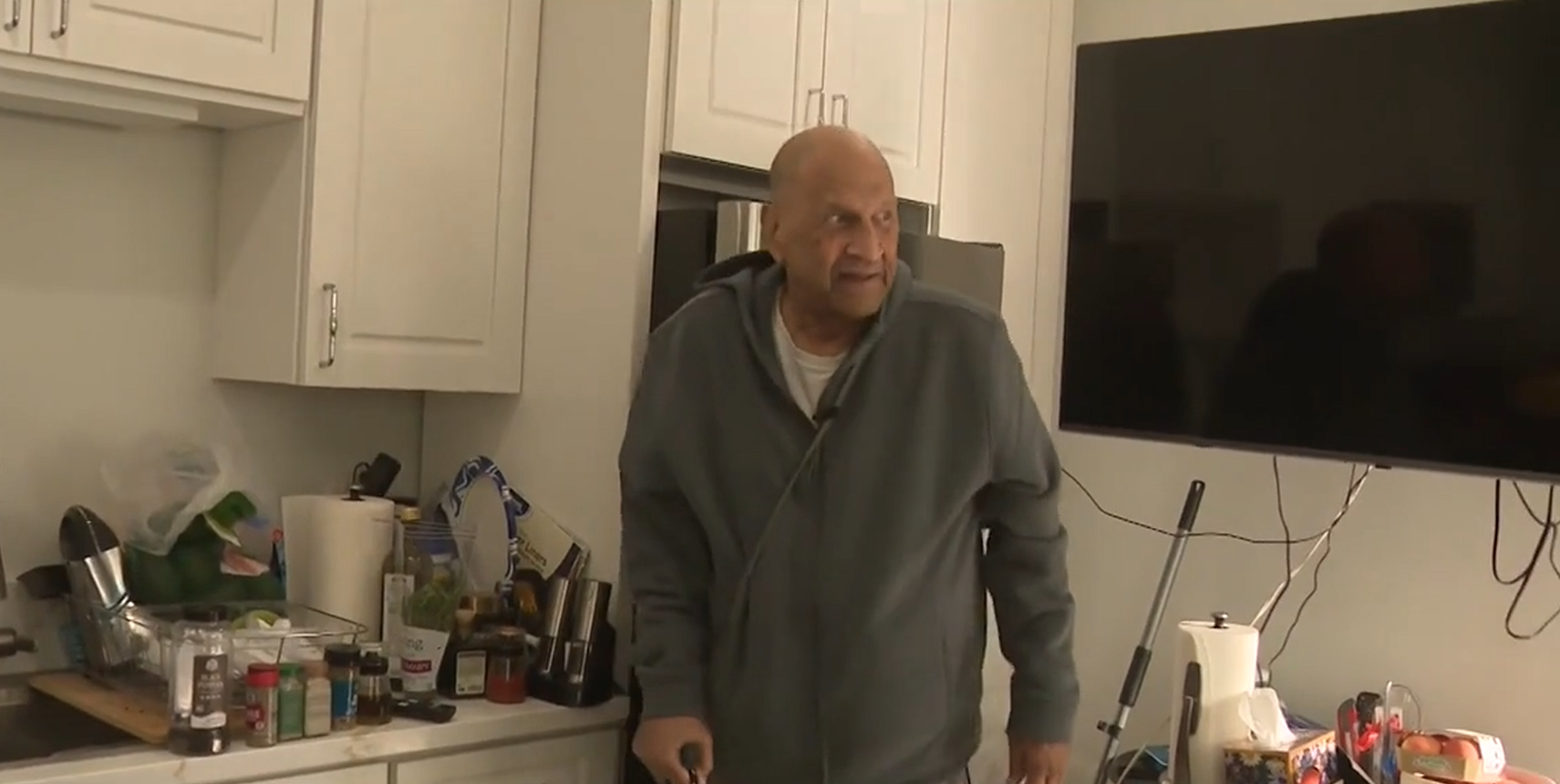
Brown claims Menu Homes went $90,000 over the agreed budget and is demanding another $51,000 to complete his wheelchair-accessible home. (Photo: CBS)
With the agreed completion deadline having passed and the house still unfinished, Brown says he has exhausted his insurance funds as well. He is currently paying $2,500 a month in rent while waiting to return to his home.The prolonged rebuilding process has left him struggling to meet basic living expenses. A GoFundMe campaign has been launched to support the Army veteran, explaining that he “needs our help with basic living expenses and the remaining costs of getting back into his home.”For Brown, the situation has become particularly difficult because the new property was supposed to provide the wheelchair accessibility he needs. Instead, he remains without a permanent home and says he has no savings left to meet the contractor’s latest demand.
Contractor blames county permitting delays; town council members question explanation
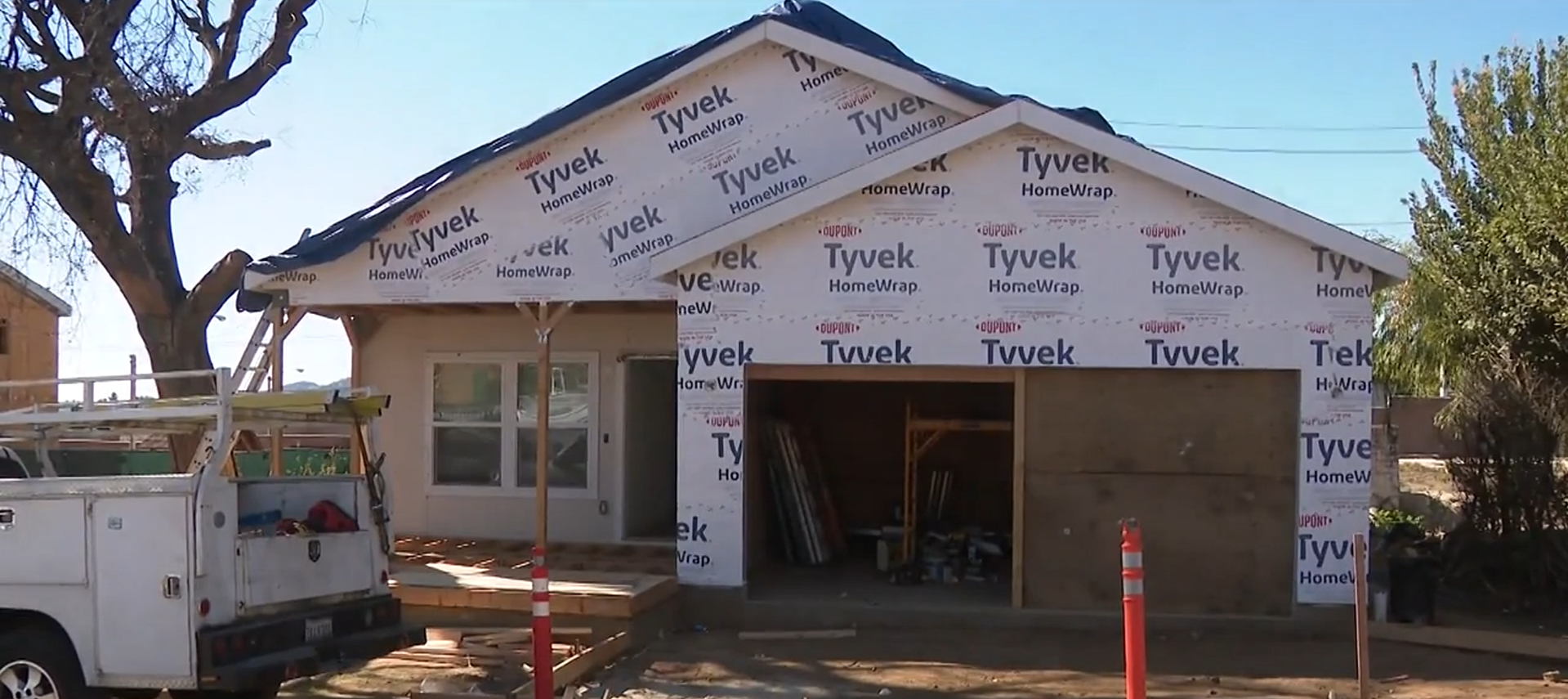
The disabled Army veteran says he has exhausted his insurance money and savings and is paying $2,500 a month in rent. (Photo: CBS)
Menu Homes has offered a different explanation for the delay. Bobby Shokri, a representative of the company, attributed the holdups to Los Angeles County requirements and months of permitting approvals. He also said additional features, including a garage and porch, expanded the scope of the project.“We had a contract for a certain scope of work — the county imposed additional scope of work,” Shokri said.However, some Altadena Town Council members have questioned the contractor’s explanation. Morgan Whirledge acknowledged that the county’s permitting process had not been perfect, given the huge number of rebuilding projects following the fires. However, he said officials had streamlined what was previously a notoriously bureaucratic process and waived all permit fees.“Many of the delays are due to contractors or professionals who may be taking a long time responding to comments from the county,” Whirledge told Moneywise.He also questioned the additional charges allegedly being passed on to Brown, arguing that they should not fall on a homeowner with limited resources who had already agreed to a contract price. Whirledge pointed to Contractors State License Board guidance for disaster rebuilding, which he said states that contracts must be fixed-price.Another council member, Darlene Green, told CBS News that homeowners should not be caught off guard by changes to a rebuilding project.“If something changes, it shouldn’t be a shock. And it certainly shouldn’t be hundreds of thousands of dollars over the initial asking,” she said.The dispute remains unresolved.
California wildfire survivor’s struggle highlights rising cost of disaster recovery
Brown’s experience highlights the financial challenges that can continue long after a natural disaster destroys a home. Even when insurance provides some assistance, rebuilding can involve additional expenses, delays and unexpected financial commitments.According to Harvard University’s Joint Center for Housing Studies, homeowners across the United States spent approximately $23 billion annually between 2021 and 2023 repairing damage caused by disasters. The average cost per homeowner reached $22,100 in 2023.The financial strain can also build over time. A report by the nonprofit Urban Institute examining the aftermath of Hurricane Helene in 2024 found that survivors sometimes faced growing debt and worsening credit as recovery costs accumulated. For households relying on fixed incomes, these expenses could be particularly difficult to manage. The report also documented a family that cashed out a 401(k) account to stay financially afloat.