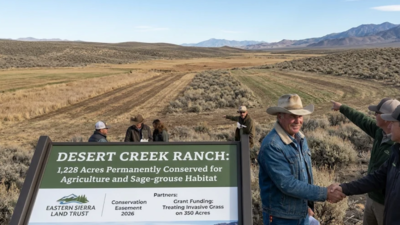
A Nevada rancher has permanently protected 1,228 acres of land to support farming and safeguard habitat for the rare Bi-State sage-grouse. David Park began efforts to conserve Desert Creek Ranch in 2016, according to the Eastern Sierra Land Trust. The work has now resulted in a permanent conservation agreement covering the entire 1,228 acres. The agreement prevents non-agricultural development and protects the land as both working ranchland and wildlife habitat. A separate grant awarded in 2026 will also support restoration work across 350 acres of the property. The funding will be used to treat invasive grass, which threatens native plants and increases the risk of wildfires.
A decade of protective effort
Rancher David Park began working to protect Desert Creek Ranch around ten years ago. His aim was to keep the property available for agriculture while protecting the natural areas needed by the Bi-State sage-grouse. According to documents from the Eastern Sierra Land Trust, the protection was achieved through a conservation easement. This is a legally binding agreement attached to a property’s deed. It places permanent limits on how the land can be used, even when ownership changes. Under the agreement, the 1,228 acres cannot be used for non-agricultural development or divided into smaller plots. This prevents the land from being turned into residential or commercial developments. Park will continue to own the ranch and carry out livestock grazing. However, future owners will also have to follow the same restrictions because the agreement remains in place permanently. The Eastern Sierra Land Trust said Park wanted to make sure the ranch remained a working agricultural property while protecting important habitat for the rare sage-grouse population. The agreement is the result of years of planning and cooperation. It gives the land lasting protection while allowing Park to continue his ranching activities.
Vital habitat for sage-grouse
Desert Creek Ranch has been identified as important habitat for the Bi-State sage-grouse. According to the U.S. Fish and Wildlife Service, these birds are a separate population of the greater sage-grouse. They are found only along the border between Nevada and California. The Bi-State sage-grouse is considered a sensitive species. Conservation efforts aim to protect its population and habitat to reduce the risk of it needing protection under the Endangered Species Act. The birds depend on large areas of connected land with native sagebrush, perennial grasses and wildflowers. These plants provide food, shelter and suitable places for nesting. They also need different types of habitat throughout the year. In spring, male sage-grouse gather in open areas called “leks” to perform mating displays. Females need thick sagebrush cover to build nests, while the plants also provide shelter during winter. During summer, females take their chicks to wet meadows and wetlands, where they can find insects and nutritious plants. According to the Eastern Sierra Land Trust, Desert Creek Ranch contains rare wet meadows and spring-fed areas that are important to the birds. These wet areas are particularly important because water and suitable wetland habitat are limited in the dry region. They provide food and shelter for young birds during a key stage of their development. Protecting these areas is therefore an important part of regional plans to conserve the Bi-State sage-grouse and support its long-term survival.
Fighting invasive grass and fire
A separate grant awarded in 2026 will pay for restoration work across 350 acres of the protected ranch. The Eastern Sierra Land Trust confirmed that the funding will be used to control invasive grass. Although the grant information does not identify the exact species, cheatgrass is one of the main invasive plants threatening Nevada’s sagebrush areas, according to documents from the Nevada Department of Wildlife. Cheatgrass, scientifically known as Bromus tectorum, is a non-native annual grass that spreads quickly and competes with native plants. The U.S. Geological Survey has explained that the grass can also change the natural fire cycle across western landscapes. Native perennial grasses usually grow in separate clusters, leaving spaces of bare ground between them. Cheatgrass can fill these gaps, creating large areas of closely packed dry vegetation that provide fuel for fires. The grass dries out early in summer. This makes it easier for lightning strikes or human activity to start wildfires that can spread quickly.After a fire, cheatgrass can grow back rapidly. Native sagebrush, however, is often destroyed and can take decades to return. This creates a serious problem for sage-grouse because the birds depend on sagebrush for food, nesting and shelter. Cheatgrass also competes with native grasses and wildflowers, reducing the variety of plants available to wildlife and livestock. The 350-acre restoration project is intended to reduce these threats. Common control methods include applying herbicides before the grass grows, using carefully managed livestock grazing and planting native species again. The treatment will help restore the natural balance of vegetation and reduce the amount of dry grass that can fuel wildfires. By addressing invasive grass across 350 acres, the project will also help protect the wider 1,228-acre ranch. This adds another layer of protection for Park’s livestock and the habitat used by the Bi-State sage-grouse.
Keeping the ranch working
A major part of the conservation agreement is making sure Desert Creek Ranch can continue operating as a working agricultural property. The protection does not require Park to stop raising livestock. Instead, it aims to support ranching while maintaining the natural conditions needed by wildlife. Regional agricultural advocates have said that livestock production and sage-grouse conservation can work together. Carefully managed grazing can help control vegetation and maintain grassland health. According to state documents, appropriate grazing practices can also support wet meadows and keep grassland plants useful as food for both cattle and wildlife.The conservation easement prevents the property from being divided into residential or commercial plots. It also restricts uses that are not related to agriculture or open space. These limits are designed to protect the land’s soil, water and natural resources. They also help ensure that the high desert property is not lost to large-scale development. Park will continue managing the ranch under stewardship plans that aim to balance agricultural production with wildlife habitat protection, according to the Eastern Sierra Land Trust. The permanent agreement means these protections will remain in place even if the ranch changes hands in the future. The 2026 restoration grant will further support that effort by addressing invasive grass across part of the property. Together, the conservation easement and restoration work aim to keep Desert Creek Ranch productive for agriculture while protecting an important part of the Bi-State sage-grouse’s remaining habitat.