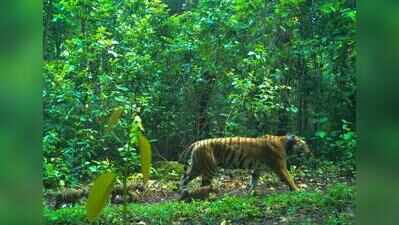
Bhubaneswar: Similipal Tiger Reserve authorities have not been able to track the movements of Zeenat and its four cubs for almost a month, with monsoon disrupting camera-trap operations, even as wildlife authorities say they have been getting radio signals from the tigress’s collar intermittently, suggesting its presence somewhere within the north region. Rain has also hampered the transmission of signal from the tigress’s radio collar.Wildlife authorities say there is no report of mortality of any cub. “We are getting radio signals intermittently, suggesting the presence of Zeenat somewhere within the north region of Similipal. The north division is alert and monitoring Zeenat and its cubs, although no photo or direct sighting has been possible for nearly a month now. We will be able to get camera trap evidence from Sept end when rain and humidity recede significantly,” said PCCF (wildlife) Prem Kumar Jha.Since the time Similipal’s camera trap picture of four cubs walking alongside Zeenat became available, no further grab has been obtained by the wildlife wing, suggesting poor performance of the cameras in rain, wildlife officials said.Earlier Similipal authorities claimed that Zeenat stayed confined to 20sqkm area since the time of giving birth to the cubs.On June 2, it was found that Zeenat gave birth to four cubs. A camera trap showed the tigress holding one of its cubs, then three weeks old, in its mouth. “The cubs are more than three months old now and must be walking with energy and agility with their mother. Once fresh camera trap picture is available, their state of their health can be known,” a wildlife official said.Tigress Zeenat, once a resident of the southern core, moved into the northern region after the birth of the cubs. This relocation is being hailed as a promising development, as the north has historically been less populated by big cats despite being a designated core area with abundant meadows and prey.Wildlife authorities said for a young adult tigress, 20sqkm movement in a span of more than two months is very little, and it is so because it is now the custodian of offspring. Its cautious movement is evident from the limited area covered.