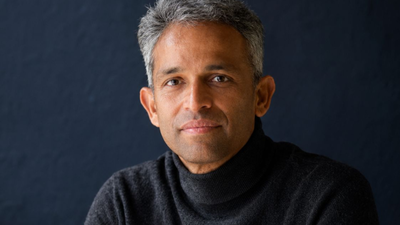
The most compelling part of Ernestine Shepherd’s story is not that she became a bodybuilder in her 70s. It is that she started at 56, an age when many people begin worrying about losing strength rather than building it. Her journey has now become a useful example in the longevity conversation led by Nickhil Jakatdar, who has spent years examining how small, evidence-based health decisions can shape long-term health.Jakatdar, whose work spans preventive health, longevity and precision healthcare, has been using stories like Shepherd’s to make a larger point: ageing does not mean giving up on strength, and health cannot be reduced to a number on a weighing scale.
The fitness lesson hidden in Ernestine Shepherd’s story
Shepherd reportedly began exercising with her sister after the two became conscious of their fitness while trying on swimsuits. What began with aerobics eventually developed into bodybuilding. After her sister Mildred died from a brain aneurysm in the early 1990s, Shepherd continued training, carrying that discipline forward partly in her sister’s memory.For Jakatdar, the story illustrates why maintaining muscle should be taken seriously as people age.“As we age, muscle becomes one of the strongest predictors of health. It helps control blood sugar, supports joints and keeps us independent,” Jakatdar said.He also points to something that is often missed in conversations about fitness and longevity: muscle is not merely about looking strong.“But here’s a surprising part. Muscle is not just strength, it acts like a metabolic organ, helping manage glucose all day. Lose muscle and metabolic health declines even if weight doesn’t change,” he said.“Do two strength training sessions this week. Keep it simple, stay consistent, and make it a part of your daily life.”That emphasis on consistency runs through much of Jakatdar’s approach to health.
From personal health shock to preventive medicine
There is also a personal reason Jakatdar approaches health with such urgency. In an earlier conversation with TOI, he revealed that his own health journey began after he was diagnosed with heart disease 11 years ago, despite what appeared to be an exceptionally healthy lifestyle. He described himself as six feet tall, weighing 68 kg, playing competitive soccer, not drinking or smoking, and still discovering significant coronary artery calcification. His calcium score was 266, putting him at the 98th percentile for arterial calcification, according to his account.That experience pushed him to spend years studying health more deeply.“I started my journey 11 years ago,” Jakatdar told TOI. He said the discovery initially made little sense to him because he did not have a traditional healthcare background, but that he immersed himself in the subject to understand what had happened.His eventual conclusion was that health is often shaped not by one dramatic mistake, but by multiple small decisions accumulating over time.“Nobody became diabetic because they did one bad thing. It’s a series of small, small cuts that are adding up,” he said.ID@undefined Caption not available.
Why Jakatdar says health advice has become harder to follow
Jakatdar’s work is not simply about telling people to exercise more or eat better. He argues that modern consumers are drowning in health information without necessarily knowing which of it deserves trust.“Today we don’t have a data problem. We have a credibility problem because you don’t know who to trust,” he said, pointing to the explosion of wearable data, health research and contradictory advice from social media influencers.The problem does not end with finding credible information.“There are so many small things I was doing wrong,” he said while describing his own experience, adding that even understanding the right thing to do does not automatically provide the motivation to act.That gap between information and action is central to his work.He has described the modern health challenge as involving three major hurdles: knowing whom to trust, converting data into useful information and then turning that information into action.
From longevity conversations to precision healthcare
That philosophy has also shaped Jakatdar’s work with MiraOne, which he founded alongside Dr. Nickhil Phadke and Abhinav Kejriwal.Launched in Mumbai in May 2026, MiraOne brings together blood chemistry, genetic information and pharmacogenomics in one consumer-facing report. The platform uses DNA sequencing across 120 million positions and is designed to combine three layers of information rather than treating each health result in isolation.Jakatdar describes the underlying problem through a simple example: two people can have exactly the same LDL cholesterol reading but arrive there for entirely different reasons. One may have a genetic factor despite an otherwise healthy lifestyle, while another may have lifestyle-related risk factors. A conventional blood test shows the number, but does not necessarily explain the difference.“We’ve been talking about personalized medicine, but it’s become such a buzzword that everyone throws around personalized medicine, precision medicine, and different terms. It is only true if you truly have personal information,” Jakatdar said.His broader argument is that healthcare becomes more useful when data leads to a clear decision rather than simply producing another report.“MiraOne really does solve one of the biggest problems as it starts giving people very personalized answers,” he said.
The common thread between longevity and precision health
At first glance, Ernestine Shepherd lifting weights at an age when many people are slowing down and Jakatdar developing a precision-health platform may appear to be two completely different stories. However, they are not.Both centre on the same idea: waiting for a health crisis is a poor substitute for understanding your body and acting earlier.Shepherd’s story demonstrates that strength can still be built later in life. Jakatdar’s own experience demonstrates that even someone who appears exceptionally healthy can have hidden cardiovascular risk. His work through MiraOne extends that lesson into personalised healthcare, bringing together blood markers, genetics and medication response to help create a fuller picture of individual health.For Jakatdar, longevity is therefore not simply about adding years to life. It is about understanding what is happening inside the body early enough to do something about it.And perhaps that is the most useful lesson in Shepherd’s remarkable journey: 56 was not too late to start building strength. Nor is there necessarily a “perfect” age to begin taking prevention seriously. The better time to understand your health is before your body forces you to.