
For years, the international response to Israel’s settlement project in the occupied West Bank followed a familiar pattern: condemnation, UN resolutions and warnings that continued construction was killing the two-state solution. But in 2026, the pattern changed.On September 8, UK foreign secretary Ed Miliband used some of the British government’s strongest language yet on Israel’s occupation, telling the House of Commons that Palestinians in parts of the West Bank were being driven from their homes and land in what Britain now considers “ethnic cleansing” carried out by “settler terrorists”.
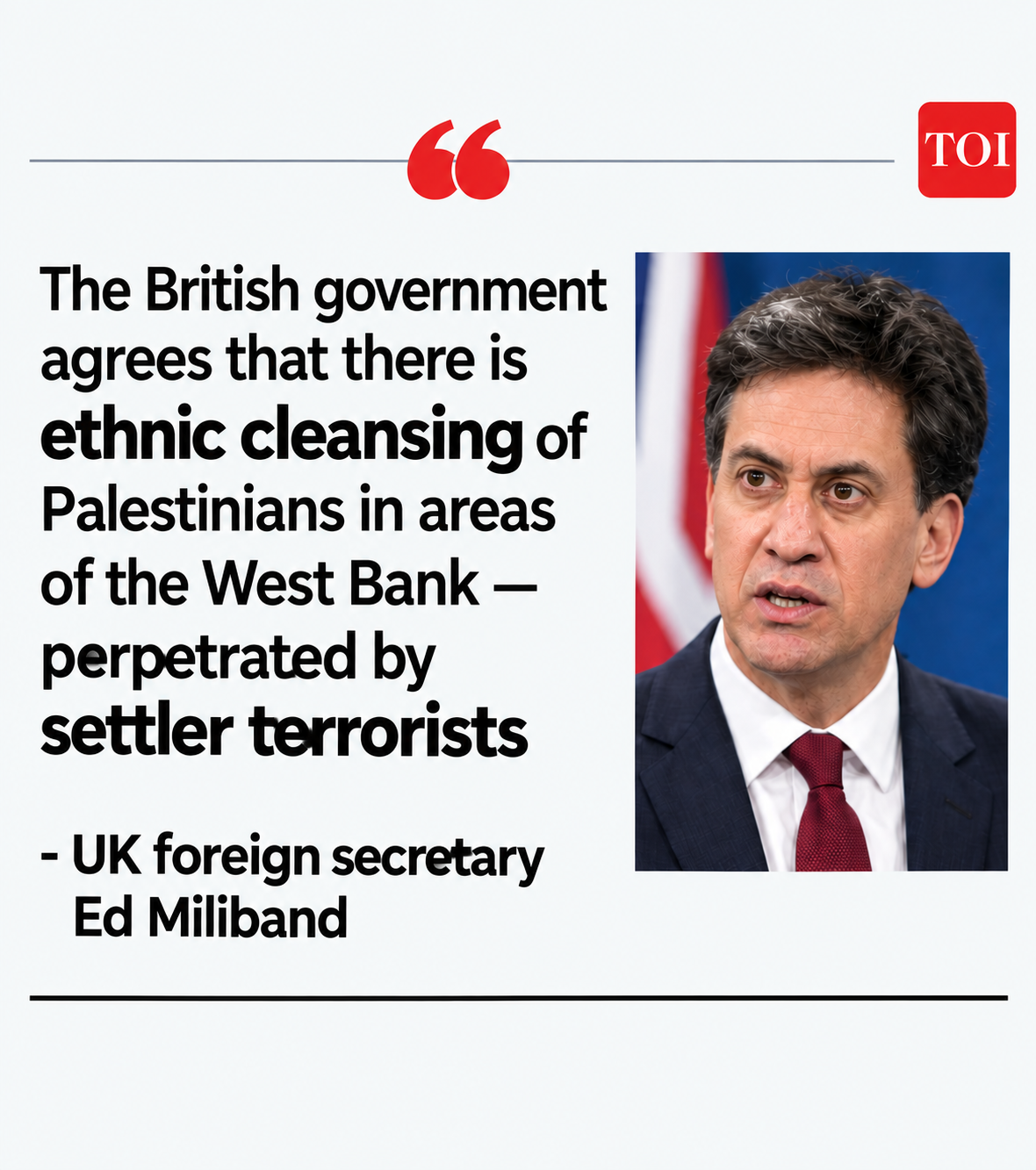
The groundshaking statement was not just another diplomatic rebuke, the UK followed it up with import ban on goods from Israeli settlements, sanctions against companies and individuals involved in settlement expansion, and measures against activity contributing materially to the occupation.The UK also formally adopted the view that Israel’s occupation of the West Bank is unlawful — a dramatic escalation by a country that has traditionally tried to balance its support for Israel with its objections to settlement expansion.And it was not just the UK.“Today, Canada, Denmark, Finland, France, Iceland, Ireland, Norway, Poland, Portugal, Spain, Sweden and the UK confirm their intention to introduce national and or support European restrictions on trade in goods with settlements which are illegal under international law, or that they are actively considering these and other measures, in accordance with their national procedures,” read a statement issued by the foreign ministers of the 12 countries on September 8.“The Government of Israel’s actions in the West Bank are undermining the possibility of a two-state solution,” the statement added.The language was unusually stark, but it followed years of increasingly severe warnings from the United Nations.The UN Human Rights Office has said Israeli settlement expansion and associated violence are accelerating the annexation of large parts of the West Bank and driving Palestinians from their homes and land. In March 2026, the UN reported that more than 36,000 Palestinians had been forcibly displaced during the previous 12-month reporting period, the largest such displacement documented there.The pace of transformation has accelerated sharply since October 7, 2023, when Hamas launched an invasion that led to the deaths of nearly 1,200 Israelis.Villages have emptied, homes and farmland have been destroyed, and settlers have seized or fenced off Palestinian land.Attacks on civilians have surged, and entire communities have been forced to leave — sometimes after repeated assaults, sometimes after their access to water, grazing land, roads or agricultural fields has been progressively cut off.
Slow occupation
In 2011, there were about 343,350 Israeli settlers in the West Bank excluding East Jerusalem. By January 2026, the settler population had reached 540,327, according to figures cited by Amnesty International from the Yesha Council, an increase of roughly 57% in 15 years.Peace Now counted 146 officially recognised settlements and hundreds of unauthorised outposts in 2026.The UN’s 2025 reporting put the total at 503,732 settlers in the West Bank and 233,600 in East Jerusalem, or more than 737,000 settlers across the occupied territory. It also recorded 141 settlements in the West Bank, 25 in East Jerusalem and 271 outposts.This growth is not merely demographic. It has changed the physical map.In 2025, Peace Now recorded the establishment of 86 new outposts, including 58 agricultural outposts. The same year, the Israeli government decided to formally establish or legalise 54 new settlements, including 14 entirely new settlements. Many were deep inside the West Bank rather than close to Israel’s pre-1967 boundary.An outpost may begin as a handful of caravans or structures, but it can gradually acquire roads, electricity, water connections, security infrastructure and eventually government recognition. What begins as an unauthorised foothold can therefore become a permanent territorial fact.
A system of pressure
The UN’s Office for the Coordination of Humanitarian Affairs began systematically recording settler attacks in 2006. The trend since then has been unmistakably upward.In 2023, OCHA recorded 1,264 settler attacks in the West Bank, including East Jerusalem, involving Palestinian casualties, property damage or both — the highest annual figure since systematic monitoring began.In 2024, the number rose to 1,432 attacks, including 204 involving incendiary materials such as Molotov cocktails or other flammable substances.By late 2025, OCHA was reporting more than 1,800 settler attacks during the year. These incidents injured 1,190 Palestinians, including 838 directly injured by settlers.And 2026 has been even worse.By September 4, OCHA had documented more than 1,430 settler incidents during the year involving casualties or property damage. More than 1,100 Palestinians had been injured in the context of settler attacks, while 23 Palestinians had been killed in such incidents. The UN said the frequency of injuries directly caused by Israeli settlers had risen from an average of one Palestinian injured every three days in 2020 to more than three a day in 2026.The violence is increasingly directed not just at people but at the infrastructure needed to keep Palestinian communities alive: houses, water tanks, electricity systems, wells, farms, olive groves, livestock shelters and roads.In one August 2026 incident in Al Mughayyir, settlers destroyed water tanks, took agricultural structures, stole livestock and disrupted the village’s water supply to about 3,300 residents. In another attack, settlers assaulted Palestinian residents while damaging water and electricity infrastructure.
Mass displacement
The clearest measure of ” ethnic cleansing”, a politically and legally charged term, is not simply how many people are injured, but whether people are being pushed from their homes and land.According to OCHA, between January 2023 and August 31, 2026, 130 Palestinian communities experienced full or partial displacement because of settler attacks and related access restrictions. Forty-eight communities were completely displaced.More than 6,400 Palestinians, including over 3,100 children, were displaced in this context. More than 2,500 were displaced in 2026 alone.That displacement is especially concentrated among Bedouin and herding communities in ‘Area C’, which makes up more than 60% of the West Bank and remains under full Israeli control for security and civil administration.The mechanism can be gradual. Settlers establish an outpost, grazing access is restricted, roads are blocked, livestock are attacked, water infrastructure is damaged and residents face repeated assaults. A community may eventually decide that remaining is impossible.In the Jordan Valley, OCHA says settler attacks and related access restrictions since January 2023 have displaced more than 2,000 Palestinians, while 11 communities have become fully displaced, including five in 2026.
Homes destroyed
Palestinians also face demolitions because Israeli-issued building permits are extraordinarily difficult to obtain in large parts of the occupied territory.OCHA documented 1,762 Palestinian-owned structures demolished or forcibly demolished in 2024, displacing 4,253 Palestinians, including 1,712 children.Between 2009 and 2018, OCHA recorded 5,773 demolished structures across the West Bank, including East Jerusalem, and more than 9,000 people displaced. The total included more than 1,600 inhabited residential structures.East Jerusalem has become particularly contentious.Many Palestinian families ordered to demolish their homes eventually destroy them themselves to avoid enormous fines and the costs imposed by Israeli authorities. Between 2020 and 2024, OCHA recorded 521 structures demolished by their owners in East Jerusalem, almost twice the number recorded during the entire 2009-2019 period.Not every demolished Palestinian building were physically seized by settlers. Some are destroyed by Israeli authorities under the planning system, some are punitively demolished and others are lost through court-ordered eviction. But together they form part of a broader struggle over who can remain on the land.
Israel’s policy: Condemnation + tacit support
The Israeli government has strongly rejected the charge that it is carrying out “ethnic cleansing” and has repeatedly refuted the international characterisation of the West Bank as simply foreign territory. Israel argues that the settlements are connected to Jewish history and security and disputes the legal interpretation used by much of the international community. Its official position also stresses that permanent-status questions should be resolved through negotiations.Yet Netanyahu’s government has simultaneously presided over an unprecedented expansion of the settlement project.Peace Now says the Netanyahu-Smotrich-Ben Gvir government has built administrative mechanisms for what it describes as de facto annexation, while settlement infrastructure, budgets and outpost legalisation have accelerated.In July 2026, Netanyahu and defence minister Israel Katz instructed the military to accelerate the legalisation of farm outposts and establishment of new ones.At the same time, Netanyahu has moved against some unauthorised outposts under pressure from Washington. Reuters reported on September 6 that he ordered the dismantling of roughly 100 unauthorised outposts, although implementation remained unclear and finance minister Bezalel Smotrich opposed aspects of the move.
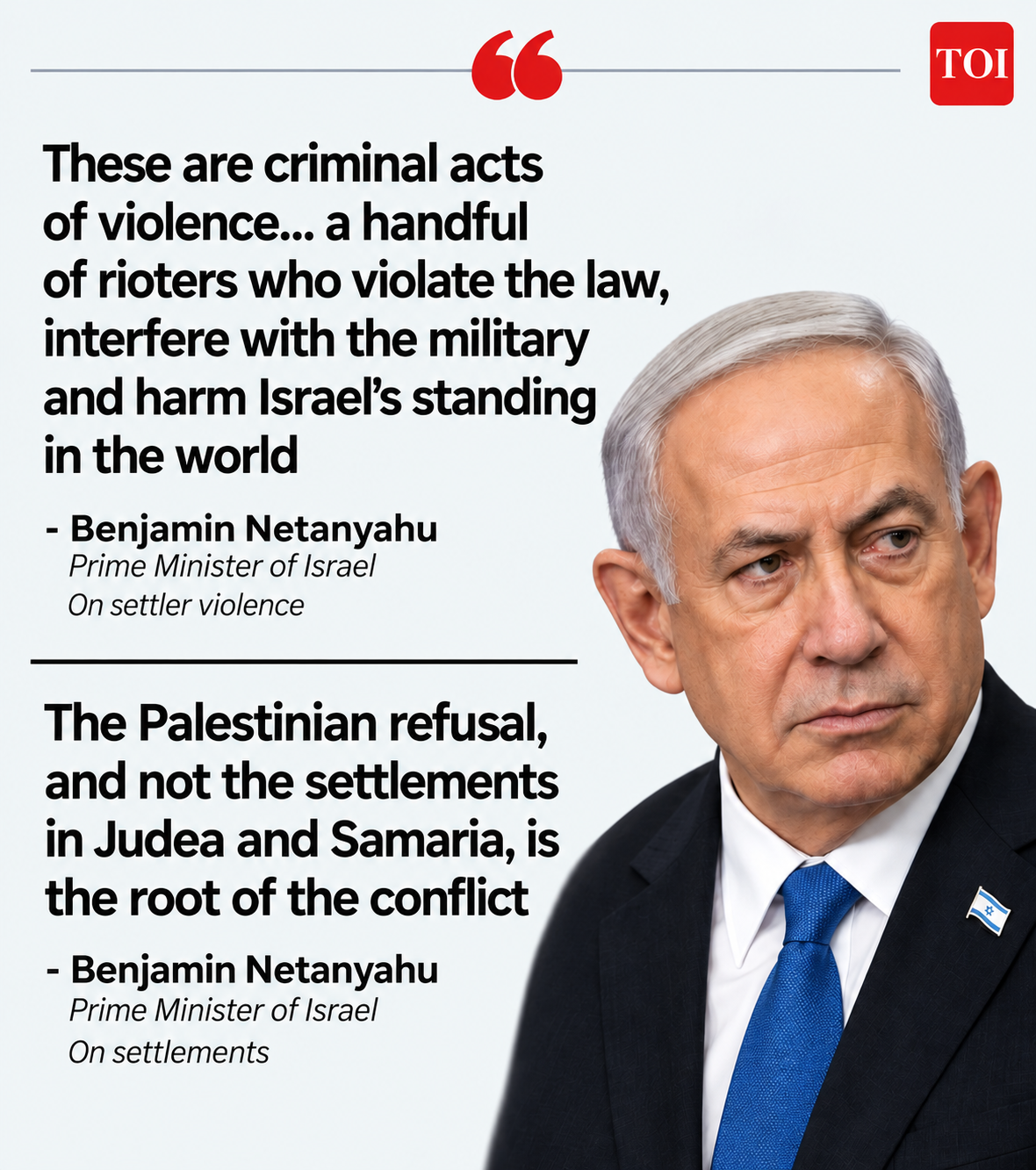
In late August, after a wave of coordinated Israeli settler attacks swept across the occupied West Bank, Netanyahu condemned the “criminal acts of violence”, blaming it on a “handful of rioters” who violated the law, interfered with the military, and harmed Israel’s standing in the world.President Isaac Herzog echoed the sentiment, calling the events a “red line”.The Israeli ministry of foreign affairs declared that the violence carried out by “extremists” stands in complete contradiction to the values of Israel.However, this public outrage contrasted sharply with the reality on the ground.Footage captured masked settlers storming the villages of Qusra and Jalud in open pickup trucks. Despite this visual evidence and Netanyahu’s assurance, the Israeli police has made zero arrests in connection with the violence.That contradiction captures Israel’s current position: public condemnation of violent “rogue” settlers while powerful elements of the government continue policies that expand settlement territory.
The E1 Area
The most strategically significant development of 2025 was the final approval in August by the Higher Planning Council of plans to build 3,401 housing units in E1, followed by the publication of construction tenders in December 2025.After years during which successive Israeli governments refrained from advancing E1 due to sustained international and American pressure, the Netanyahu-Smotrich government approved the E1 plans. These plans are universally regarded as among the most damaging possible settlement decisions for the prospects of peace and a two-state outcome.The E1 area sits at the geographic heart of the West Bank.Development of this area as an Israeli settlement would split the West Bank into two non-contiguous parts, cutting the territorial link between the northern and southern West Bank, and preclude the development of a Palestinian metropolitan area connecting Ramallah, East Jerusalem, and Bethlehem.It would also effectively consolidate the annexation of Ma’ale Adumim into the Israeli urban space.In September 2025, Netanyahu signed an agreement for accelerated development with the Municipality of Ma’ale Adumim, committing the government to invest 3 billion shekels in infrastructure for the E1 settlement and for the development of Ma’ale Adumim.These commitments signal that E1 is no longer merely a planning approval but an active construction project.
Trump’s reaction to Israeli settler ‘terrorists’
US president Donald Trump’s record is far more complicated than a simple pro- or anti-settlement label.During his first presidency, the US moved away from the long-standing American position that Israeli settlements violated international law. In 2019, secretary of state Mike Pompeo announced that Washington no longer considered civilian settlements “inconsistent with international law”.Joe Biden reversed that approach in part and his administration issued sanctions in 2024 against Israeli settlers and organisations accused of violence or destabilising activity in the West Bank.Trump reversed those sanctions almost immediately after returning to office. On January 20, 2025, he revoked Executive Order 14115. The US Treasury subsequently removed the designated settlers and entities from its sanctions list and unblocked their US-linked assets.Yet in 2025, Trump also opposed outright Israeli annexation of the West Bank, warning that it could threaten wider regional strategy.
If there are squatters that come in and put up their own flags and take possession of something that does not belong to them, if they burn a car, if they torch a mosque, if they go into someone’s home and vandalise it, paint graffiti on the walls, that’s a criminal act. But it extends beyond a criminal act. It’s an act of terror
Ex-US Ambassador to Israel Mike Huckabee
In October 2025, he said Israel was “not going to do anything” with the West Bank after the Knesset advanced an annexation measure.In 2026, Washington’s position has become more interventionist again. US Ambassador Mike Huckabee has publicly described violent settlers as terrorists, and in September he travelled to Turmus Ayya to meet Palestinian Americans affected by settler attacks. Reuters reported growing US pressure on Netanyahu to confront settler violence.
What the UN says
UN Security Council Resolution 2334, adopted in 2016, reaffirmed that Israeli settlements in territory occupied since 1967, including East Jerusalem, have “no legal validity” and constitute a major obstacle to peace. The council demanded an end to settlement activity.In July 2024, the International Court of Justice went further. Its advisory opinion concluded that Israel’s continued presence in the Occupied Palestinian Territory is unlawful and said Israel must end new settlement activity, evacuate settlers and provide reparation for damage caused by its unlawful acts.The UN General Assembly has continued to reaffirm the same position.In December 2025, it adopted a resolution on Israeli settlements by 146 votes to 13, condemning settlement activity, land confiscation, forced transfer and violence against Palestinian civilians and calling for accountability for extremist settlers. The United States voted against the resolution alongside Israel.In June 2026, the UN secretary-general’s report again said settlement activity was continuing and recorded thousands of newly advanced or approved housing units.Israel has rejected all such opinions.
A new phase of the conflict
Tha larger global consensus is that the West Bank crisis is no longer simply about individual extremist settlers burning fields or attacking Palestinian villagers.The evidence points to a much larger transformation: a growing settler population; hundreds of outposts; expanding roads and infrastructure; recurring violence; demolitions; forced evictions; loss of agricultural access; and the displacement of entire communities.The Netanyahu coalition includes ministers such as Bezalel Smotrich, who has openly advocated extending Israeli sovereignty over the West Bank. In 2025, Smotrich told the Knesset that Israel should move toward applying sovereignty in Judea and Samaria and described the policy as a process of establishing “de facto sovereignty”.The UN’s assessment is therefore less about whether every Israeli official orders every settler attack and more about the cumulative effect of policies, enforcement failures, settlement expansion and land control.Its March 2026 report said settler violence continued in a coordinated and largely unchallenged manner, with Israeli authorities playing a central role in directing, participating in or enabling aspects of the conduct.That is why the language coming from Britain and other Western governments in 2026 has become so severe. London is no longer talking only about isolated violations. It is arguing that the cumulative process amounts to “ethnic cleansing” and that Israel’s continued occupation itself is unlawful.Whether that pressure can actually change events on the ground remains uncertain.Till then, Israel continues to expand settlements, Palestinians continue to lose access to land, and Washington remains unwilling to impose the kind of sanctions used by Britain and other Western governments.