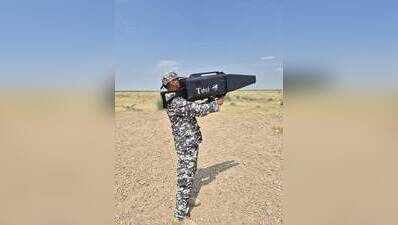
Bhubaneswar: Odisha-based defence technology firm IG Defence has successfully demonstrated its indigenous T-SHUL BEAM Counter-UAS System at Indian Air Force’s Dronathan 2026 exercise held at Pokhran between Sept 14 and 16.The demonstration highlighted the system’s capability to neutralise aerial drone threats using soft-kill electronic countermeasures, underlining the growing significance of indigenous counter-drone technologies amid evolving battlefield requirements.Developed by IG Defence, T-SHUL BEAM is a man-portable, directional Counter-Unmanned Aircraft System (C-UAS) designed to disrupt critical communication and navigation links of hostile drones. The system’s multi-band RF architecture is capable of targeting command-and-control, telemetry, video transmission and GNSS signals associated with unmanned aerial systems.According to the firm, the directional architecture enables operators to focus countermeasures on specific aerial targets, offering a rapidly deployable defence against small UAVs, first-person view (FPV) drones and other low-cost unmanned platforms.Designed for deployment in tactical environments, T-SHUL BEAM is intended to protect forward positions, critical assets and temporary operational locations where drone threats can emerge with little warning, it said.“The rapid evolution of drone warfare has made Counter-UAS capability an essential requirement for modern military operations. T-SHUL BEAM is designed to give operators a mobile and responsive capability against small UAVs and FPV systems,” said Wg Cdr Anoop Sharma (retd.) of IG Defence.The system operates on GRID, IG Defence’s indigenously developed AI-powered battle management system for C5ISRT applications. GRID integrates sensors, unmanned systems, intelligence, communications and command elements into a common operational picture, enabling coordinated decision-making across the battlespace.The company said integrating T-SHUL BEAM with GRID allows counter-drone capabilities to function as part of a broader battlefield network, alongside sensing, intelligence and command systems.The company said it is focused on building an integrated technology stack spanning unmanned systems, AI-powered battle management platforms and solutions designed to counter evolving aerial threats.