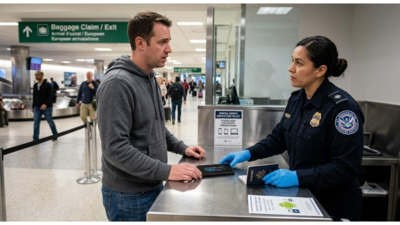
An American citizen was arrested at Atlanta airport after his phone was wiped when he entered a PIN during an airport search in January this year. Months later, a new US court ruling has highlighted just how much power border authorities have when it comes to searching travellers’ electronic devices. The January case of Atlanta resident Samuel Tunick involved GrapheneOS, a privacy-focused Android operating system that has a feature allowing users to wipe a phone with a designated PIN. Prosecutors accused Tunick of destroying potential evidence. His lawyers have challenged the search and the seizure of his phone.Now, the US Court of Appeals for the Second Circuit has ruled in a separate case that border agents can search a traveller’s cellphone without reasonable suspicion or a warrant. The ruling was issued on September 17 in United States v. Alisigwe. As stated in a Bloomberg report, the decision does not concern Tunick or GrapheneOS directly. But it comes after the July case and adds to the debate around phone privacy, airport searches and electronic device searches at the US border.
What happened at Atlanta airport in January
Samuel Tunick was returning from the Dominican Republic when federal agents stopped him at Hartsfield-Jackson Atlanta International Airport on January 24, according to the case details you provided. The agents repeatedly asked him to unlock his phone and warned that it could be seized if he refused. After he entered a PIN, his phone reportedly went blank, flashed several times and appeared to restart. The data stored on the device was then lost.Prosecutors alleged that Tunick deliberately wiped the phone to prevent authorities from accessing potential evidence. His lawyers then argued that the underlying search was unlawful and sought to have the case dismissed. They also disputed the government’s account of the incident.
What does the new US court ruling say about phone searches
The new ruling comes from the Second Circuit, which covers New York, Connecticut and Vermont. The case involved Chinwendu Alisigwe, a lawful permanent resident whose cellphone was searched by federal agents at John F. Kennedy International Airport in 2019 and again in 2021. Agents manually went through the phone and photographed information found on it.Alisigwe argued that the searches violated the Fourth Amendment because the government did not have a warrant. The appeals court rejected that argument.The court held that border agents do not need reasonable suspicion before manually searching a traveller’s cellphone at the border. It said a cellphone is considered property for purposes of the existing border-search exception to the Fourth Amendment. The court also rejected the argument that the First Amendment creates a separate warrant requirement for cellphone searches at the border.
Does this mean US border agents can search any phone
While the ruling is significant, its exact scope matters. The Second Circuit’s decision concerns border searches of travellers’ electronic devices. It does not mean police can generally search any person’s phone anywhere in the US without legal restrictions.The court relied on the long-standing border-search exception, under which the government has broad authority to inspect people and property entering the country. The court said this authority extends to cellphones and that reasonable suspicion is not required for the type of manual cellphone search involved in the case.Judge Eunice Lee agreed with the result but wrote separately. She questioned the majority’s broader conclusion that cellphone searches should be treated as routine searches requiring no suspicion, noting the amount of highly private information stored on modern phones.
What about laptops and other electronic devices
The ruling specifically concerned cellphone searches. The court’s reasoning relies on the border-search exception and the treatment of a cellphone as property. So the headline question around phone and laptop searches needs some care: the decision does not specifically establish a separate rule for every type of electronic device in every situation.The broader legal issue is whether electronic devices carried across an international border receive special protection from warrantless searches. In this case, the Second Circuit said the Fourth Amendment does not require a warrant or reasonable suspicion for the cellphone search at issue.
Why the July GrapheneOS case matters
The Tunick case and the Alisigwe ruling involve different people, different airports and different legal proceedings. But both involve a growing question for travellers: what happens to the data on a phone when US authorities want to inspect it at the border?In Tunick’s case, prosecutors allege that wiping the phone interfered with their ability to obtain evidence. In Alisigwe, the appeals court addressed the government’s authority to search a cellphone in the first place. The two cases therefore highlight different sides of the same broader issue: government access to smartphones at international borders and the privacy protections available to travellers.