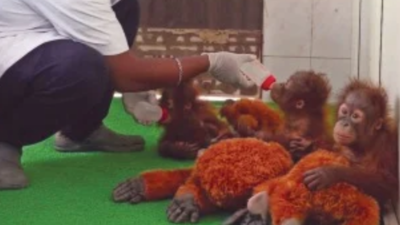
By: Anup NayakThe name orangutan comes from the Malay words orang (“person”) and hutan (“forest”) — aptly describing these reddish-orange “people of the forest”. Native to the rainforests of Borneo and Sumatra, orangutans are among humanity’s closest relatives, sharing about 97% of our DNA.They are the largest arboreal animals on Earth and spend almost their entire lives in the forest canopy. With their long arms and flexible feet, they move effortlessly between branches. As they feed and travel, they disperse seeds over long distances, helping regenerate the rainforest and earning them the title of the forest’s “gardeners”.Fruit, particularly wild figs, makes up more than 60% of their diet. When fruit is scarce, they eat leaves, bark, insects, honey and even mineral-rich soil. Their intelligence is evident in their daily routines: each evening, an orangutan weaves leafy branches into a fresh sleeping nest within minutes. It may also use sticks to extract insects, remove seeds or hold large leaves overhead as umbrellas during rain.Unlike chimpanzees and gorillas, orangutans are largely solitary. Scattered food sources make living alone more practical. Mothers remain with their young, while adult males roam large territories. Mature males develop prominent cheek pads and throat sacs, which help them produce booming “long calls” to attract mates and deter rivals.Orangutans reproduce slowly. A female generally gives birth to one infant every seven or eight years. The young cling to their mothers for the first two years and may depend on them until they are seven to nine years old, learning vital skills such as foraging, tool use and nest building.All three species — Bornean, Sumatran and Tapanuli — are Critically Endangered. Habitat loss, caused by rainforest clearing, particularly for palm-oil plantations, along with poaching, illegal pet trade, forest fires and their slow breeding rate, threatens their survival.(The writer is former member secretary of National Tiger Conservation Authority)