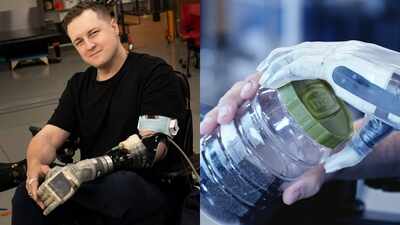
After losing his arm 17 years ago, Alexander Avi Davidson, 33, can finally feel the sense of touch again. Thanks to a revolutionary bionic arm developed by University of Utah researchers, he can control the prosthesis with his thoughts and receive sensory feedback through it. Davidson is the first participant in a University of Utah clinical trial testing the bionic prosthesis at home. He is finally able to perform everyday tasks such as writing, playing cards, making a sandwich and, most importantly, holding his wife’s hand.“The ability to have a return of sensation to my previously dominant hand is a life-altering experience, as I never imagined feeling any part of that hand in my lifetime, let alone for it to feel so authentic,” Davidson said in a release shared by the University of Utah.
Losing left arm at 16
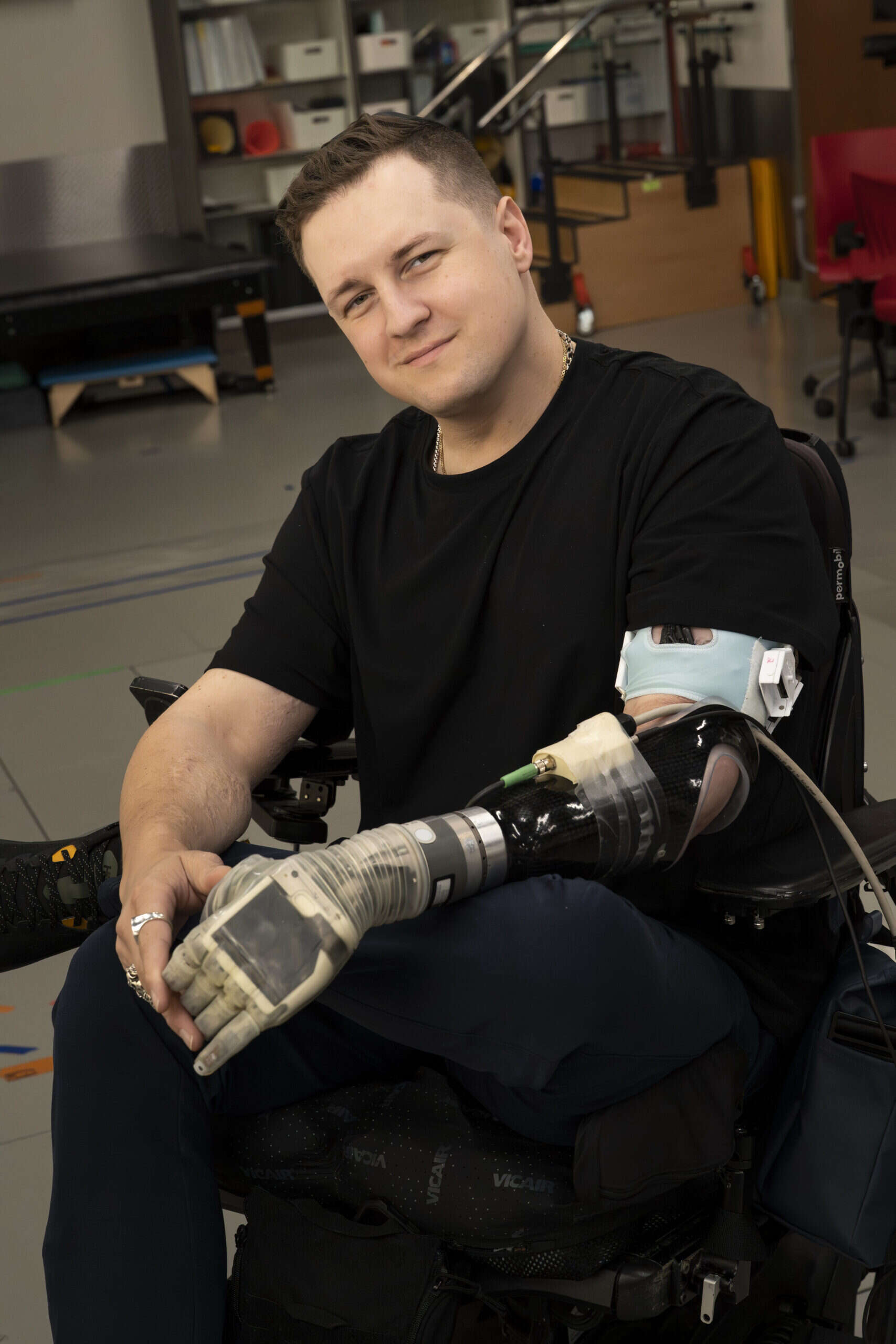
Pic credit: Dave Titensor, University of Utah
Alexander ‘Avi’ Davidson, a resident of Tampa, Florida, lost his left arm at the age of 16. He fell from the top of a telephone pole, which left him paralysed from the waist down. Following the accident, his left arm was amputated below the elbow.Now, 17 years later, Davidson can feel the sense of touch again using a Luke Skywalker-inspired bionic arm developed at the University of Utah. He is the first participant in a clinical trial testing the prosthesis at home. The bionic arm is powered by a direct nerve interface called the BIOS Controller.This technology allows the user to control the bionic prosthesis using their thoughts. It restores a sense of touch, similar to that of one’s own hand. Within days of using the arm, Davidson is already able to return to a somewhat normal life. And his greatest joy? Being able to hold his wife’s hand.“The ability to recognise how much pressure I’m putting on my wife’s hand and to feel hers back in mine is a wild idea to internalise. This technology has the potential to reconnect so many individuals to a reality they did not believe possible.”
One-of-a-kind bionic arm offers hope
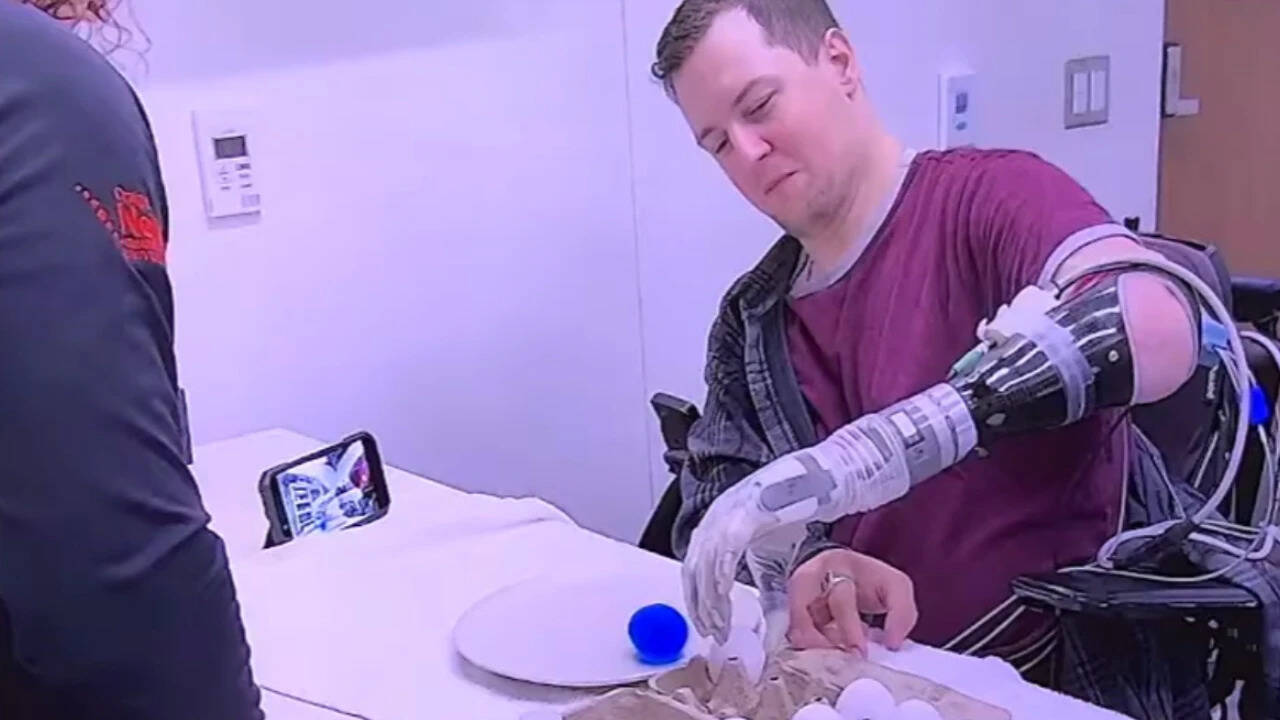
Davidson is a therapist, photographer and activist. Though he has tested other prosthetic arms, none of them gave him this range of movement, fine control, sensory feedback and convenience. As part of the trial, the researchers will be monitoring Davidson while he uses the bionic arm for a year, with the possibility of an extension.“Clinical trial participants are experiencing the world in a whole new way that really shapes and encourages our research and development and inspires us to keep working on this technology. The goal is to ultimately transform the standard of life and quality of care for individuals with limb loss,” Jacob A. George, director of the Utah NeuroRobotics Lab, said. He started developing Utah’s Skywalker-style bionic arm in 2015.
Thought-controlled prosthetics no longer limited to sci-fi
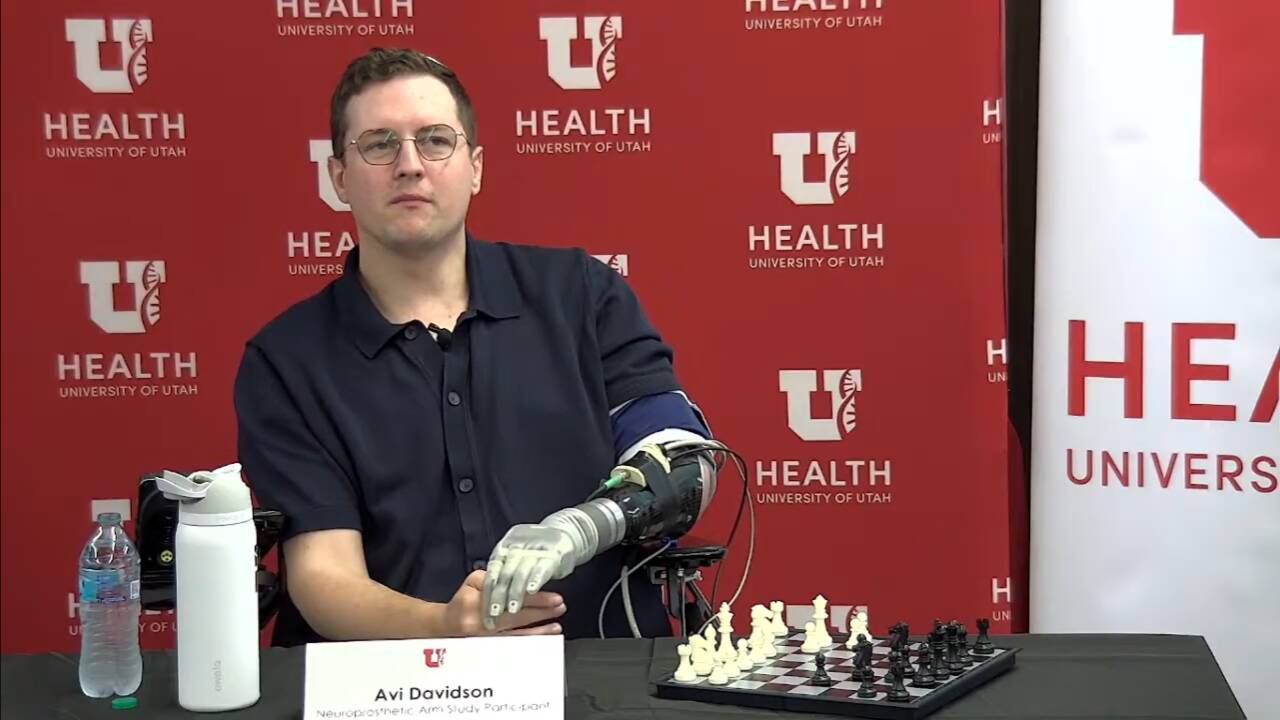
Robotic prosthetics have been a staple in science fiction for decades. However, real-world robotic arms have not fully matched those futuristic expectations. Despite advances in technology, many amputees still use body-powered hooks, a technology dating back to the Civil War era. The direct nerve interface is expected to revolutionise this. Implanted in the residual limb, the device allows users to control a ‘neuroprosthetic’ arm with their thoughts. Most importantly, it can also send sensory information, so users can experience a sense of touch.“Because of the presence of sensation, it allows access to do more things in a different context that wouldn’t be possible with other prosthetic devices,” Leanne Seckinger, an occupational therapist at University of Utah Health who has been helping Davidson integrate his use of the neuroprosthesis into daily life, said.Davidson is the first to use the bionic arm as part of the trial in his own home. And the tech has changed his life for the better. The potential of this tech goes beyond prosthetics. The BIOS interface can be integrated with robots, virtual reality systems, and even phones and computers. Theoretically, someone could control multiple devices with their thoughts and feel what those devices are touching.“The possibilities truly are endless. With this technology, we can create an inclusive world for everyone, regardless of their physical capabilities,” George said.