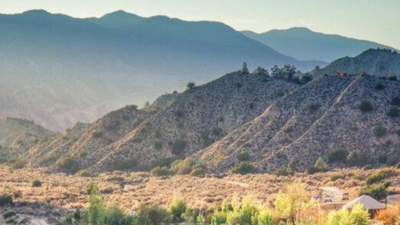
The largest remaining intact part of an 1843 Mexican land grant in California’s Cuyama Valley has been permanently protected from future commercial development after a successful grassroots conservation campaign. The 5,650-acre Spanish Ranch, managed by the Doiron family, is now protected by a permanent agricultural conservation easement through a partnership with the California Rangeland Trust. The agreement guarantees that the historic cattle ranch will remain working agricultural land forever, preventing future subdivisions or industrial development. The agreement was completed after a $1 million fundraising campaign. It protects important wildlife corridors, native oak forests, and headwater habitats across San Luis Obispo and Santa Barbara counties. According to an official announcement from the California Rangeland Trust, the project protects a continuous farming and ranching tradition that began before California became a state.
Preserving a pre-statehood Mexican land grant
The property is the main part of what was originally called Rancho Cuyama (No. 1), a 22,193-acre land grant awarded in 1843 by Mexican Governor Manuel Micheltorena to José María Rojo. After the Mexican-American War ended and the Treaty of Guadalupe Hidalgo was signed in 1848, the United States government formally recognized the land grant. Over the past 183 years, large parts of California’s historic ranchos have been divided into smaller residential lots, farmland, and industrial sites. Spanish Ranch remains the largest connected parcel from the original 1843 grant that is still being used for agriculture. The Doiron family bought the land decades ago and has operated it as a traditional cattle ranch while preserving its open natural spaces. As development pressure increased in the Cuyama Valley, the family began working with conservation groups to protect the property permanently. In a statement released by the California Rangeland Trust, landowner Pam Doiron spoke about the property’s deep historical importance. “The ranch is a symbol that shows that agriculture, history, and conservation go hand in hand,” Doiron said. “I am proud, along with my family, to carry that legacy forward.”
Funding through public and private coalitions
Protecting the land required money from several sources, including federal grant programs, charitable foundations, and individual donors. Federal support came from the United States Department of Agriculture’s Natural Resources Conservation Service through its Agricultural Conservation Easement Program. The program provides matching funds to protect working agricultural land. To pay the remaining costs, the California Rangeland Trust launched a $1 million fundraising campaign. More than 140 private donors and seven charitable foundations gave money to the campaign, providing nearly 54 per cent of the project’s total funding. A major leadership grant from the John S. Kiewit Memorial Foundation provided the final amount needed to complete the project. According to records published by the California Rangeland Trust, the organization now protects more than 150,000 acres of working land across Santa Barbara and San Luis Obispo counties. This represents 34 per cent of its conservation portfolio across the state. Eric Hvolboll, board president of the John S. Kiewit Memorial Foundation, said during a dedication ceremony that supporting conservation agreements for working land fits closely with the region’s conservation goals.
Safeguard for working landscapes and wildlife
Beyond its historical value, Spanish Ranch provides an important natural buffer between the Los Padres National Forest and the Cuyama River basin. The property offers important habitat for native wildlife, including the California condor, tule elk, pronghorn, and several species of special concern. Under the legal agreement, the Doiron family keeps full private ownership and control of the cattle ranch. However, the easement permanently removes all future commercial development rights. This ensures that the soil, watershed, and vegetation can remain protected. Michael Delbar, Chief Executive Officer of the California Rangeland Trust, pointed to the wider importance of the agreement for protecting land in the region. “Spanish Ranch represents what is possible when landowners, conservation partners, and communities come together around a shared vision for the future,” Delbar stated. “We are not just conserving acres, we are helping ensure that these working landscapes remain whole, productive, and connected for generations to come.”