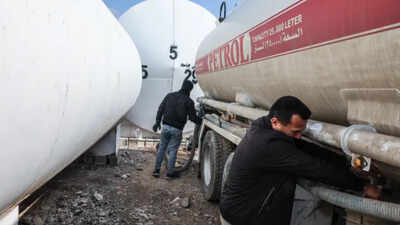
Iraq is facing a growing economic squeeze as the Iran war disrupts oil exports through the Strait of Hormuz, while fuel shortages and rising import costs expose the country’s dependence on both oil revenues and imported petroleum products.According to Al Jazeera, the disruption has hit Iraq’s oil revenues while pushing up the cost of imported goods, with Iraqi officials warning that the crisis is placing additional pressure on the country’s economy. The report also highlights Iraq’s struggle to maintain crude exports while meeting domestic demand for refined fuel.Iraq Prime Minister Ali al-Zaidi said Iraq had lost about $60 billion in oil revenues because of the war, after the country was temporarily unable to export around 90 percent of its oil through its usual Gulf routes. He also described Iraq as facing “extraordinary economic challenges.”The impact is particularly severe because oil revenues account for more than 90 percent of Iraq’s federal budget, meaning disruption to crude exports quickly translates into pressure on government finances.Iraq oil minister Basim Mohammed Khudhair told parliament that Iraq’s oil exports had fallen to no more than 200,000 barrels per day during the crisis.He said export capacity had subsequently recovered, with Iraq able to move up to 4.254 million barrels per day on September 20, although actual shipments remained dependent on tanker traffic through the Strait of Hormuz.The disruption has also increased the cost of transporting Iraqi crude. During the parliamentary hearing, Khudhair said shipping costs had risen sharply amid the regional conflict, adding further pressure to the revenue Iraq earns from its oil exports.Iraq petrol problemThe disruption has also exposed another weakness in Iraq’s oil economy. Despite being one of the world’s major crude oil producers, Iraq does not produce enough refined fuel to meet domestic demand and remains dependent on gasoline imports.Iraq’s Oil Minister Basim Mohammed Khudhair told parliament that domestic petroleum-product production stood at around 37 million litres per day, but the country still needed to import at least 5 million litres of gasoline every day to meet demand.Iraq imported an average of 3.907 million litres of gasoline per day in August to help bridge the shortfall, the official said.Iraq looks beyond Hormuz for his oil exportWith exports through the Strait of Hormuz disrupted, Iraq has been turning to its northern route through Kirkuk and Turkey’s Ceyhan port to keep crude flowing to international markets.Iraq’s Basra Oil Company chief Bassem Abdul Karim said on September 24 that around 250,000 barrels per day of Basra crude was being transported north to Kirkuk for export through Ceyhan, while southern ports were handling about 2.6 million barrels per day.Iraq is also looking at longer-term alternatives. The government has been working to restore and expand pipelines connecting its oilfields to Fishkhabur and Ceyhan, while plans are also being pursued for a western route towards Syria’s Mediterranean Baniyas port.