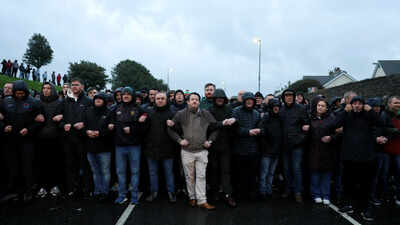
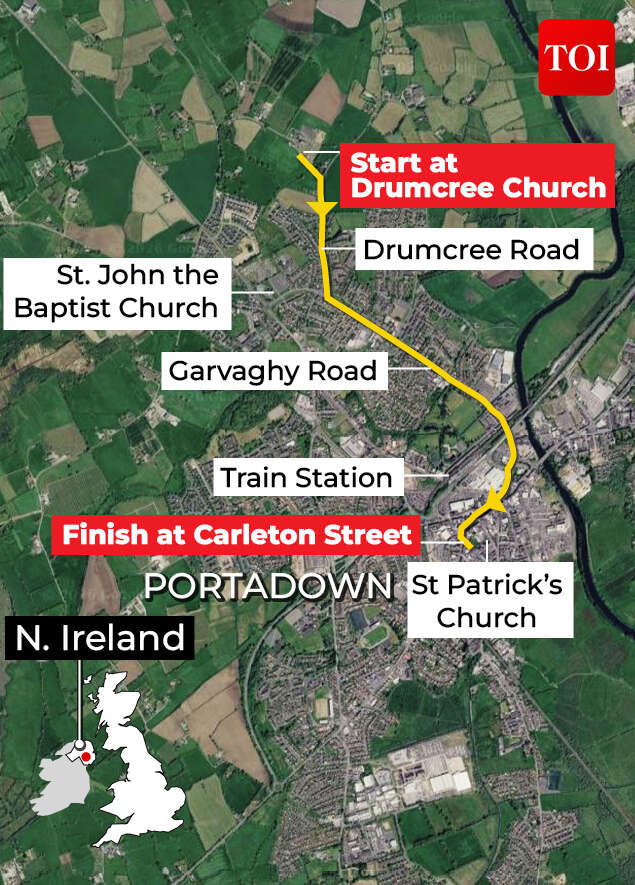
Tensions remained high in Northern Ireland on Monday after police prevented members of the Orange Order from marching along the Garvaghy Road in Portadown, despite the route being legally approved for the first time in nearly three decades.The stand-off followed a day of protests in which thousands gathered to block the road, while police kept the two sides apart.The dispute centres on the Drumcree parade, an annual march by the Orange Order, a Protestant organisation closely associated with British unionism.The march was supposed to pass through Garvaghy Road, a predominantly Catholic and Irish nationalist area of Portadown. The route had been banned since 1998 because previous attempts to use it had triggered serious unrest.
Why did the latest confrontation happen?
Northern Ireland’s Parades Commission had initially kept restrictions on the march, but a court challenge overturned the decision. The commission then allowed a much smaller parade of 35 people, without bands or supporters, and required it to start by 8am and finish by 9.30am. A final court challenge by residents was also rejected, clearing the way for the march.
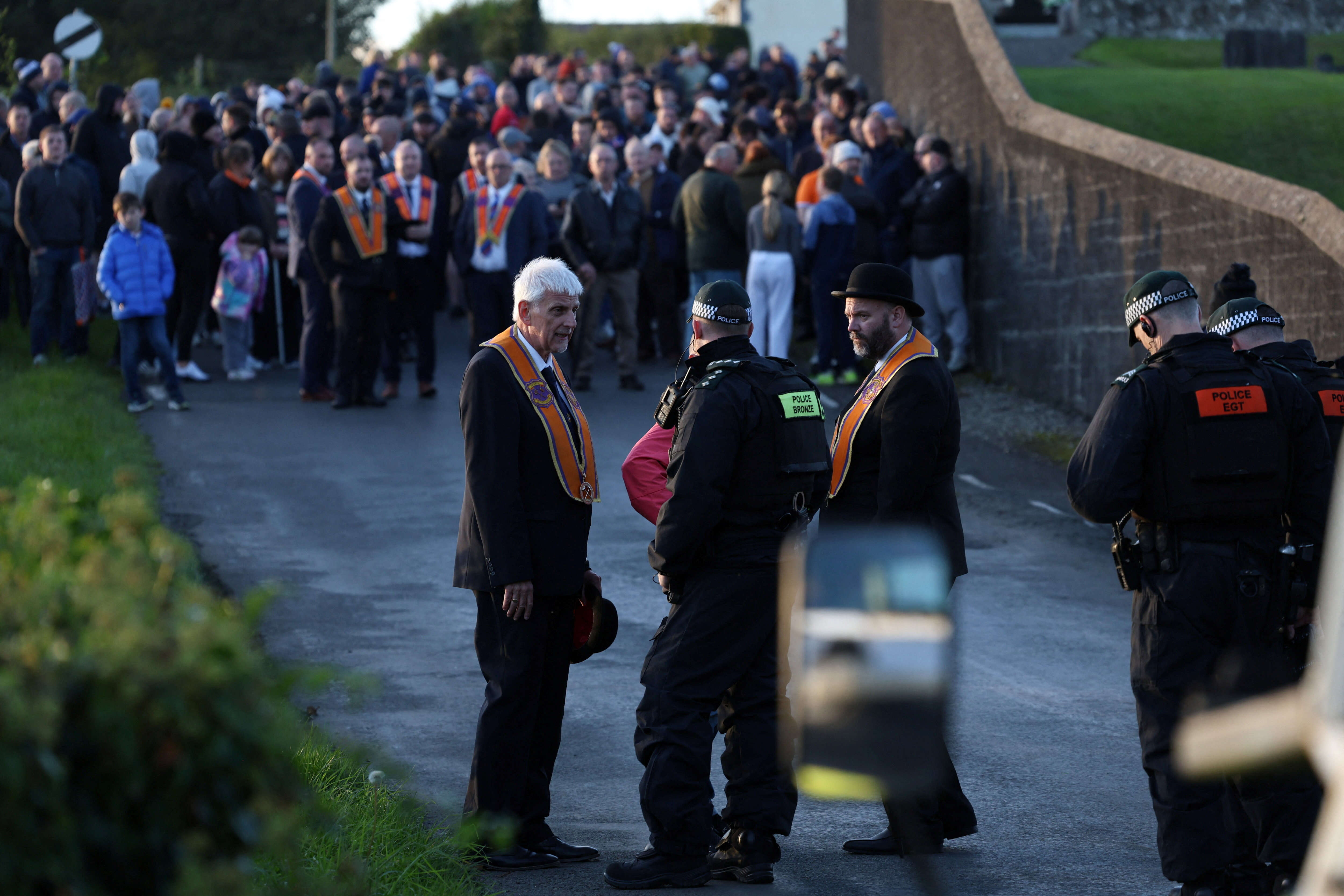
Nigel Dawson, known as District Master of Portadown Loyal Orange Lodge, speaks to a police officer after police blocked the road near Drumcree Church (Reuters photo)
That decision immediately reignited opposition in Garvaghy Road. Around 2,000 people gathered there on Sunday and blocked the route. Members of Sinn Féin, including First Minister Michelle O’Neill and party leader Mary Lou McDonald, joined the protest. The Orange Order remained near Drumcree Parish Church, waiting for police to allow the route to be used.The stand-off continued into the early hours of Monday. A group of Orangemen attempted to move towards the road, but police Land Rovers blocked their way. Police also faced stone throwing from protesters and used tear gas to control the crowd.
Why is one parade causing such a big dispute
Northern Ireland is part of the United Kingdom, but its population has long been divided between two broad political identities. Unionists, who are predominantly Protestant, generally want Northern Ireland to remain part of the UK.Nationalists, who are predominantly Catholic, generally identify as Irish and support the idea of a united Ireland. Religion is therefore an important marker of the divide, but the deeper argument is about national identity and whether Northern Ireland should remain British or eventually become part of a united Ireland.The Orange Order represents a Protestant and British tradition. It says its marches are an important part of its cultural and religious heritage. But many Catholics and nationalists see some of these marches as provocative when they pass through their neighbourhoods. Garvaghy Road became one of the most sensitive examples of that dispute.
The Orange Order represents a Protestant and British tradition.
The history behind Drumcree row
Attempts by the Orange Order to march along Garvaghy Road became a major flashpoint during the Troubles, the decades of political and sectarian conflict in Northern Ireland.The confrontation was not simply about a parade. It reflected the much wider struggle between communities with competing British and Irish identities. Earlier Drumcree stand-offs were accompanied by riots, roadblocks and killings, making the route one of the most controversial in Northern Ireland.
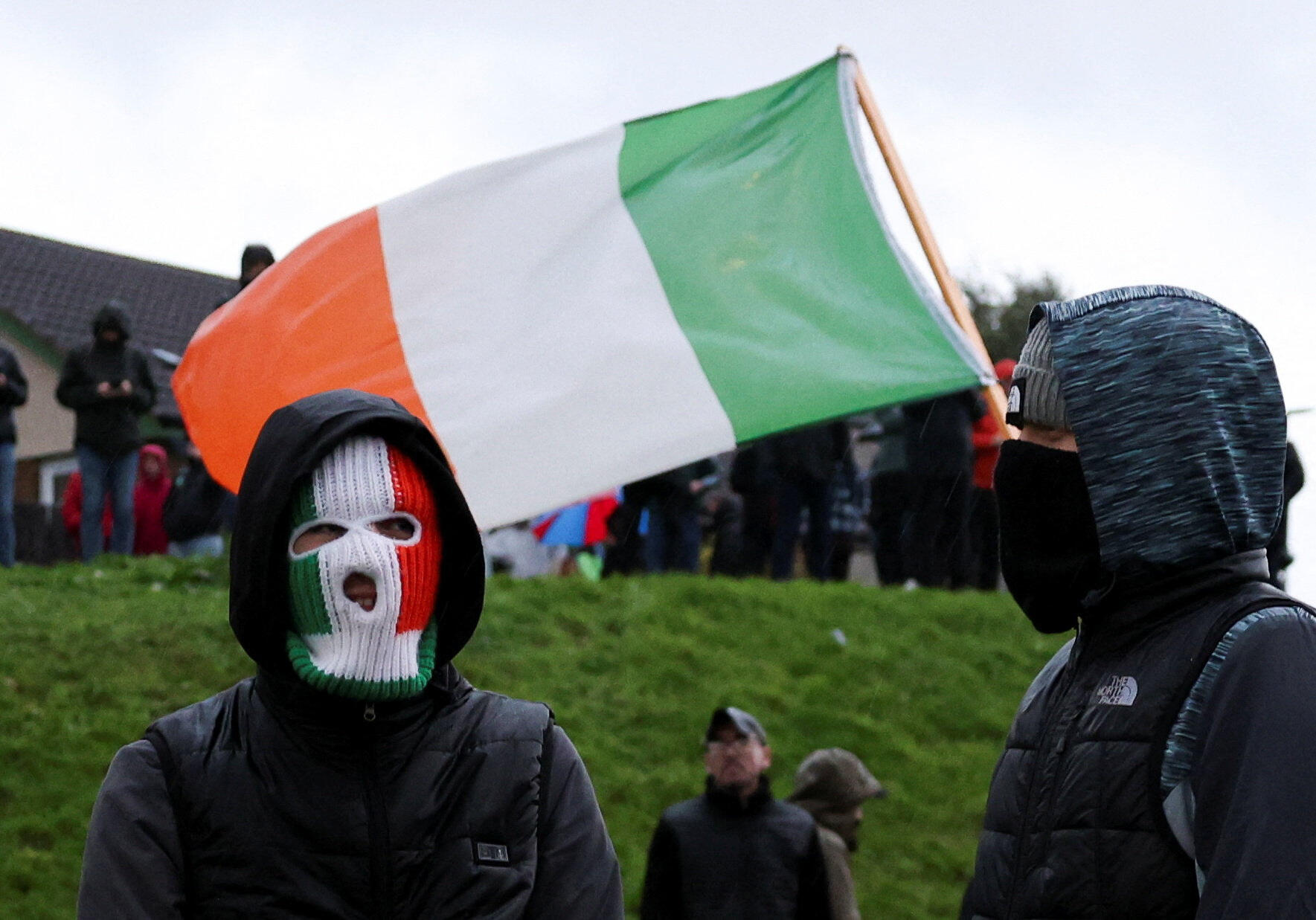
A person wears an Irish flag themed mask as people block the Garvaghy road (Reuters photo)
In 1998, the route was banned from the Orange Order’s parade. That same year, the Good Friday Agreement helped bring an end to the main period of conflict known as the Troubles. The agreement established a new political framework based on power-sharing and recognised that Northern Ireland’s constitutional status could ultimately change if its people voted for it. For nearly 30 years, the Orange Order was unable to complete the Drumcree route.This year’s decision to allow the march therefore carried significance far beyond a few dozen people walking down a road. For Orangemen, it represented the restoration of a right they had been denied for decades. For many residents of Garvaghy Road, it revived memories of a conflict they believed had been left behind.
Why are politicians involved
The dispute has also exposed the continuing political divide at the heart of Northern Ireland. Sinn Féin party’s Michelle O’Neill joined the protesters and urged them to “stay the course”. Her participation angered unionist politicians, who argued that a senior government figure should not support a protest against a legally authorised parade.DUP leader Gavin Robinson accused O’Neill and other Sinn Féin politicians of being “lawmakers acting as lawbreakers”.Northern Ireland Secretary Sir Chris Bryant has called for “compromise”, while British and Irish leaders have urged calm. Police Chief Constable Jon Boutcher has also called on people with influence to help maintain a peaceful situation.The concern is not just about this particular march. The Drumcree dispute was once associated with some of the worst violence of the Troubles, so any confrontation carries a powerful historical memory.The current situation is therefore a clash between a legally approved Protestant parade, a Catholic nationalist community opposed to the route, and a police force trying to enforce the law without allowing the dispute to return to the violence of the past.