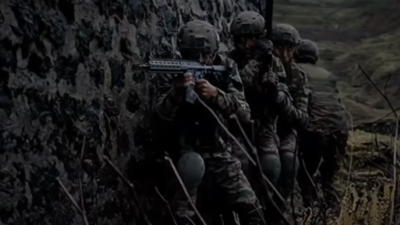
India today marks ten years since the surgical strikes of September 29, 2016, an operation that came to define a new template for the country’s counter-terrorism response and set the stage for the bolder military actions that followed in the decade since.The strikes were carried out in direct retaliation for the Uri attack of September 18, 2016, when terrorists belonging to Jaish-e-Mohammed struck the Army’s brigade headquarters located in Uri in Jammu and Kashmir. The terror attack claimed the lives of 19 soldiers, who belonged to the 10th battalion of the Dogra Regiment and the 6th battalion of the Bihar Regiment.A fire caused by the combat spread through the camp’s tents and barracks and is believed to be the reason for the toll climbing this high. This was not the first terror attack in that sector. Terrorists had attacked the Mohura camp in Uri less than two years earlier, in December 2014, which had claimed the lives of 11 security personnel and six terrorists. 2016 also saw the terror attack at the Pathankot air base, which had come just days after PM Modi’s impromptu visit to Pakistan.
The night India crossed the LoC
The response to the terror attack came less than two weeks later. On the intervening night of September 28 and 29, paratroopers of the Army’s elite Para Special Forces (SF) units crossed the Line of Control in the wee hours and entered Pakistan-occupied Kashmir, striking seven terror launch pads across the Bhimber, Hotspring, Kel and Lipa sectors.The targets were located two to three kilometres from the LoC and had reportedly been under surveillance for over a week. The elite SF operatives penetrated between 500 metres and two kilometres into Pakistani-held territory during the nearly five-hour operation, which wound down by around 4.30 am as the raiders withdrew to the safety of the Indian side. Intelligence estimates placed casualties between 35 and 70 terrorists killed.
What made the surgical strikes different
What made the operation stand apart from previous cross-LoC raids, which have historically been conducted quietly at the battalion, brigade or divisional level, was that this series of strikes was novel in scale and in the political decision to publicly own it.The planning involved the Prime Minister’s Office and the then Army chief, while the government had given the Army a free hand to plan and execute the response. The strikes also inspired the 2019 Bollywood film *Uri: The Surgical Strike*.
From Uri to Balakot and Operation Sindoor
A decade on, the 2016 surgical strikes are widely seen as the moment India’s counter-terrorism posture shifted from restraint to visible retaliation. The template set that September, striking terror infrastructure directly rather than relying solely on diplomatic pressure, was tested again in 2019, when the Indian Air Force struck a Jaish-e-Mohammed camp in Balakot following the Pulwama attack, marking the first use of air power across the border since 1971.That same resolve was demonstrated at a far larger scale in 2025 during Operation Sindoor, when the armed forces struck targets deep inside Pakistan and Pakistan-occupied Kashmir over 88 hours, backed by extensive use of modern surveillance and precision-strike capability.
A decade later, the security picture has shifted
In the same time period, infiltration attempts have declined sharply, local recruitment into terror ranks has thinned, and the Valley has witnessed some of its most peaceful years in recent memory.