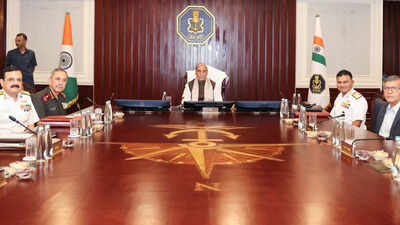
NEW DELHI: Confirming a big milestone in the induction of combat vessels, defence minister Rajnath Singh on Tuesday said that there is a planned addition of 18 warships this year, calling it the “largest single-year force accretion in the history of the Indian Navy”.The new inductions will include frontline combat ships as well as specialised support vessels, all built at Indian shipyards. Among them will be modern stealth frigates designed for multiple roles, including surface warfare, air defence and anti-submarine operations. The Navy plans to become a fully self-reliant (Aatmanirbhar) force with a target of a 200-plus-ship navy by 2035.
Rajnath called for a significant upgrade of India’s maritime surveillance architecture, recognising the importance of existing systems.
“Indian Navy’s warship production ecosystem is now meeting global benchmarks. The warships commissioned recently contain over 75% indigenous content. In the times ahead, we must not only meet our own requirements but also export our warships to friendly foreign nations,” Rajnath said while addressing Navy’s biannual Commanders’ Conference 2026 here.The minister said the presence of Indian warships in the South China Sea, Mediterranean and Atlantic Ocean has demonstrated the Indian Navy’s blue-water force capability. “India stands firm as the first responder, preferred security partner and as a symbol of trust and reliability in the Indian Ocean Region and the entire world is witnessing the growth of both our strategic position and our strategic responsibility in the region. The role of the Indian Navy is crucial in ensuring the strategic depth and regional power projection,” he said.“Today, issues such as congestion, deception, and gray-zone activities have made our maritime domain far more complex than ever before. Hence, we must elevate our monitoring and response mechanisms to a new level,” the minister said.
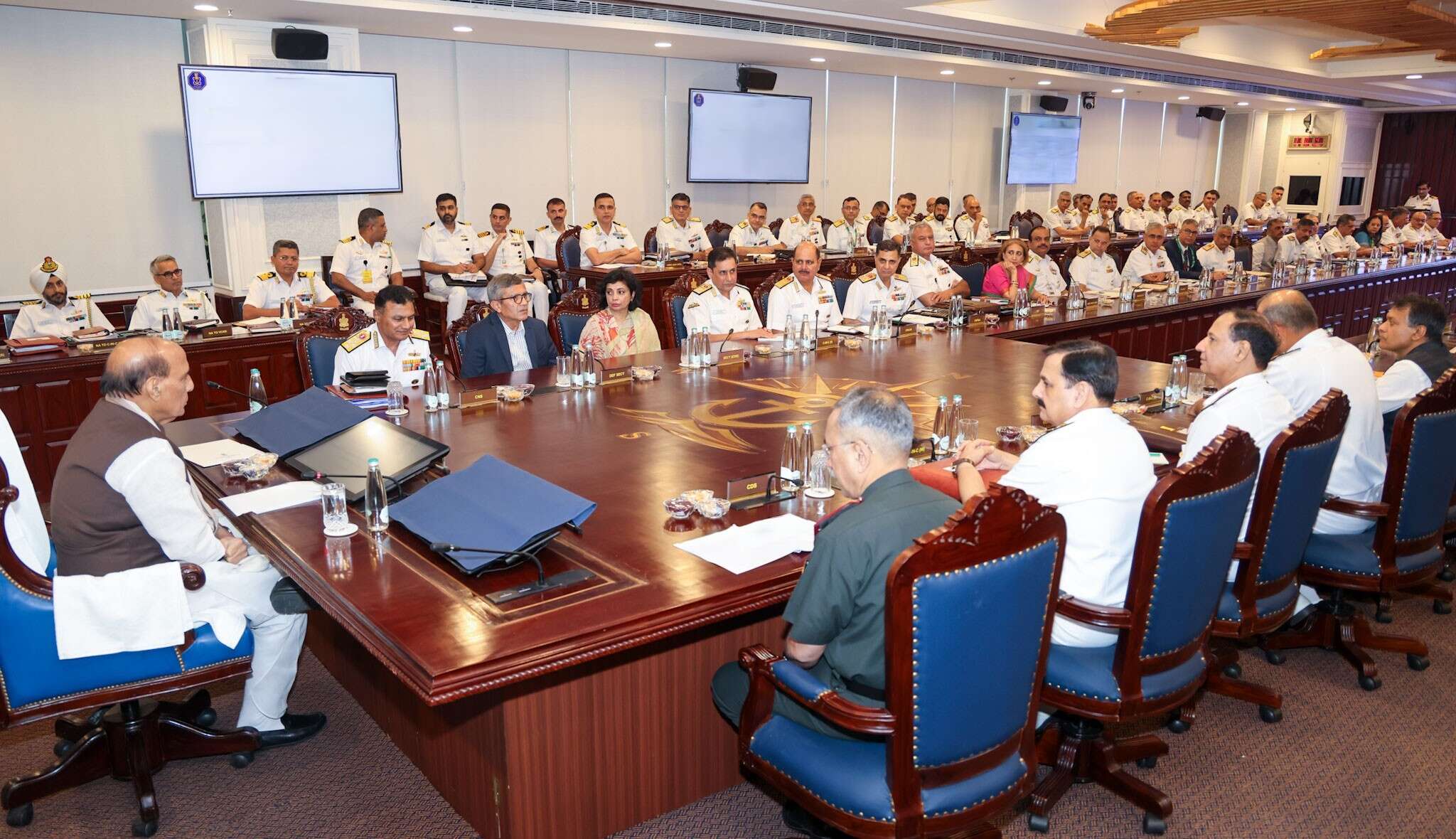
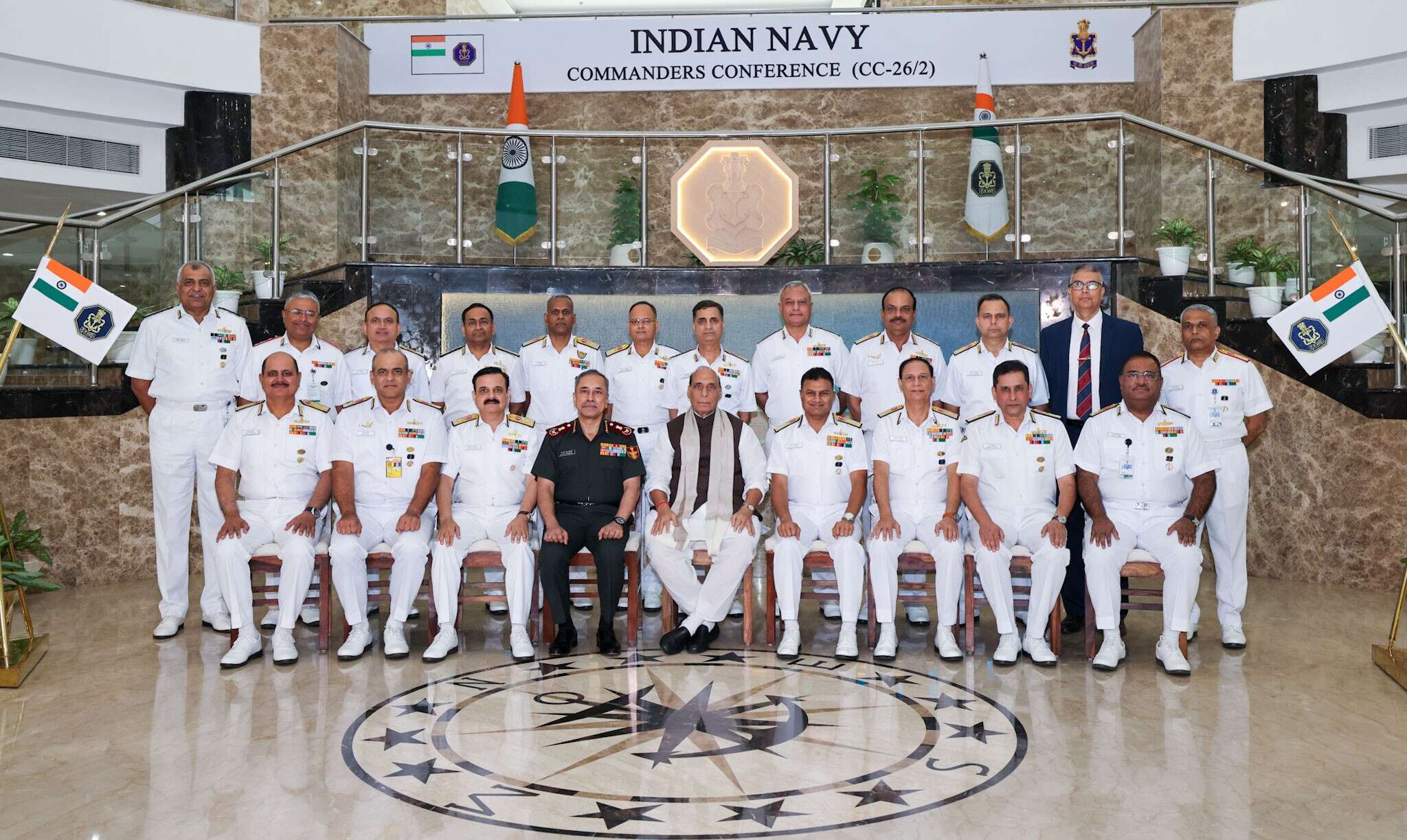
The three-day apex-level conference is being held from Sept 29 to Oct 01, 2026.
Rajnath called for a significant upgrade of India’s maritime surveillance architecture, recognising the importance of existing systems. He added that the growing volume and complexity of maritime traffic require enhanced analytical capabilities.Highlighting government’s commitment to the modernisation of the Navy under the leadership of PM Modi, Rajnath said, “Indian Navy serves as a strategic anchor in the vision of ‘Viksit Bharat 2047’. Beyond merely guarding maritime boundaries, our Navy strengthens economic protection, regional stability, and power projection.” He urged the Indian Navy to maintain its unrelenting momentum while transforming itself into a future-ready, combat-ready, and globally respected force.Lauding the Navy’s role during the West Asia crisis, the minister highlighted that ensuring the safe transit of Indian-flagged merchant vessels—particularly LPG tankers—through the Strait of Hormuz under ‘Operation Urja Suraksha’ is an outstanding achievement. India imports approx 85-90% of its crude oil and around 50% of its natural gas through maritime routes; therefore, the security of sea lanes is directly connected with the country’s economy, energy supplies and defence preparedness, he said.