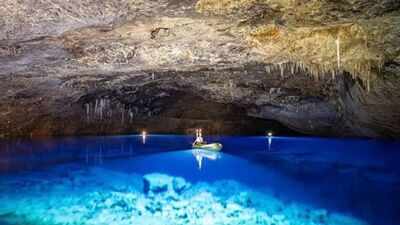
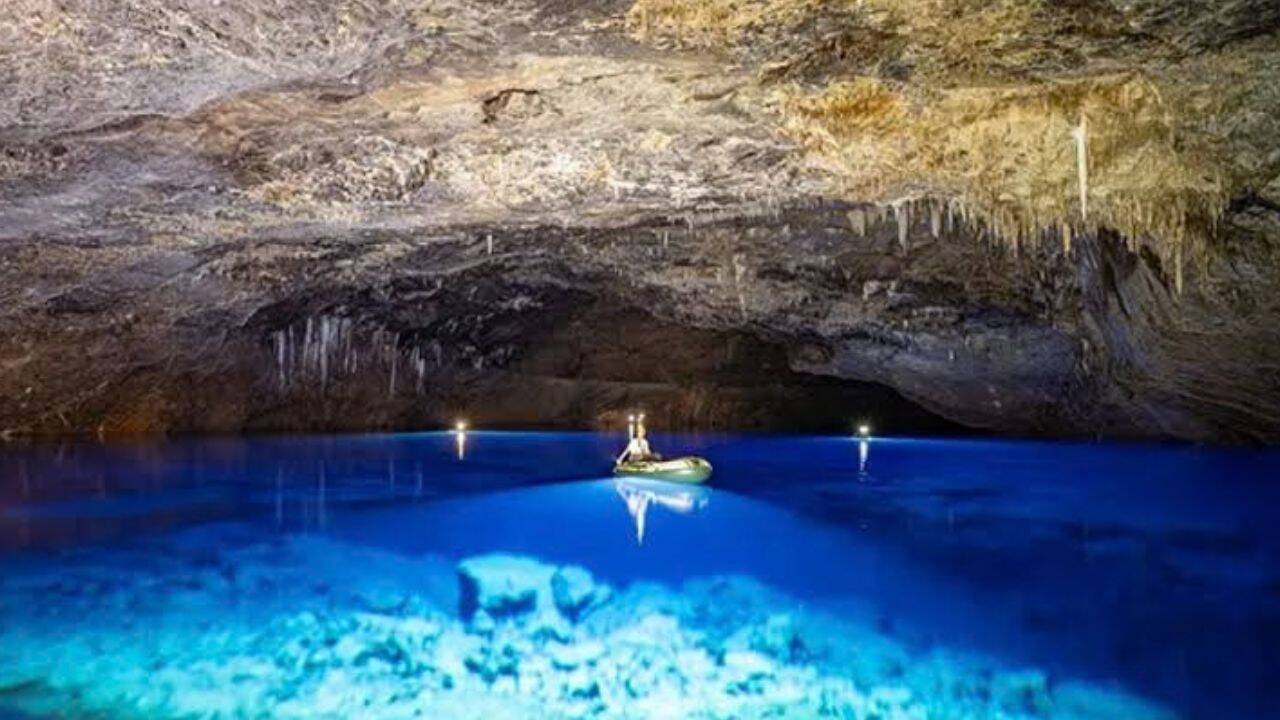
The world’s largest underground lake is hidden beneath a desert: Where is this extraordinary natural wonder located?Do you dream of experiencing unique, naturally formed wonders of the world? If yes, underground lakes are geographical wonders that are hard to imagine and remain largely unexplored. Most underground lakes are located inside a cave, karst formation or beneath a glacier.But the world’s largest underground lake is hidden beneath a desert, concealed from rookie explorers. The Dragon’s Breath Cave is the largest non-subglacial underground lake hidden deep below the Kalahari Desert in Namibia. It is a wonder to behold, and the challenging path to reach it is worth the experience.Where is it located?While the desert seems an unlikely location for such a vast underground lake, it is formed below the Karst formations in the remote and arid Otjozondjupa region of Namibia. This is about 46 kilometers northwest of the city of Grootfontein. Namibia is largely a waterless topography with vast spans of desert running across the country. But, the vast 264-meter-deep lake provides a refreshingly fresh space while serving stunning views.The DiscoveryThe lake was discovered in 1986 by the South African Speleological Association. During a trip to the region in 1986, South African explorer Roger Ellis found the cave. He returned a year later to guide a group of divers and cavers from the South African Speleological Association to further investigate the cave.A tunnel along the Kalahari Desert ends at a minor choke after slanting gently downward for over five meters. From there, there’s a nearly 7-meter vertical plunge that abruptly stops on a ledge, followed by a 12-meter drop and a 36.5-meter descent that opens to the vast, mind-blowing Dragon’s Breath. They discovered a lake at the bottom of the cave with a surface area of roughly 2 hectares (4.9 acres), or two football fields, after navigating its intricate network of drops, small ledges, and vertical pitches.
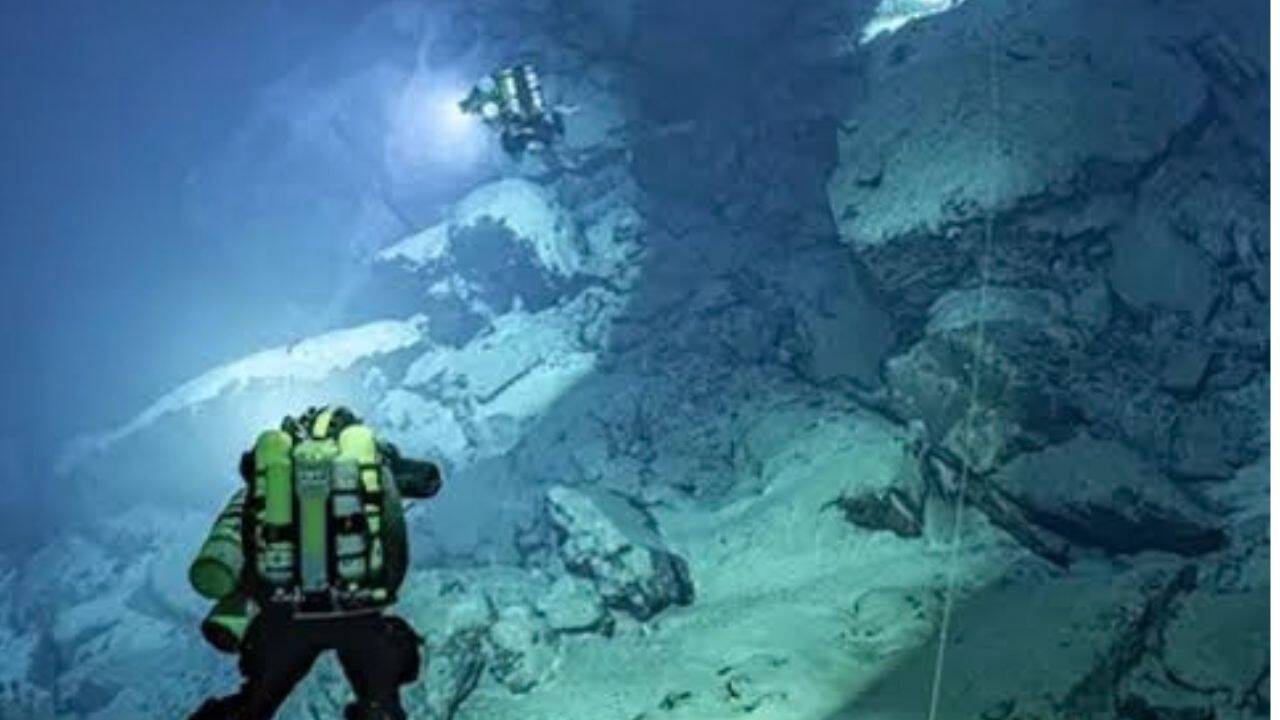
Why is it named so?Well, don’t think it has anything to do with inhabiting dragons secretly. But, interestingly, at the time of its discovery, the humid air rising from the cave’s opening felt like the warm breath of a dragon. The name suits the mystery of the cave and gives it a curious perception.However, under some circumstances, this air condenses into a fine mist that evokes visions of a dragon’s lair hidden far below the surface. In actuality, the enormous water-filled vacuum that exists today was created by karst dissolution, a geological process in which groundwater gradually destroyed the area’s soluble bedrock over millions of years.The rare wildlifeThe cave’s dark and still waters combined with stable temperatures have led to the habitation of the world’s rarest aquatic species. The blind Golden Cave Catfish (Clarias cavernicola) is among the rarest and most isolated fishes in the world, with an estimated population of just 200. The cave is also home to sightless white prawns (Trogloleleupia dracospiritus) and a tiny endemic amphipod whose name translates to “spirit of the dragon.”Due to the isolating conditions which allow them no respite of sunlight and unusually stable waters, these creatures have had to adopt a life in complete darkness. If you are wondering what they survive on, interestingly, they feed on bat droppings. These bat droppings are typically known as guano and they fall from the cave’s upper reaches. This fascinating mix of species and their way of survival provides a glimpse into the exceptional capabilities that nature holds.Permits requiredThe beauty of the lake is not an easy experience; it comes with its own challenges. Firstly, the cave is located on private property and is not open to casual tourism. It requires special authorisation from the landowners or accredited caving expedition teams. Further, it is difficult to navigate the cave’s steep shaft which requires heavy diving equipment to reach the lake’s surface. Even after reaching it, the challenge continues with the inky-black waters and extreme depths.Essential Travel InformationBest Time- Dry season, months of May to October are easier for overland travel to the region, though cave conditions are stable year-round.Nearest Airport- Hosea Kutako International Airport (WDH)Reaching there- As mentioned, access is highly restricted and requires special permits. The cave is generally reached by 4×4 from Grootfontein or Tsumeb in the Otjozondjupa Region, followed by a challenging overland journey to the cave site.If you are someone with an adventure steak who would want to have a chance to have a sneak peek into the interiors of the world, a trip to Dragon’s Breath Cave will be worth it. Just be ready with your permits and the diving equipment and you are good to go!