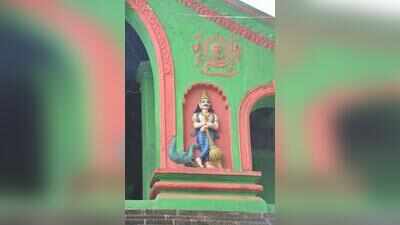
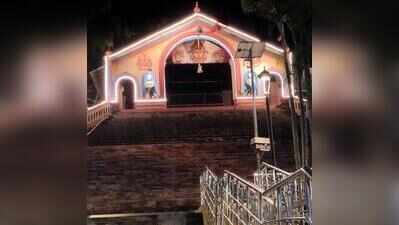
Nestled in the hills of Koraput, Nandapur today appears like any other quiet settlement. But its weathered stone ruins narrate a different story — of royal dynasties, shifting capitals and a medieval kingdom that once held sway over a sizeable part of the region.At the heart of this historical landscape stands Batrisa Sinhasan, the famed 32-step throne and one of the most evocative remnants of Nandapur’s royal past.The Koraput District Gazetteer traces Nandapur’s emergence as the capital of a kingdom established by a branch of the Sailavamsi (Silavamsi) dynasty, which migrated towards Trikalinga region after the decline of its earlier power. Nandapur became the seat of the new kingdom, with the name itself believed to have been derived from the dynasty’s ancestral capital, Nandivardhana.The Gazetteer identifies Ganga Raju as the earliest known ruler of the family, followed by Viswanadha Raju alias Bhairava Raju and Pratapa Ganga Raju. Pratapa Ganga Raju occupies a particularly important place in the region’s medieval history, with inscriptions dating to 1435 and 1437 AD.The Batrisa Sinhasan acquired its place in Nandapur’s history during this era of royal power.The monument comprises a throne approached by 32 steps and is traditionally associated with the legendary Batrisa Sinhasan, or Singhasan Battisi, of King Vikramaditya. The Koraput District Gazetteer notes that the rulers of Nandapur appear to have sought to emulate the prestige associated with Vikramaditya’s celebrated throne.
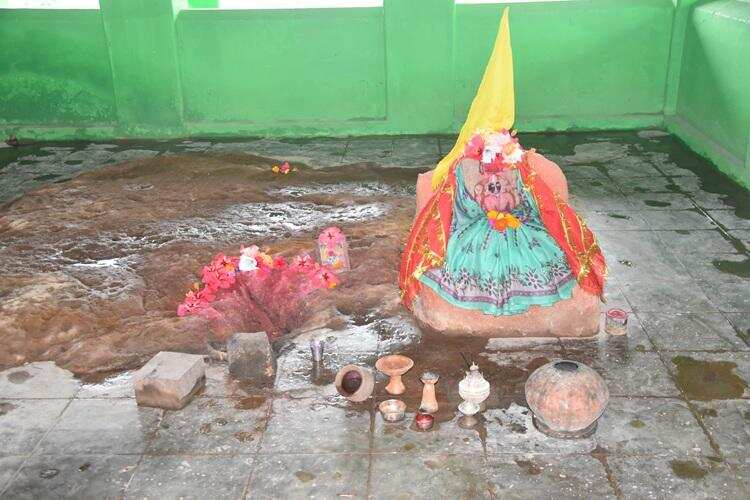
The idol of a goddess being worshipped
The Vikramaditya connection, however, is partly rooted in tradition and legend. The popular Singhasan Battisi tradition centres on a throne associated with 32 figures and stories highlighting the virtues and qualities expected of an ideal king.Local tradition has also given the Nandapur throne a distinct royal association. Old-timers say the throne was used by Nandapur rulers for administrative purposes and to deliver judgments.According to Rabi Satpathy, retired senior lecturer in Odia at Nandapur College, “The 32 steps have sacred Salagram stones on both sides and on special occasions, the king used to sit on the throne to deliver judgment, though there is no written evidence of it.”For researchers, however, the importance of Batrisa Sinhasan extends beyond the legends surrounding Vikramaditya. It is closely linked to the political history of Nandapur, which first served as the seat of the Silavamsi rulers and later became associated with the Suryavamsi rulers of the Jeypore kingdom.According to the district’s official historical account, the Suryavamsi line succeeded the Silavamsis, while Nandapur later came under Muslim occupation in 1571. Eventually, Vikram Dev-I, the seventh ruler of the dynasty, shifted the capital from Nandapur to Jeypore in the middle of the 17th century. The shift marked a turning point. Jeypore emerged as the principal seat of the kingdom, while Nandapur gradually lost its political prominence. “The Batrisa Sinhasan is therefore more than a stone structure. It represents a period when royal authority, mythology and political legitimacy were closely intertwined. Its association with the idealised throne of Vikramaditya also reflects aspirations of regional rulers to connect themselves with a wider Indian tradition of exemplary kingship,” said Jeypore based tribal researcher Paresh Rath.The monument has been recognised as a protected heritage site under the state archaeology wing, while the tourism department has undertaken some facelift work to improve the site for visitors.Today, only fragments of Nandapur’s former royal centre remain. Yet, the 32 steps of the Batrisa Sinhasan continue to evoke memory of a kingdom that preceded modern Jeypore and played an important role in the history of southern Odisha.“From Silavamsi rulers who made Nandapur their capital to the Suryavamsi dynasty that eventually moved the seat of power to Jeypore, Batrisa Sinhasan remains a silent witness to the region’s changing political landscape. The tourism department should develop it further,” said Ajit Patra, district convener of Koraput’s INTACH chapter.History and folklore have become intertwined around the weathered throne, giving the Batrisa Sinhasan a place not only in Nandapur’s past but also in the living memory of Koraput.