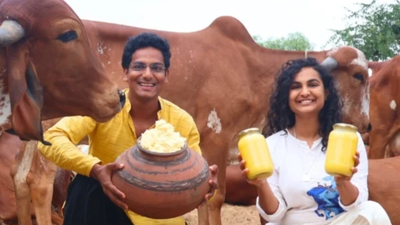
For Jaipur couple Vibhor Jain and Ishita Jain, farming did not begin with a large piece of land, an established agricultural business or years of experience in the field. It started with few rented Gir cows and a decision to leave the conventional corporate path. Today, their Kinaya Organic Farms and Life, located around 35 km from Jaipur, has 100 Gir cows and generates an annual revenue run-rate of up to Rs 2.4 crore, as reported by Navbharat Times. The farm produces milk, ghee and other value-added products while also combining dairy, farming, trees, renewable energy and water conservation into one system.What makes the model interesting is how different activities on the farm are connected. Cow dung does not simply become waste. It is used to produce biogas, while the material left after the biogas process is used as fertiliser. The farm also has a 45-kilowatt solar setup, rainwater harvesting and electric vehicles.
It started with a few Gir cows
Vibhor had completed a BTech in computer science from Bengaluru.
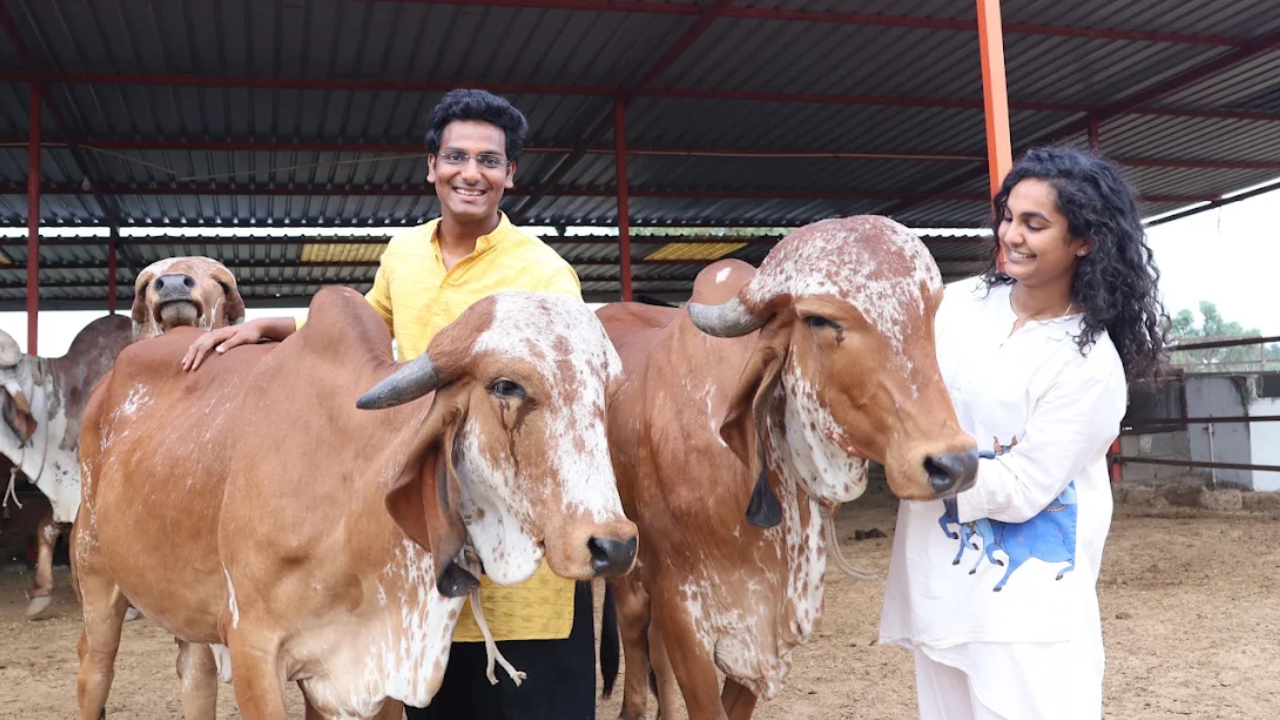
Vibhor, who has a computer science engineering background, chose not to follow the usual corporate career route. According to Kinaya Farms’ official website, he started the journey in 2018 with a few Gir cows on rented land despite having no background in agriculture or animal husbandry. Vibhor had completed a BTech in computer science from Bengaluru. His interest in Gir cows grew after his family brought two cows home. He later travelled to Kathiawar in Gujarat in 2017 and learned cattle-rearing practices from families that had been raising cows for generations. He also saw a gap between the quality of indigenous cattle and their access to urban markets.Vibhor initially had little knowledge of farming or selling, but the two cows at his home sparked his interest in cows, cow dung and traditional animal husbandry. He began learning on his own before starting the dairy. In 2018, he took land on lease near Jaipur and began with 20 Gir cows. The first three years were spent learning and developing the dairy operation before the couple moved towards a larger farming model.Ishita, who has an engineering degree in Information Technology and an MBA in HR, joined Vibhor in the venture after their marriage in 2022. She has played a key role in the overall development and functioning of the organisation.
From dairy farm to a connected farming system
The couple gradually moved beyond dairy farming. After buying their own land near Jaipur, they developed a model that combines dairy with agroforestry and organic cultivation. More than 2,000 trees have been planted on the farm. These include more than 500 mango trees representing around 40 varieties, along with more than 25 other types of fruit trees and more than 300 white sandalwood trees.
The cow dung becomes part of the energy cycle
One of the clearest examples is cow dung. Instead of treating it as waste, the farm uses it to produce biogas. The slurry left after the process is used to make fertiliser for the fields. The farm also produces cooking gas on site through its biogas system. As per Kinaya Farms’ official website, the farm has installed a 15-cubic-metre biodigester to make it self-reliant for cooking gas. It also highlights regenerative organic farming as one of its core practices, with a focus on improving the soil.Water is another part of the system. As reported by the Better India, the farm has a large rainwater-harvesting reservoir with a stated capacity of 50 lakh litres, while drip irrigation is used for fruits and vegetables to reduce water wastage. Energy is also generated on the farm through a 45-kilowatt solar setup, while electric vehicles are used as part of the farm’s operations. The supplied video transcript describes the combination of solar power, rainwater harvesting and electric vehicles as making the farm self-sustainable across energy and water.
100 Gir cows and multiple products
The farm produces around 250-300 litres of milk a day.
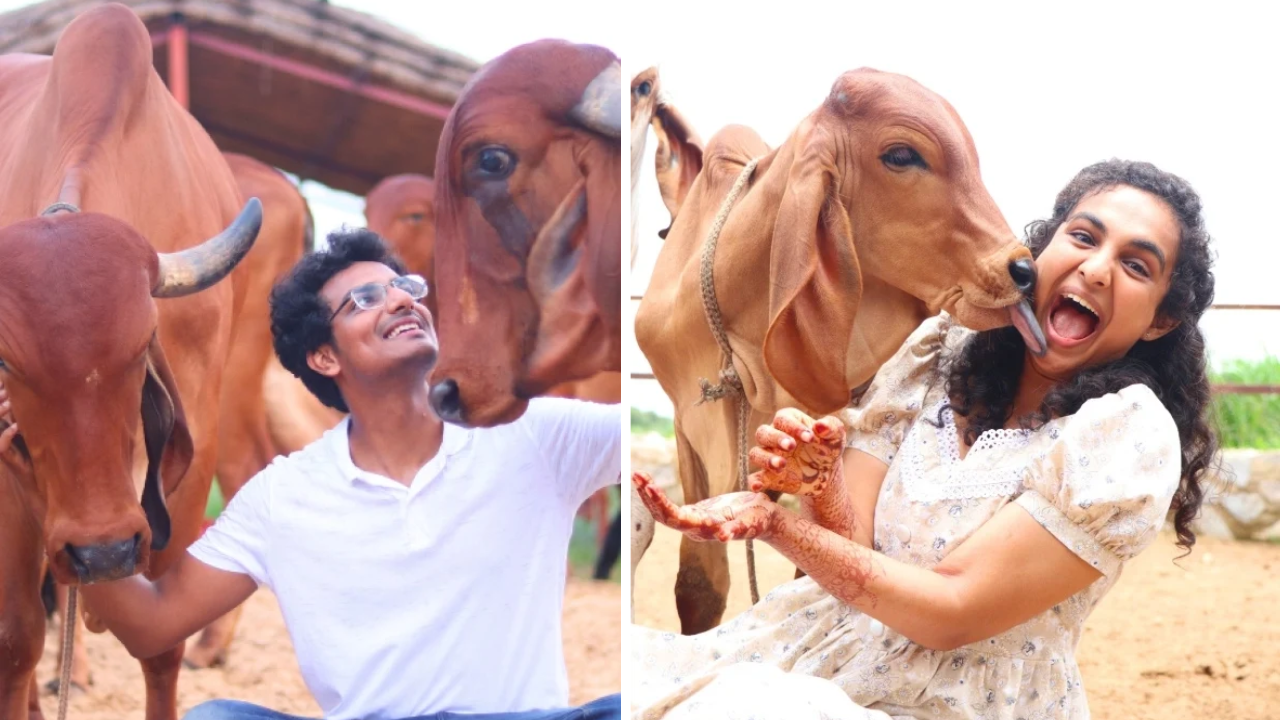
The dairy operation has now grown to 100 Gir cows. The farm produces around 250-300 litres of milk a day, with part of the milk sold as liquid milk and the rest used to make traditional bilona ghee. Around nine litres of ghee are produced daily. The business has also expanded beyond milk and ghee. The farm produces wood-pressed oils, organic vegetables and freeze-dried products, including colostrum powder. The business makes more than 25 products, including ghee, from the milk of its 100 cows.According to Navbharat Times, the farm’s monthly revenue is currently around Rs 18 lakh to Rs 20 lakh, excluding cattle sales. That puts the annual revenue run-rate between Rs 2.16 crore and Rs 2.4 crore.The idea behind Kinaya is not simply to add more activities to a farm. The different activities are linked. Cows provide milk and dung. Dung goes into the biogas system and the resulting material can return to the soil as fertiliser. Trees provide fruit and form part of the agroforestry system. Rainwater is collected and stored. Solar panels generate electricity, while crops and fodder are grown within the same farming ecosystem.This is a system where the waste from one activity becomes an input for another. Cow dung becomes biogas, the remaining slurry is used as fertiliser, and the farm produces its own cooking gas. The model also brings together solar power, rainwater harvesting and electric vehicles. For Vibhor and Ishita, the farm has therefore grown from a dairy operation into a larger business built around agriculture, livestock, food products and resource management. What began with a small interest sparked by two cows has now become a 100-cow farm with more than 2,000 trees, renewable energy, rainwater harvesting and a growing range of products.