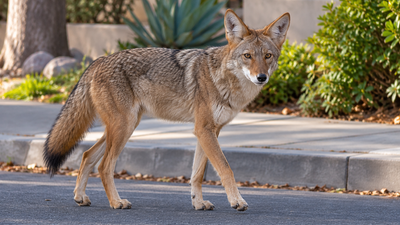
A 16-month-old child was bitten by a coyote in Los Angeles’ Atwater Village neighbourhood, prompting renewed scrutiny of months of complaints about the animal’s presence and behaviour. The incident occurred on October 16 on the 3300 block of Glenhurst Avenue, according to the California Department of Fish and Wildlife (CDFW). Wildlife officers later located a coyote in the same area and euthanised it. DNA testing subsequently confirmed that the animal was responsible for the attack, officials said on October 20. The child was taken to a hospital, treated and released. The incident has raised questions among residents about whether earlier action could have prevented the encounter, with neighbours saying they had repeatedly alerted authorities to concerns about the coyote.
Months of coyote complaints preceded toddler’s attack in LA
Residents told the Los Angeles Times that the coyote had been a concern in the neighbourhood since at least January, when they alleged that a neighbour began feeding the animal. They said it subsequently began approaching homes, entering yards and appearing around residents and their pets.Several neighbours described encounters that they considered threatening. One resident said the coyote chased his cat up a tree, while others said they had stopped allowing their pets outdoors because they feared the animal might attack them.Residents said they had contacted Los Angeles Animal Services and state wildlife officials about the coyote from around June. Richard Dean, one of the residents who raised concerns, shared an email dated June 19 in which he warned city officials that someone could be seriously hurt if the situation continued.Dan Bree, another resident, said neighbours had been trying to get authorities to address the issue for months. The toddler’s injury prompted renewed criticism from residents who questioned why the animal had remained in the area despite repeated reports.
DNA testing confirms coyote was responsible for attack
The CDFW confirmed on October 20 that DNA samples collected from the child and the euthanised coyote matched, establishing that the animal was responsible for the attack. Wildlife officers had located the coyote near the scene on the evening of October 16 and euthanised it.The confirmation resolved the question of whether the animal captured by officials was the one involved in the incident. The child was treated at a local hospital and subsequently released, according to the department.However, the DNA results did not establish whether the euthanised coyote was the same animal residents had nicknamed “Wiley”, which had reportedly been seen around Atwater Village for months. CBS Los Angeles reported that the identification remained unclear.
Allegations of feeding coyote remain under scrutiny
Some residents alleged that a neighbour had been feeding the coyote, potentially making it more accustomed to human presence. They said they had asked the individual to stop, but the allegations have not been established as a legal finding.Joe Marconi, who lives across the street from the person identified in the complaints, told the Los Angeles Times that he had raised concerns after seeing the coyote near his young daughter and chasing his cat. Other residents also described encounters they considered worrying.Rebecca Dmytryk, chief executive of Humane Wildlife Control, said she had filed a complaint with the state on July 28. Her complaint described a coyote reportedly spending time in a resident’s backyard and following people, behaviour she associated with an animal conditioned to expect food from humans.California prohibits feeding non-domesticated mammalian predators, including coyotes. However, authorities said evidence of a violation had not been established during their earlier investigation. The state said it was investigating residents’ allegations of intentional feeding.
What authorities said about earlier complaints
Los Angeles Animal Services said it had responded to complaints and coordinated with state wildlife officials. According to the department, an animal control officer visited the property of the person identified in the complaints on May 20. The individual denied feeding the coyote, and the officer did not find evidence warranting a violation.The department said further complaints arrived in June and that officers contacted complainants, provided information about coyote behaviour and consulted with the state agency responsible for wildlife management.CDFW also acknowledged receiving tips about suspected illegal feeding. According to the Los Angeles Times, state officials said wildlife officers followed up on the reports but would not attempt to capture the coyote unless an incident such as an attack had occurred.The differing accounts have fuelled residents’ concerns about how wildlife agencies respond when coyotes repeatedly approach people. Although the reporting documents complaints made before the attack, it does not establish that earlier intervention would certainly have prevented the incident.
Why coyotes can become accustomed to people
Coyotes are adaptable wild animals that can survive in urban environments, where food, water and shelter may be readily available. Wildlife specialists warn that feeding them, intentionally or unintentionally, can encourage them to associate people with food.This process, known as food conditioning, can make coyotes more likely to approach people in search of food. Habituation, in which animals become less responsive to people after repeated exposure, is a related but distinct process.Dmytryk said she believed the coyote was unusually comfortable around people. However, the publicly reported DNA findings establish the animal’s involvement in the bite, not the precise cause of its behaviour.The incident has renewed debate over how urban communities can coexist with wildlife while reducing the risk of encounters involving children and pets.
Coyote attacks on people are rare but documented
Attacks on humans are uncommon, but California has recorded incidents involving children. In 1981, three-year-old Kelly Keen was killed by a coyote in Glendale, in what is widely cited as the state’s first confirmed fatal coyote attack.Other reported incidents include a coyote biting a six-year-old child at a baseball field in 2025 and an attack involving a child in Woodland Hills in 2022, according to the Los Angeles Times. These cases highlight the potential risks when coyotes come into close contact with people, particularly young children.Wildlife authorities advise residents not to approach or feed coyotes, to secure rubbish and other potential food sources, and to keep children and pets close when an animal is nearby.