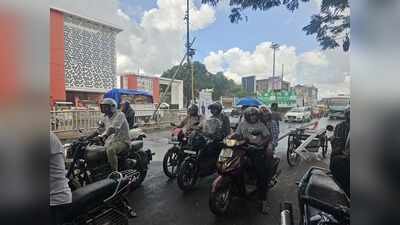
Bhubaneswar: State workers spend considerably less on daily commuting than their counterparts across India, with men spending an average of Rs 589 a month and women Rs 409 on travel to and from fixed workplaces, according to the first National Household Travel Survey released by National Statistics Office, released earlier this month.The national average was Rs 785 a month, the survey conducted from July 2025 to June 2026, found.Travel times in the state were also relatively short.Workers took an average of 23 minutes to reach fixed workplaces in rural Odisha and 22 minutes in urban areas. Students took an average of 22 minutes to reach their educational institutions.The survey covered 4.92 lakh households and more than 20.34 lakh people across 14,274 villages and 10,377 urban blocks. It counted journeys involving travel of more than 1 km.The difference in commuting expenditure between men and women in the state was pronounced. Women’s average monthly spending was about 31% lower than men’s. The figures, however, do not establish whether this difference stems from shorter journeys, the modes of transport or differences in work patterns.Experts said Odisha’s relatively low commuting expenditure could partly reflect where people live and work. The state’s workforce is not concentrated in urban centres alone, with a significant share of employment located in rural areas.According to the Sixth State Finance Commission report, around 80% of Odisha’s manufacturing jobs were in rural areas in 2023-24, against 53% nationally. Such a distribution could reduce the need for some workers to travel long distances to urban centres for work, although the employment figures alone do not establish the reason for the state’s lower commuting costs, experts said.Urban planner Piyush Rout said shorter travel distances and the use of bicycles, shared autorickshaws, and public transport helped keep commuting expenses down. In urban areas like Bhubaneswar, he added, many workers also lived close to their workplaces.“Unlike in metro cities, where people can spend up to three hours commuting every day, distances in Odisha’s cities are relatively short. Bhubaneswar’s grid-based layout also makes it easier to travel between places,” he said.Rout added beyond the capital, many of Odisha’s smaller urban settlements have developed along one or two main roads, often extending from villages. Their relatively compact spread, he said, helped keep daily journeys shorter and travel costs lower.The gap between rural and urban workers’ travel times in the state was, however, marginal, with those in rural areas taking just a minute longer to reach their workplaces. Nationally, 83.4% of workers reached their fixed workplaces in less than 30 minutes.Two-wheelers were the most widely used mode of transport for workplace journeys across India, accounting for 42.6% of workers, followed by walking at 28.3%. Buses accounted for 6.7% and cars 3%. Walking was also the most common mode among students travelling more than 1 km to educational institutions nationally, followed by buses and bicycles.