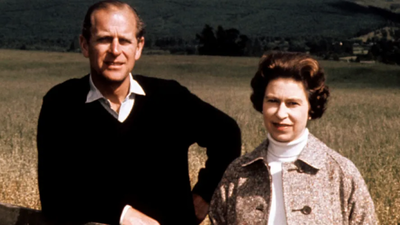
Sandringham is best known as the Norfolk country estate closely associated with the British royal family, but its land has also been managed with wildlife and long-term conservation in mind. As reported by the Royal Households of the United Kingdom, more than 5,000 trees are planted there each year, alongside several miles of hedges, while 10 wetland areas have been created to provide habitats for wildlife. These efforts formed part of a wider approach to maintaining the estate for future generations, a principle that Prince Philip took a personal interest in during his lifetime. Although responsibility for running Sandringham has since passed to King Charles III, the conservation practices established under his father remain part of its management.
How Prince Philip introduced wildlife conservation measures at Sandringham
Prince Philip assumed responsibility for managing Sandringham at the beginning of Queen Elizabeth II’s reign in 1952. The estate was privately owned by the monarch rather than held as part of the Crown Estate, and its management involved balancing agricultural activity with the protection of its natural environment.Philip took an active interest in how the land was maintained, with conservation forming part of his wider approach to the royal family’s private estates. At Sandringham, this included allocating resources to improve habitats for wildlife, particularly birds that nest on the ground. The estate also established more than 100 miles of field margins, strips of land around cultivated fields that can provide shelter, food and nesting opportunities for different species.Reportedly, the annual planting of more than 5,000 trees, together with several miles of new hedges, helped maintain and extend the estate’s network of wooded areas and vegetation.
Sandringham’s 10 wetlands add new habitats for wildlife
The creation of 10 wetland areas added another element to Sandringham’s conservation programme. Wetlands provide conditions that can support a range of plants, insects, birds and other animals, depending on their size, water levels and surrounding vegetation. Their presence also adds habitat variety to a landscape that includes farmland, woodland and managed gardens.The estate’s approach does not rely on planting trees alone. Farming practices are adapted to encourage different forms of wildlife, allowing agricultural land to serve purposes beyond food production. Field margins, hedgerows and wetland areas can each contribute to this work, offering different conditions for species to feed, shelter and reproduce.
Waste recycling and long-term land management at Sandringham
Environmental management at Sandringham also extends to the handling of everyday waste. Food waste, glass, metals, plastic, cardboard and paper are recycled as part of the estate’s operations. These measures sit alongside its woodland, hedgerow and wetland projects, covering both the management of the land and the resources used to run the property.The estate remains a working landscape, meaning conservation has to take place alongside farming and other activities. Practices intended to encourage wildlife are therefore incorporated into the management of the land rather than treated as separate from its agricultural use.The annual tree planting figure is particularly significant in this context because it represents recurring work rather than a single restoration project.
King Charles III took over Sandringham’s management in 2017
King Charles III assumed responsibility for running Sandringham in 2017, continuing the management approach developed during Prince Philip’s involvement. The transition marked a change in who oversaw the estate, while conservation remained among the principles guiding its operations.Sandringham is one of several royal properties where Philip took a close interest in environmental management. His involvement also extended to Balmoral in Scotland and Windsor’s Great and Home Parks, where his projects included woodland regeneration, tree planting and changes to the management of gardens and buildings.A small area was enclosed for an initial regeneration trial in the early 1970s, followed by a larger section in 1979. The protected area expanded again in 1992, eventually covering about 300 hectares. Further areas were enclosed in later years, including in 2016.His work across the estates varied according to the landscape, from protecting woodland to improving habitats and developing gardens.