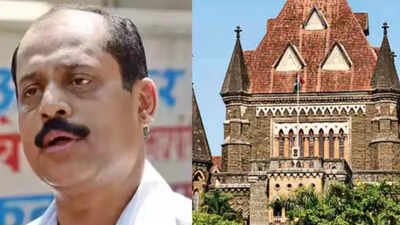
MUMBAI: The Bombay high court on Thursday cancelled the bail granted by a special NIA trial court to Sachin Waze in the Antilia bomb scare and Mansukh Hiran murder case.A special bench of Justices Girish Kulkarni and Neela Gokhale, while pronouncing the judgment, said, “The order passed by special trial court on Sept 29 order in bail application (filed by Waze) is quashed and set aside and the appeal filed by NIA stands allowed.” The reasoned order will follow.On October 16, the HC had concluded hearing an appeal filed by the National Investigation Agency (NIA) against the bail granted to the dismissed police officer by a special trial court and reserved the matter for orders. The HC bench had earlier stayed the bail order.On September 29, a special NIA trial court judge in Mumbai had directed Waze’s release on bail, holding that no offence of a ‘terrorist act’ was prima facie evident under the anti-terror law, the Unlawful Activities (Prevention) Act (UAPA).The NIA, however, argued in its appeal under the special law that the trial court had not considered the contents of the chargesheet in their proper perspective.Waze is the main accused in the February 25, 2021, Antilia bomb scare and Mansukh Hiran murder case. The car contained gelatin sticks and a threat note, which took the case into the political arena, Additional Solicitor General Anil Singh, appearing for the NIA, said.He stressed that threatening the country’s richest family was intended to send a larger message through an act likely to threaten the security or economic security of the country or strike terror in the community.Waze was arrested on March 13, 2021, and has been behind bars since. His counsel, VM Thorat, cited his prolonged incarceration as one of the grounds for bail, besides the absence of detonators, which, he argued, meant the incident did not constitute a terror act and therefore did not attract the stringent UAPA provisions.He also argued that the trial could not begin until all forensic reports were available.For the NIA, Singh, however, argued that charges had been framed and the trial could begin soon. He also said, “It is not a private matter. The explosive has been proved by forensic report.”Singh argued that the UAPA was worded in such a way that the absence of a detonator did not take away from the act being classified as a terror act.