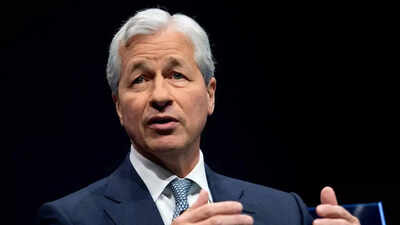
The cryptocurrency industry’s efforts to secure a comprehensive US regulatory framework could face a major setback after Democrats won control of both chambers of Congress in the midterm elections, with analysts warning that the long-debated CLARITY Act may struggle to advance. The development comes months after JPMorgan Chase CEO Jamie Dimon vowed to fight provisions that could allow yield-paying stablecoins, arguing that such products pose risks similar to those seen in shadow banking. According to a CoinDesk report, several industry observers believe the Democratic victory has significantly reduced the chances of the CLARITY Act passing in its current form. Mati Greenspan, founder of Quantum Economics, described the Democratic sweep as potentially “the final nail in the CLARITY Act’s coffin,” noting that the legislation failed to clear a procedural Senate vote even when Republicans controlled both chambers. He said the crypto sector may now have to restart negotiations under a new political landscape.
Jamie Dimon’s warning on CLARITY Act
In a Fox Business interview reported by The Globe and Mail in July, Dimon sharpened his criticism of the Digital Asset Market Clarity (CLARITY) Act, saying he feared yield-paying stablecoins could cause a “shadow banking” crisis. “We’ll fight it. If we lose, we lose, and we’ll live,” he said. Dimon argues that such tokens are effectively unregulated deposit-like products. Without capital requirements, he says, they could destabilise markets in a way similar to shadow banking in the 2008 financial crisis. In May, Dimon criticised Coinbase CEO Brian Armstrong in a Fox Business interview, according to Bloomberg, using crude language to dismiss him. He said banks “will not accept” the current version of the bill.
The bank-crypto fight
The CLARITY Act, intended to set a federal framework for digital assets, passed the House last year. It stalled in the Senate over whether crypto firms can pay yield on stablecoins. A compromise reached in May would ban passive rewards earned simply by holding tokens, but allow activity-based rewards tied to transactions or platform use.Coinbase and other exchanges back yield-bearing stablecoins, arguing they expand consumer choice and innovation. Banks, led by Dimon and the American Bankers Association, want them banned outright to protect deposits and financial stability. A ban would hit Circle, issuer of the USDC stablecoin, which earns interest on the cash and Treasuries backing its tokens, and Coinbase, which shares in Circle’s reserve income and earns fees from stablecoin trading.
Democratic sweep
CoinDesk reported that the crypto industry’s hopes for a regulatory framework took another blow when Democrats won both chambers. “For crypto, the Democratic sweep may well be the final nail in the Clarity Act’s coffin,” said Mati Greenspan, founder of Quantum Economics. He noted the bill couldn’t even clear a procedural vote in September, when Republicans controlled both chambers, and that the industry may now have to start from scratch in a divided Washington.Stefan Muehlbauer, head of US government affairs at CertiK, said the bill is likely dead in its current form. Anton Golub said crypto political action groups spent about $170.5 million on the elections, with at least $125.5 million going to Republicans. Despite Republican control of Congress and a crypto-friendly President Donald Trump, the bill failed to advance in September. Golub said Trump made regulators friendlier to the industry, but his family’s crypto involvement also gave Democrats a reason to oppose crypto-friendly legislation.
Greater scrutiny expected for crypto sector
Several industry participants expect Democrats to take a more aggressive approach toward crypto oversight. CoinDesk reported that lawmakers could focus on issues including anti-money laundering controls, cybersecurity practices and consumer protection measures.Muehlbauer said congressional hearings and investigations may examine both cryptocurrency companies and President Trump’s crypto-related business interests. Meanwhile, Shady El Damaty, co-founder of Human.tech, predicted increased scrutiny of tokenised stock offerings and broader crypto expansion efforts by trading platforms.Not everyone believes the legislation is beyond saving. Brent Fulfer, co-founder of venture capital firm TBV, noted that more than 70 House Democrats previously supported the CLARITY Act and argued that a revised bill with stronger safeguards and bipartisan backing could still gain traction.
Crypto products expected to keep expanding
While the regulatory outlook has become more uncertain, some industry executives believe innovation in digital asset products will continue. Golub said products such as perpetual futures are likely to grow beyond cryptocurrencies and expand into equities and other traditional financial markets.Jason Fernandes, founder of AdLunam, said the crypto industry should engage constructively with Democratic lawmakers rather than oppose stricter oversight outright. According to Fernandes, carefully targeted regulation and enforcement against bad actors could ultimately strengthen the broader crypto ecosystem.