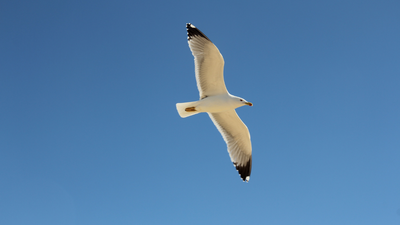
In the mobile game Flappy Bird, the bird’s problem is not flying forward, it is staying airborne. Every tap buys a little lift, every pause lets gravity pull it down. Real birds face a harder version of that challenge when they land. They must shed speed, remain controllable, and arrive safely on a branch, ledge, or patch of ground. New physics research, published inProceedings of the Royal Society A, suggests that the wing-flapping birds do during landing is not wasted energy, but a practical solution to a difficult aerodynamic problem.
The paradox of landing
Flying expenses a lot of energy, and flapping costs more energy than gliding. So it seems logical that a bird approaching a perch should stop flapping, glide in, and touch down as slowly as possible. Yet many birds flap vigorously during the final moments of landing, apparently spending energy at exactly the point where conservation might seem most sensible.Researchers at the University of Manchester Tom Rottier and Ben Parslew, along with Philippe Lavoie of University of Toronto, used mathematical modelling to test whether a bird could achieve a zero-speed landing without powered flapping. Their conclusion: it is theoretically possible, but it demands an approach that is far too fast and long for most real-world landings.For a pigeon-sized bird, the model found that stopping completely without flapping would require an initial speed of more than twice its typical cruising speed, about 60 metres of horizontal travel, and a climb of roughly 20 metres. In practical terms, the bird would need a long runway, a high approach, and considerable speed just to arrive at the perch with no forward motion.
Why slowing is hard
A bird’s wings generate lift and control through airflow. As the bird slows, the airflow over its wings weakens, and so does its ability to steer, adjust its angle, and recover from disturbances. This creates a fundamental trade-off: a bird wants a low landing speed, but flying too slowly makes precise manoeuvring difficult.Dr Ben Parslew describes landing as more than simply decelerating. A bird must reduce speed while retaining enough aerodynamic authority to complete the manoeuvre safely. The slower it flies, the less control it has; so it must find a way to brake without losing command of its flight.Flapping provides that missing control. By adding bursts of lift and thrust, a bird can adjust its trajectory late in the approach, avoid stalling for too long, and touch down at a manageable speed within a short distance. The energy cost is real, but so is the benefit: a safer, more compact landing.
The swoop before the perch
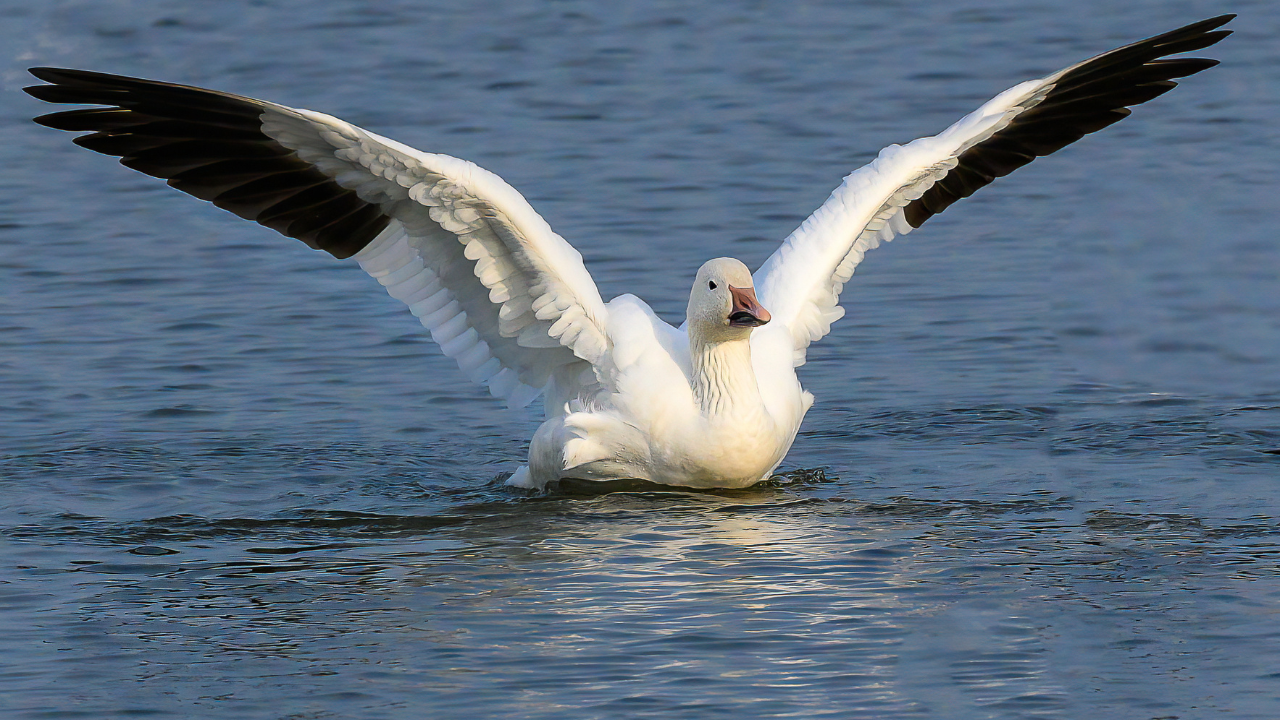
Bird landing has different physics.
The model also helps explain a familiar sight among birds of prey: the dramatic swoop below a target perch before rising upward to land. Harris’s hawks, for example, have been observed dipping below their landing spot and then gliding up toward it.Earlier work suggested that this manoeuvre minimises the distance travelled after the wings stall, when control is reduced. The new modelling adds an important nuance: the swoop appears to balance two competing goals, arriving at the perch at low speed and limiting the time spent in a stalled, less controllable state.Touchdown speed, the researchers found, has a greater influence on swooping behaviour than previously recognised. In other words, hawks may swoop not merely to shorten the risky post-stall phase, but to manage how fast they arrive at the perch.
Landing on the ground is different
Perching birds have one advantage: they can approach from below and rise to their destination, converting speed into height as they close in. A bird landing on the ground cannot do that. It cannot continue below the surface or climb through its landing point.The model showed that a bird making an unpowered ground landing cannot eliminate all of its forward speed before its feet touch down. Some energy inevitably remains, and the bird must absorb it using its wings, legs, or both.That has evolutionary consequences. Stronger legs, muscles, and bones can help a bird withstand the impact of landing, but extra mass makes flight less efficient. The researchers propose that this tension: light enough to fly well, robust enough to land safely, may have helped shape the evolution of birds.
From birds to aircraft
The findings could extend beyond ornithology. Understanding how animals manage low-speed control, stall avoidance, and energy absorption may inform the design of drones and other aerial vehicles that must land in confined spaces. Birds solve these problems continuously, without runways, sensors, or fuel calculations.The study’s central insight is counterintuitive but elegant: sometimes the fastest way to slow down is to arrive with enough speed and enough control to manage the final descent.For birds, flapping during landing is not a failure to glide efficiently. It is a calculated investment in safety, precision, and the ability to stop in the small, cluttered spaces where they actually live. In a sense, they are playing a far more sophisticated version of Flappy Bird, one where the goal is not merely to stay aloft, but to arrive exactly where intended, under control.