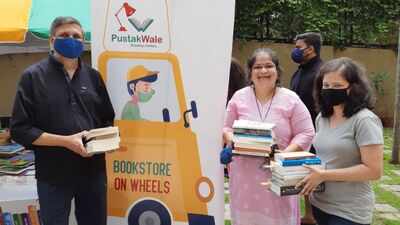
A bookstore does not always need four walls, shelves or a busy shopping street. Sometimes, all it takes is a few children’s books, an invitation to a housing society and two people willing to try an unusual idea. That is how Pune-based couple Rutica Walambe, 39, and Ashay Walambe, 41, began their entrepreneurial journey with Pustakwale in August 2020. What started as a small book exhibition in a Baner housing society has grown into a doorstep book venture that has sold more than one lakh books to 50,000 families and generated over Rs 1.5 crore in cumulative revenue.Their story is not just about selling books. It is about taking reading beyond traditional bookstores and making it easier for families to discover their next favourite read.
From one housing society to a citywide reading network
The idea was born during a casual conversation. When the couple visited their friend in August 2020, they carried a book for his five-year-old son. During the visit, they learnt that the family had no nearby bookstore and found it difficult to travel elsewhere to buy books. Instead of treating this as a problem, Rutica and Ashay saw an opportunity. They arranged their first exhibition in the same housing society in Baner. The response surprised them. Nearly half of their stock was sold on the very first day.That early response gave them the confidence to continue. Rather than opening a conventional bookstore or spending heavily on an online platform, they decided to take books directly to residential communities. Their approach also addressed something online shopping could not fully replace: the experience of picking up a book, flipping through its pages and deciding whether it was worth reading. Children could explore books with their parents, while older residents could browse without having to travel to a distant shop.The idea gradually expanded beyond housing societies. Schools, corporate offices and exhibitions became part of their business network. Today, Pustakwale reaches more than 1,000 housing communities, over 75 schools and upwards of 50 corporates in Pune. Since starting in August 2020, the venture has sold more than one lakh books to approximately 50,000 families, generating a cumulative revenue of over Rs 1.5 crore, according to a report by the Hindustan Times.
A business built around people, not expensive technology
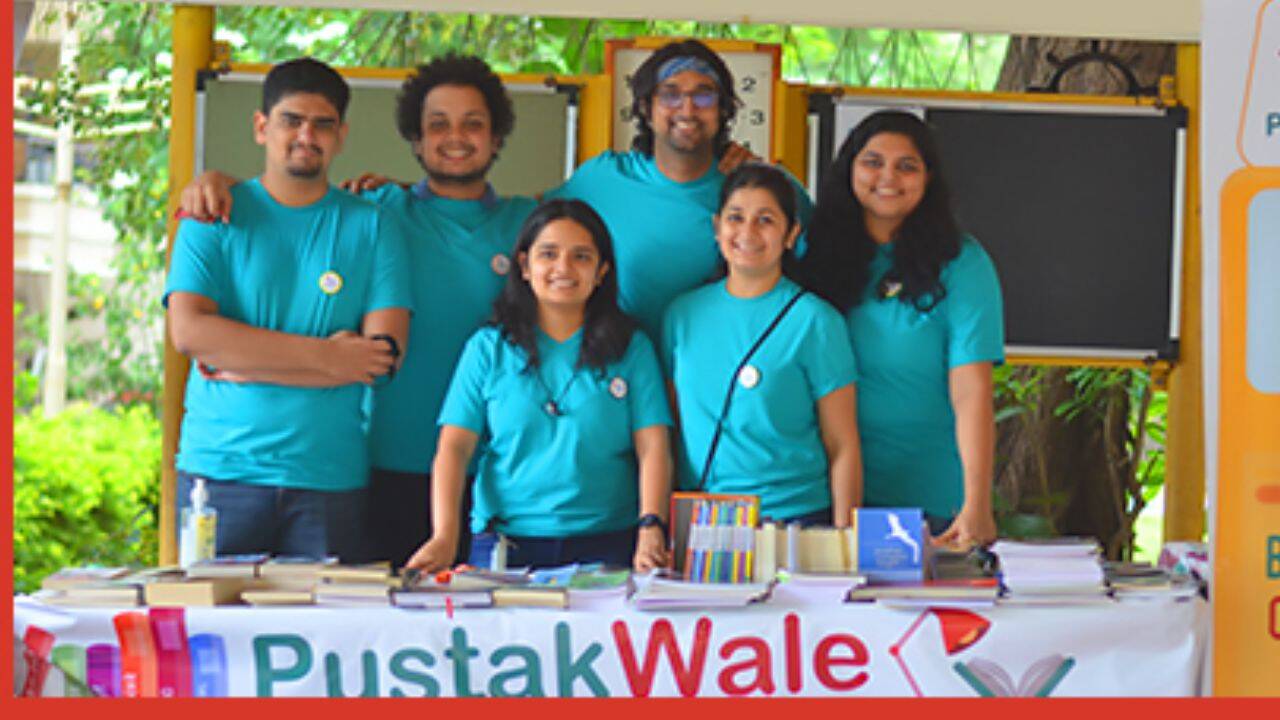
One interesting aspect of Pustakwale’s journey is how the founders chose to grow the business. Instead of beginning with a large digital platform, they focused on understanding readers. They observed which books attracted attention, spoke to families about their preferences and used customer feedback to improve their collections. The exhibition model also keeps things simple for housing societies. Communities invite the team and provide space, while Pustakwale does not charge an exhibition fee. Its primary earnings come from the books sold during these events.The venture has also created opportunities for young people through its ‘Earn and Learn’ initiative. More than 100 Gen Z book lovers are associated with its operations, helping with exhibitions, sales, customer interaction and community activities. The initial financial support came from five backers, who contributed Rs 5 lakh each. The founders structured the total Rs 25 lakh as debt rather than giving away equity. They also received cultural sponsorship support from banks during the early stages. The couple now plans to raise Rs 50 lakh in stages to strengthen inventory, working capital, institutional sales, operations and community programmes.
Can two pages a day build a reading habit?
For Pustakwale, selling more books is only one part of the larger ambition. The founders want to encourage people to make reading a regular part of their lives. Their upcoming initiative, ‘2 Pages A Day’, is built around a simple idea: reading just two pages daily could help people develop a lasting habit. Planned for a launch on Children’s Day, the initiative aims to make reading feel less like a task and more like an everyday activity. The founders hope that small, consistent efforts will encourage families and children to spend more time with books.The business is also looking beyond individual book sales. It plans to develop reading programmes and paid institutional services for schools, corporates and communities. These initiatives could create recurring revenue while helping the venture build stronger relationships with readers. Over the next year, the focus will remain on expanding institutional partnerships, improving inventory management and developing better customer relationship systems.
Five years to take the reading culture beyond Pune
The founders’ long-term vision is to build a company that connects readers with families, schools, communities, authors and publishers across India. They also see technology and artificial intelligence playing a role in personalised book recommendations, helping readers discover titles based on their interests. However, they do not want technology to replace the physical experience that helped Pustakwale find its audience in the first place.Their belief is that while technology can make everyday activities faster, books encourage people to slow down, explore new ideas and spend meaningful time away from screens. What began with a few children’s books at a housing society has now become a venture serving thousands of families. The next challenge for Rutica and Ashay is to turn that initial curiosity into a lasting reading habit. As the founders put it, “Pune can be our laboratory. India can be the opportunity.”