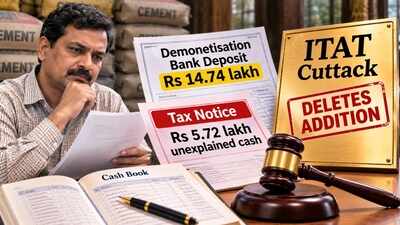
A cement trader based in Balasore, Odisha, came under the Income Tax Department‘s scrutiny after depositing Rs 14.74 lakh in cash into his bank account during the demonetisation period in November 2016.The Income Tax Assessing Officer (AO) in Balasore questioned the deposit and estimated the trader’s cement sales by comparing his business activity before and after demonetisation. Following this exercise, the AO classified Rs 5.72 lakh as unexplained cash and initiated proceedings against him.The trader, however, was unable to contest the department’s action or file an appeal within the prescribed period because he had sustained a serious injury and was admitted to hospital. His doctor had advised him to remain on complete bed rest.After recovering, the trader approached the Income Tax Appellate Tribunal (ITAT), Cuttack, to challenge the assessment, resulting in a delay of 736 days in filing the appeal.The tribunal condoned the delay and agreed to examine the case on its merits.
Why did the cement trader win relief?
The trader’s advocates submitted his cash books and other supporting evidence before ITAT Cuttack.They submitted that he had deposited Rs 14.74 lakh in cash into his bank account between November 30, 2016, and December 6, 2016. The Assessing Officer had classified Rs 5.72 lakh of this amount as “unexplained cash”. However, the cash book maintained for the cement business showed that he had Rs 14.78 lakh available in cash as of November 8, 2016, they argued.According to the advocates, the cash book established that the trader had sufficient recorded cash on the date of demonetisation to account for the subsequent bank deposits. They therefore contended that the penalty order should be set aside.According to an ET report, after examining the facts, ITAT Cuttack found that the man had an adequate cash balance on the date of demonetisation to make the deposits into his bank account.The tribunal also noted that the AO had neither rejected the books of account maintained for the cement business nor disputed the net profit reported in the profit and loss account.Explaining its decision, ITAT Cuttack said: “Once the books of accounts have been accepted, the cash available as of the date of demonitisation and SBN (specified bank note) deposits are less than the cash availability as of the date of demonitisation, we are of the view that no addition is called for in the hands of the assessee. Consequently, the addition made by the AO and confirmed by ld CIT(A) stands deleted.”