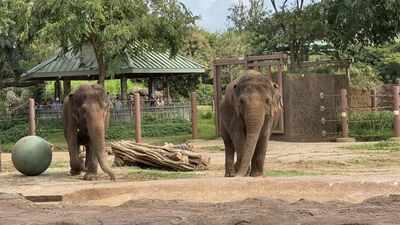
Two Asian elephants that have spent decades at the Honolulu Zoo are at the centre of a legal battle that could reshape how courts consider the rights of animals. The Hawaii Supreme Court is examining whether Mari and Vaigai can use habeas corpus, a legal remedy traditionally associated with challenging unlawful human detention, to contest their confinement. The Nonhuman Rights Project (NhRP), which is seeking their transfer to an accredited sanctuary, argues that the elephants deserve protection for their fundamental interest in bodily liberty. The case has drawn attention to animal welfare, legal personhood and the limits of existing laws.
Hawaii Supreme Court is hearing the elephant captivity case
According to the Nonhuman Rights Project, the Hawaii Supreme Court agreed in June 2026 to hear the case after the organisation challenged earlier rulings against its petition. The court granted an application for a writ of certiorari, allowing it to review the lower court decision and consider the legal questions raised by Mari and Vaigai’s confinement.A November 9 hearing was subsequently scheduled, as reported by the organisation. The proceedings concern whether the elephants can bring a habeas corpus claim and whether their captivity can be challenged through that legal mechanism.The case, known as Nonhuman Rights Project v. C&C of Honolulu, et al., follows a petition originally filed in 2023. The NhRP sought to have the elephants moved from the zoo to an accredited sanctuary, arguing that their needs and abilities warrant a different form of legal protection.The organisation’s application reached the Supreme Court after Hawaii’s Intermediate Court of Appeals upheld the dismissal of the petition in January 2026. The NhRP then filed for review in April, according to its court update.
Mari and Vaigai have lived at the zoo for decades
Mari was captured in the wild and brought to the Honolulu Zoo in 1982, while Vaigai arrived in 1992, the Nonhuman Rights Project states. Both are wild-born Asian elephants who have spent much of their lives in captivity.The Florida Bar Animal Law Section describes the elephants as living in a habitat measuring approximately 68,244 square feet. It contrasts that space with the extensive ranges Asian elephants can occupy in the wild, which may span several square miles.Asian elephants may travel up to 10 miles in a day and occupy home ranges extending to roughly 500 square miles.The NhRP argues that the enclosure cannot accommodate the animals’ complex physical, social and behavioural needs. Its legal position rests on the claim that elephants possess advanced cognitive abilities, emotional lives and enduring social relationships, making freedom to direct their lives an important interest.
What does habeas corpus mean for elephants
Habeas corpus is a legal process through which a court examines whether someone is being unlawfully detained and should be freed. The NhRP wants Hawaii’s courts to consider whether the same protection can apply to elephants, rather than limiting it exclusively to humans.As per Civil Beat, the case should not be reduced to a demand for human rights for animals. The petition seeks a specific protection, bodily liberty, rather than every right recognised for people.The argument is that legal systems can recognise limited protections for entities without treating them as human. Civil Beat cited corporate free speech protections as an example of how legal safeguards may extend beyond human beings without granting them an entire set of human rights.The NhRP maintains that the elephants’ advanced abilities and interest in autonomy should be recognised in law. The organisation says scientific evidence submitted in the case describes elephants as capable of problem-solving, forming lifelong bonds, experiencing grief and displaying complex emotions.
Why the case has divided animal rights advocates and critics
The legal challenge has attracted support from animal law advocates as well as criticism from groups concerned about the wider implications of recognising legal rights for animals.The Hawaii Animal Law Section filed a supporting brief, according to the Florida Bar Animal Law Section. It argued that the case could be considered in light of Hawaii’s Aloha Spirit, a cultural principle associated with kindness, unity, humility and respect for nature.The section also pointed to Hawaii’s legal framework, which permits courts to consider the Aloha Spirit when making decisions. It believes the principle supports a more compassionate approach to the elephants’ confinement.The NSSF, however, presents a contrasting perspective. It warned that extending habeas corpus to elephants could have consequences beyond zoo captivity, potentially opening the door to legal challenges involving animal ownership, livestock and wildlife management.The organisation stressed that animal welfare protections and legal personhood are separate issues. It also cited the zoo’s position that Mari and Vaigai receive veterinary attention, enrichment and opportunities to walk within their habitat.
The sanctuary proposal remains central to the dispute
The NhRP is not seeking to release Mari and Vaigai into the wild. Its petition proposes transferring them to an accredited sanctuary where they could have greater space and opportunities to express natural behaviours.The sanctuary proposal was an effort to address the elephants’ needs without necessarily granting them the full range of rights enjoyed by humans.The debate also reflects Hawaii’s history with captive elephants. The Florida Bar Animal Law Section recalled the 1994 incident involving Tyke, an elephant who escaped from a travelling circus in Honolulu, killed one person and injured others before being fatally shot. The incident led Hawaii to prohibit the importation of animals for exhibition.The earlier appellate ruling found that the relevant statute applied to human persons and did not extend the remedy to elephants. The outcome could influence future debates about how courts recognise the interests of cognitively advanced animals.