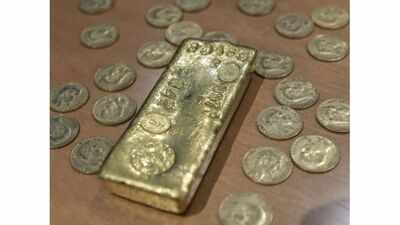
A homeowner in Neuville-sur-Saône, near Lyon in France, unearthed a fortune buried in his garden while preparing to install a swimming pool. The discovery, made during excavation work in May 2025, included 5 gold bars and hundreds of gold coins packed inside plastic bags. The treasure was valued at approximately €700,000, turning an ordinary home improvement project into an extraordinary find. Although authorities confirmed that the gold could legally remain with the homeowner, the circumstances behind its burial have continued to raise questions, particularly because the property’s previous owner had died.
French homeowner discovered €700,000 worth of gold treasure in backyard
According to French regional newspaper Le Progrès, the discovery happened at a property in Neuville-sur-Saône, a town located near Lyon. The homeowner had purchased the house approximately a year earlier and decided to undertake construction work to install a swimming pool in the garden.During the excavation, workers discovered several plastic bags buried in the ground. Inside them were 5 gold bars and numerous gold coins, carefully stored together beneath the garden’s surface.Le Progrès said in November 2025 the treasure was estimated to be worth around €700,000. The homeowner, who has not been publicly identified, didn’t try to keep the find under wraps. Instead, he went directly to the local town hall to declare the treasure, setting in motion a process to determine whether he could legally retain it.
How did authorities determine who could keep the gold
The discovery was reported to the relevant authorities, including the Regional Directorate of Cultural Affairs, known as DRAC in France. The organisation was involved in determining whether the buried objects had archaeological importance.As Le Progrès explained, the French state can intervene when a discovery is considered historically or archaeologically significant. In such circumstances, officials may order an expert assessment and potentially claim ownership of the objects. However, the gold uncovered in Neuville-sur-Saône did not meet that threshold.The Independent reported that local authorities had confirmed the homeowner was entitled to keep the treasure after officials established that it had no archaeological significance. The decision meant the discovery would not become a state-owned historical collection.
Police traced the gold to a legitimate source
The discovery also prompted checks by law enforcement, as authorities needed to establish whether the gold had been connected to criminal activity.According to Le Progrès, the gendarmerie examined the five gold bars as part of its investigation. Each bar carried an identification number, making it possible to trace its origins and check whether it had been connected to a burglary or theft in the surrounding region.The investigation established that the gold had been acquired legally. The Brussels Times reported that the bars and coins had been melted by a company in the Lyon area approximately 15 to 20 years earlier.This detail helped to distinguish the find from possible stolen valuables or archeological discovery. The gold did not appear to be connected to any recent crime, but rather to have been lawfully acquired and then buried on the property.The checks also cleared the way for the homeowner to retain the valuable collection without facing a claim from the state.
The previous owner’s death leaves the treasure unexplained
Despite the investigation establishing the gold’s legal origins, one important question remains unanswered: who buried the treasure in the garden, and why.Le Progrès reported that the property’s previous owner was believed to have died. Nobody appeared to know who had hidden the gold or what circumstances had led to its burial.The homeowner had only acquired the property around a year before the discovery, according to Le Progrès. That meant the treasure had been buried before his ownership, although the precise date when it was placed there remains unclear.The gold’s relatively recent origins, estimated at around 15 to 20 years, make the mystery particularly intriguing. Unlike ancient coins or historical artefacts, the collection appears to have been hidden during a period within living memory.With the gold valued at approximately €700,000 and the authorities confirming his right to retain it, the homeowner became the lawful possessor of a substantial fortune. Le Progrès also noted that the discovery’s beneficiary had chosen to remain anonymous.