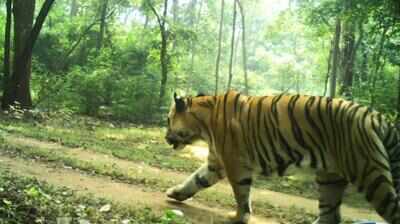
Bhubaneswar: The wildlife wing of the forest department on Friday wrote to National Tiger Conservation Authority (NTCA) tagging camera trap evidence of the Royal Bengal Tiger that has come to Debrigarh wildlife sanctuary to identify its natal habitat.Wildlife officials said identifying the source population of a transient tiger is essential for understanding its dispersal history, movement ecology, behavioural patterns and prospects of establishing a territory in a new landscape. In 2022, the male tiger had come to Debrigarh from Kawal Tiger Reserve, NTCA had confirmed then.“A tiger was detected in Debrigarh wildlife sanctuary on Nov 9. In this regard, it is requested that your good office may kindly facilitate identification of the tiger’s source population and the landscape from which it may have dispersed to reach Debrigarh. Two photos of the tiger captured in the trap camera are attached herewith for kind reference,” the letter to NTCA read.Wildlife officials said tigers, particularly young males, disperse from their natal territories in search of suitable habitats, prey availability and breeding opportunities. Knowledge of the source population helps reconstruct previous movement patterns, dispersal distances, habitat preferences and possible migration corridors. “Camera-trap records, individual identification through stripe patterns and genetic profiling can provide valuable information about the tiger’s age, previous locations, territorial associations and movement history,” said a wildlife officer.On Monday, the male RBT was sighted while entering Debrigarh, marking the second such tiger movement into the protected area in the last five years. The big cat was directly spotted by forest personnel and also captured on a camera trap, prompting wildlife authorities to intensify surveillance across the sanctuary.Forest officials said the tiger entered the sanctuary through the Dechuan-Lakhanpur forest route. Around 100 camera traps and 27 teams are carrying out daily patrols along the border trails of Debrigarh wildlife sanctuary. Night patrolling is being undertaken by three layers of teams. The male tiger is now moving in the core area and exploring its territory in the sanctuary, Debrigarh officials said.Though Debrigarh does not have a resident tiger population, it has witnessed visits by dispersing tigers in the past. The last tiger had stayed in the sanctuary between 2022 and 2024 for around one and a half years before it died due to electrocution in neighbouring Gomarda wildlife sanctuary.Another wildlife officer said understanding past behaviour helps interpret present movements and anticipate future behaviour. “Previous encounters with human settlements, habitat disturbances and other tigers may offer insights into its adaptability, potential conflict risks and likelihood of settling in a particular landscape,” he said.