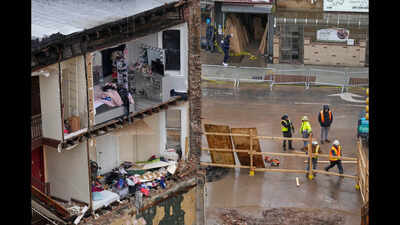
The sudden collapse of a three-storey building in Brooklyn, New York, that killed at least eight people has raised questions about construction safety and whether excavation work at an adjoining site destabilised the structure. The building, located in the Flatbush neighbourhood, collapsed on Wednesday, November 11, 2026, plunging into an excavation pit at an adjacent construction site. At least 17 people were injured. The disaster triggered a major rescue operation involving around 250 firefighters and emergency responders.Structural engineers believe inadequate support for the soil surrounding the construction site could have played a crucial role in the collapse.According to experts interviewed by Scientific American, excavation work close to an existing building can destabilize its foundations if the surrounding soil is not adequately supported.Michael Chajes, a professor of civil and environmental engineering at the University of Delaware, said vibrations from construction machinery could have weakened the soil supporting the neighbouring structure. He suggested that the vibrations may have undermined the building, redistributed the forces acting on it and eventually triggered its collapse.
How can excavation cause a building to collapse?
When construction workers excavate land next to an existing building, they must install temporary support systems, commonly known as shoring, to prevent the surrounding soil from shifting or collapsing. These systems can include steel piles driven into the ground, with boards or other materials placed between them to hold the soil in position.Gregory Deierlein, a civil and environmental engineer at Stanford University, explained that supporting the soil becomes particularly challenging when excavation takes place immediately next to an existing building. The soil is already under pressure from the neighbouring structure. If the temporary support system is not sufficiently strong or rigid, the ground can shift, potentially destabilising the building’s foundation. The design must account for several factors, including the type of soil, the weight of the neighbouring building and the depth of its foundation. Heavy construction machinery can also generate vibrations that disturb the soil and affect the stability of temporary supports.Mehrdad Sasani, a civil engineering professor at Northeastern University, said the vibrations from construction equipment could have contributed to the failure of the shoring system. He also pointed to the age and structural condition of the collapsed building as possible contributing factors. An older structure with weaknesses may be particularly vulnerable to movement in the surrounding soil.
What are investigators examining?
The collapsed building was a three-storey structure containing four apartments and a commercial unit on the ground floor. New York City’s Department of Buildings is investigating the collapse, including the excavation work at the neighbouring property and whether appropriate safety measures were followed. The investigation is expected to examine whether the excavation was properly designed, whether adequate support systems were installed and whether the building’s structural condition was monitored during construction.The neighbouring construction site had previously faced regulatory scrutiny. The Associated Press reported that the city issued a stop-work order in March after finding problems with demolition work. Inspectors subsequently found that work had resumed in violation of the order. New York officials have also pointed to a shortage of building inspectors, renewing calls for stronger oversight of construction projects.