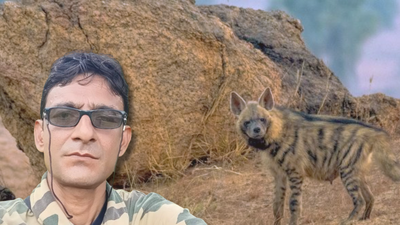
When a striped hyena killed a goat in a village near Pakhi Pahar in West Bengal’s Purulia district, the loss was not just an encounter with wildlife for the family. Goats are an important source of income for many households in the area. Some villagers chased and killed hyenas in retaliation when livestock went missing.Mountaineer and researcher Joydeep Chakraborty realised that protecting the animals would require him to understand why people feared them. Instead of limiting his work to searching the hills for wildlife, he began visiting homes, speaking to families and explaining the role striped hyenas play in the local ecosystem.Nearly nine years after he began his focused fieldwork, his community-based efforts have helped change how some villagers view the animal. Chakraborty estimated that around 18 to 19 striped hyenas now live in his study area near Pakhi Pahar.According to a report by award-winning journalist Partho Burman for The Better India, Chakraborty’s effort began with a chance encounter with the animal’s call on a winter night in January 2017.
The night that changed his relationship with the hills
Chakraborty had been visiting Pakhi Pahar for years as a mountaineer. On January 14, 2017, he was camping beneath a tree when he heard a strange, sharp call coming from the darkness. He initially could not identify the animal. He switched on his torch and tried to follow the sound, but the creature disappeared before he could see it clearly.“That was the first time I heard a striped hyena in the wild,” he told Burman. “I was scared. But that sound stayed with me.” Curiosity led him to look for information about striped hyenas in India. He found that there was limited research, particularly on the species in eastern India. He also learnt about the threats it faced, including habitat loss, road accidents and killings linked to conflict with people.The more he read, the more he wanted to understand whether the animal was still present in the forests around Pakhi Pahar. He returned in 2018 and began exploring the surrounding hills and forests more systematically. From March that year, he started walking through the terrain with a few tribal villagers who helped him look for signs of hyena activity.
From searching for footprints to earning villagers’ trust
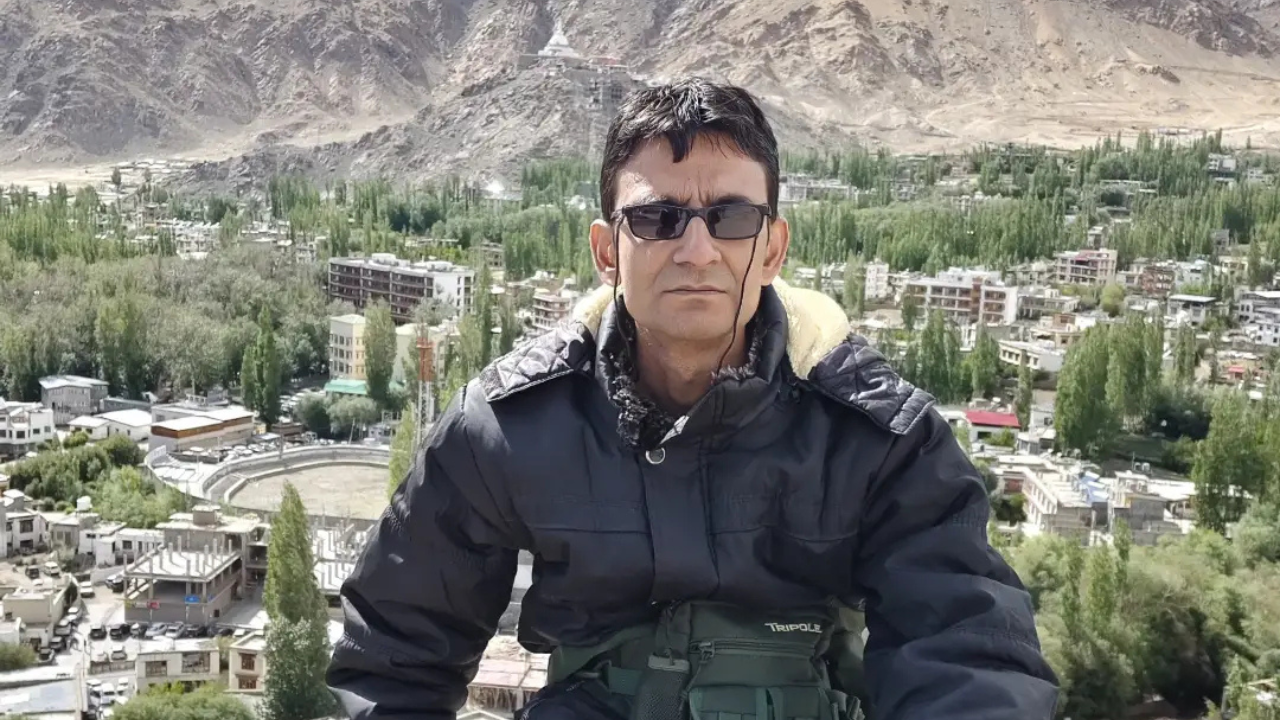
Image courtesy: Instagram/@deeptodeepc
The first clear sign of progress came on March 8, 2020, when Chakraborty found a striped hyena footprint after nearly two years of searching. The Covid-19 lockdown soon interrupted his fieldwork. But the relationships he had built with local residents continued to matter. By then, villagers had become familiar with his visits and some had started helping him with his work. In February 2022, he captured the first photograph of a striped hyena in the region using a hand camera. It provided visual confirmation of the animal’s presence.He also continued speaking to families about the species. He explained that striped hyenas are scavengers that feed on carcasses, helping remove dead animals from the environment. He discussed their ecological role and tried to address the belief that they were simply dangerous animals that needed to be killed.The conversations gradually began to make a difference. Chakraborty considers 2022 an important turning point, as retaliatory killings in the area began to reduce significantly.
Camera traps reveal more hyenas
In November 2021, the pregnant female hyena he had been tracking gave birth to three cubs. Chakraborty later saw the cubs emerge from their den. In May 2022, he installed camera traps provided by Idea Wild near the hyena’s lair. After a forest fire destroyed the first set, he returned and installed them again. He clarified that he used the cameras on private land and in areas around villages, rather than inside protected forest areas, because permission was required for installations in the latter.The footage showed the mother and her cubs, along with eight to ten other hyenas. Further sightings over the following years added to the evidence of their presence. Based on his observations, Chakraborty estimates that 18 to 19 striped hyenas inhabit his study area today. This is his estimate, not an official population figure. The forest department has also said that a formal population survey of striped hyenas in Purulia is still pending.
Why protecting the hyena matters
Striped hyenas are scavengers, and their feeding habits help remove animal carcasses from the environment. But they face several threats, including shrinking habitats, road accidents and retaliatory killings.The Wildlife Trust of India has alsodocumented human-hyena conflict in Purulia. In a separate conservation initiative carried out with the West Bengal Forest Department, the organisation has highlighted the importance of community awareness, field surveys and local participation in protecting the species. Its work underlines that reducing conflict requires understanding both wildlife behaviour and the concerns of residents.Chakraborty continues his work as an independent researcher, with Dr Anindita Bhadra of IISER Kolkata serving as his research mentor. He is also seeking grants to support women who helped collect field data. His work has not yet produced an official population survey, and the estimate of 18 to 19 animals needs to be viewed in that context. But the change in the way some villagers respond to the hyenas is an important part of the effort.For Chakraborty, the work has involved more than walking long distances through the hills. It has meant returning to the same villages, listening to families who have lost livestock and building enough trust for people to consider protecting an animal they once feared.