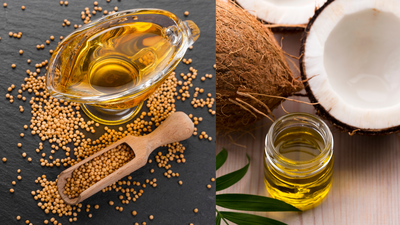
Winters are almost here, and so are the dryness and itchiness of the hair and scalp.And as soon as the hair feels frizzy or the scalp starts acting dry, the most common solution in Indian households is a warm bowl of oil thoroughly massaged into the scalp.In North India, that oil is usually mustard. Along the coasts and in the south, it is coconut. And lately, social media has added a third category that advises skipping oil altogether because it only makes hair greasy and attracts dust.But what exactly is the right choice?Amid the chilly season, which is quite hard on hair. Cold air outside and dry, heated air indoors pull moisture out of the strands and the scalp, which can leave hair brittle, frizzy, full of static charge, and the scalp flaky.But does oiling the hair always protect from damage?Is there actually any evidence, or do we do it just as a habit?Let’s see what science has to say
Mustard oil , coconut oil or no oil: what actually is the right choice for your hair in winter?
Researchers compared coconut, sunflower and mineral oil on hair tresses in a 2003 study published in the Journal of Cosmetic Science. According to the paper, coconut oil was “the only oil found to reduce the protein loss remarkably” in both undamaged and damaged hair.The authors associate this to its structure, as coconut oil has a low molecular weight and penetrates the hair’s cortex, while mineral oil does not penetrate at all. Sunflower oil’s bulky structure also keeps it out of the fibre. Less protein loss means less breakage, which is crucial when winter air has already made hair brittle.
How does Mustard oil impact the hair?
A 2022 review in the International Journal of Trichology says it inhibits fungal penetration of hair, but less effectively than coconut and amla oil; these findings come from lab work, often on plant extracts, not clinical trials. It may help with dryness-related flaking, but it has not been shown to treat dandruff.
What does this mean in winter?
The scalp dries out in cold weather, and according to the Cleveland Clinic, an oil or conditioner can keep it moisturised. So an oil massage can help provide moisture, and even though Mustard oil has a warming effect, it is not proven to be better than other options.
What about no oil at all?
Oil is an option to keep the hair moisture intact and prevent dryness, but it is not the only one. Cleveland Clinic dermatologist Dr Wilma Bergfeld advises, “You should treat your hair like a cashmere sweater.” In practice, that means less heat styling, gentle brushing, and waiting to comb until wet hair is less damp.
So what should you do?
For dry or damaged hair: coconut oil on the lengths before washing is the best-supported choice.For dry, itchy scalp, and you like mustard oil: use a small amount, diluted, after a patch test.For oily scalp or sensitive skin: skipping oil and conditioning the ends is fine.For red, painful or stubborn flaking: see a dermatologist instead of adding more oil.