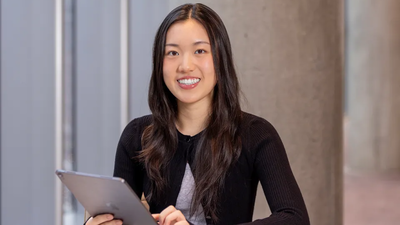
A 17-year-old student from Pennsylvania has developed an innovative bioengineering method to detect early-stage pancreatic cancer from blood samples, tackling one of the biggest challenges in cancer diagnosis. Audrey Zheng, a senior at North Allegheny Senior High School in Wexford, developed a technique that uses tiny magnetic beads to capture tumor-derived particles moving through the bloodstream. In clinical testing, her method correctly identified 87 per cent of patients with pancreatic ductal adenocarcinoma and correctly ruled out the disease in 87.5 per cent of people who did not have it. Her research earned her a place as a national finalist in the 2026 Regeneron Science Talent Search, one of the leading science and mathematics competitions for high school seniors, run by the Society for Science.
Targeting microscopic messages in blood
Pancreatic cancer is difficult to detect because it often causes no clear symptoms in its early stages. By the time symptoms such as abdominal pain or jaundice appear, the cancer may have already spread to nearby organs, making surgery much harder or impossible. Current screening methods, including standard imaging and general protein biomarkers, often cannot detect small, localized tumors. Zheng focused on extracellular vesicles, tiny membrane-covered sacs that are constantly released by human cells into the blood. These biological packages carry molecular material, including proteins and genetic information, that can reveal the condition of the cells they came from. To separate cancer-related vesicles from the trillions of healthy vesicles in a blood sample, Zheng created a mixture of magnetic nanospheres coated with three specific antibodies. These antibodies were designed to attach to cancer-related surface molecules found on tumor-derived vesicles. After the antibodies attach to the cancer vesicles, a magnetic field pulls the nanosphere-bound particles out of the blood sample. This physically separates the targeted particles from healthy biological material.
Tracking genetic mutations for diagnostic precision
After isolating the targeted extracellular vesicles, Zheng extracted and examined the genetic material inside them. She focused on mutations in the KRAS gene, a major cancer-driving mutation found in more than 90 per cent of pancreatic ductal adenocarcinoma cases. By testing the DNA inside the isolated vesicles for these mutations, the diagnostic system used two layers of confirmation. First, it identified vesicles using their cancer-related surface markers. Then, it checked their genetic material for cancer-causing mutations. This two-step approach helped the test achieve strong sensitivity and specificity. In comparative testing, the method correctly identified 87 per cent of confirmed cancer cases while keeping the false-positive rate at 12.5 per cent. Early detection is especially important for pancreatic ductal adenocarcinoma, where five-year survival remains below 13 per cent, largely because the disease is often found late. Detecting the cancer at Stage I or II, when the tumor may still be removed through surgery, can greatly improve the chances of long-term survival.
Leadership across science and community service
The daughter of Ming Ni and Siyang Zheng, Audrey Zheng balances her bioengineering research with leadership roles at North Allegheny High School. She serves as co-president of the math and physics club and captain of the school’s tennis team. Her interest in practical engineering also extends to community service. Zheng founded and serves as president of The Food Lounge Pittsburgh, a non-profit organisation that has organised more than 50 volunteer events supporting regional food banks and community kitchens. Building on her work with magnetic nanoparticles, Zheng is now adapting her nanosphere technology to develop a separate portable sensor that could quickly detect common food allergens in field settings. Her pancreatic cancer diagnostic project was presented at the Society for Science Public Day exhibition in Washington, D.C., where 40 Regeneron Science Talent Search finalists showcased their research to scientific panels and the public.