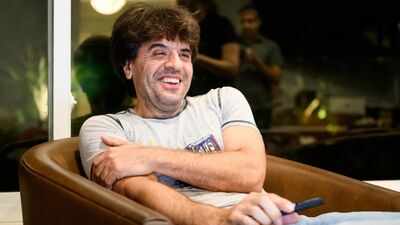
Dr Karl Deisseroth had barely begun processing the news that he had won the 2026 Nobel Prize in Physiology or Medicine when an ordinary family responsibility came into view. The Stanford University professor and California scientist had spent the early hours speaking with journalists and receiving congratulatory calls after the announcement. Then he needed to step away and prepare school lunches for his children. The small domestic task came after a night of major scientific recognition for work that has changed how researchers study the living brain. According to AP News, Deisseroth was due to make the lunches after his children woke up.
The California scientist made school lunches after winning a Nobel Prize
Deisseroth, 54, shared the 2026 Nobel Prize in Physiology or Medicine with German researchers Peter Hegemann and Georg Nagel. Their work on optogenetics helped create a way of using light to control activity in specific brain cells. AP News reported that the three scientists were recognised for research into light-gated ion channels and optogenetics, a field that has become an important tool for studying the brain.The Nobel announcement came early on Monday, 5th October, while Deisseroth was at his home in Stanford, California. He is a professor at Stanford and an investigator with the Howard Hughes Medical Institute. The Associated Press reported that he had been working late before the call arrived from the Nobel Assembly in Stockholm.Deisseroth is known for being a night owl, and the timing of the announcement fitted his usual routine. The Nobel call came just as he was settling between wakefulness and sleep, leaving him unsure for a moment whether the news was real. In an interview reported by NPR affiliate KLCC, he described the experience as disorienting and unexpected.The Nobel news quickly turned the family’s Stanford home into an unusually busy place. According to AP News, an Associated Press photographer arrived at around 3:30 a.m. and initially saw only one light on inside, with Halloween decorations outside. Deisseroth’s wife, Dr Michelle Monje-Deisseroth, answered the door and welcomed the photographer inside.Michelle Monje-Deisseroth is also a scientist, an HHMI investigator and a Stanford paediatric neuro-oncologist. While her husband took calls from the sofa, she helped make coffee for Stanford communications staff who had joined the early-morning celebration.Yet the most relatable part of the morning came after the interviews. Deisseroth told Stanford staff that he needed an hour-long break beginning at 6:30 a.m. His children would soon wake up and need lunch before heading to school. AP confirmed that this was the point when the newly announced Nobel laureate had to turn his attention from international recognition to a familiar morning responsibility.The moment offered a striking contrast without diminishing the importance of his achievement. Deisseroth had spent the night discussing a discovery that has reshaped the study of brain activity, yet his immediate schedule still included one of the everyday jobs of family life.His wife appeared equally unfazed by the unusual night. When someone from Stanford wondered whether the neighbours might object to the late-night activity, she pointed out that the family lived in faculty housing and that there were plenty of Nobel laureates in the neighbourhood, according to AP News.
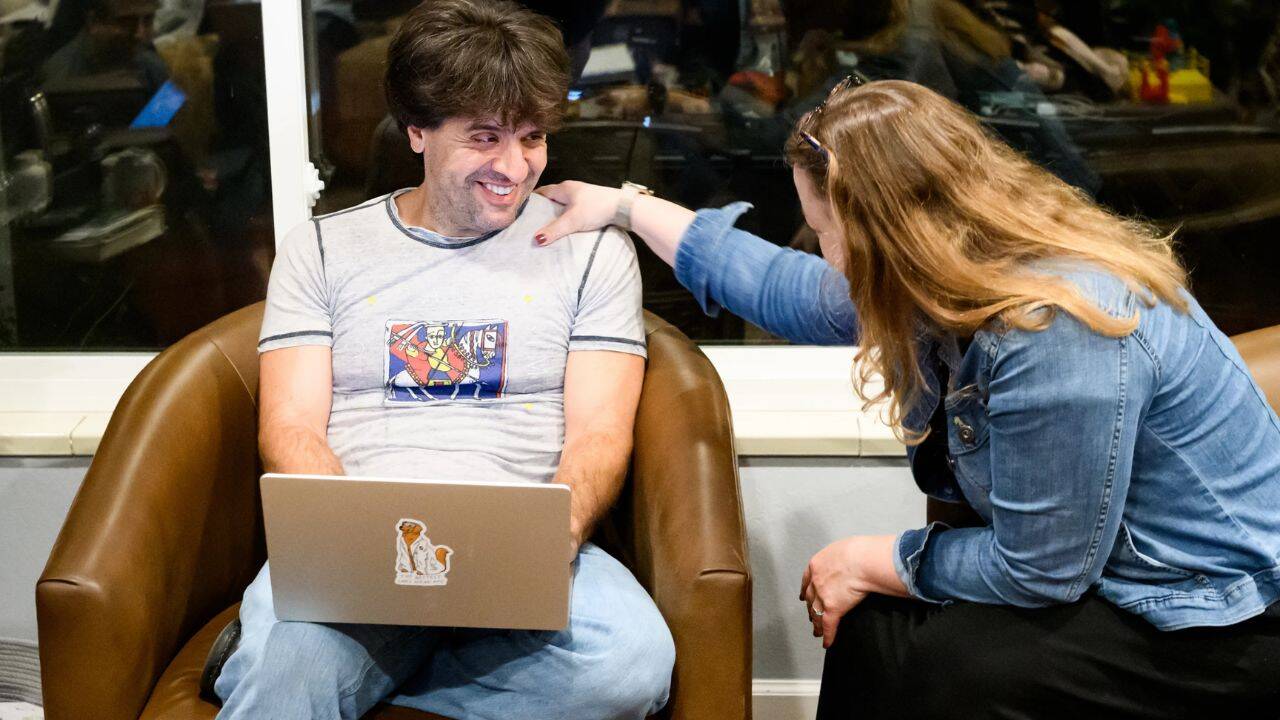
Karl Deisseroth, one of the three recipients of the 2026 Nobel Prize in medicine, talks to his wife Michelle Monje-Deisseroth at home Monday, Oct. 5, 2026. Image Credit: AP Photo/Noah Berger
What does optogenetics allow scientists to do
Optogenetics gives researchers a way to control selected cells in the brain with light. Rather than simply using light to observe activity, the method allows scientists to make targeted brain cells respond to it.Speaking to NPR through KLCC, Deisseroth explained that researchers can make cells sensitive to light by introducing a gene from single-celled algae. That gene produces a light-responsive flow of charged particles, allowing light to create electrical activity in the cells carrying it. This gives researchers much more direct control over particular parts of the brain.The approach has helped scientists examine how individual groups of brain cells contribute to behaviour. Deisseroth explained that actions and priorities are controlled by networks of connected nerve cells, and optogenetics makes it possible to study those circuits more precisely. That can help researchers understand why particular behaviours occur and how specific parts of the brain influence them.For Deisseroth, the importance of the work also comes from his medical background. AP News reported that he described himself as both a physician-scientist and a psychiatrist, with patients who have conditions including autism and depression.
Importance of this research for patients
The work has already moved beyond lab studies. In the KLCC interview, Deisseroth pointed to its use in people with retinitis pigmentosa, a condition involving the loss of light-sensitive cells through neurodegeneration. Optogenetics has been used to restore light sensitivity and allow some affected people to see things they could not previously see.He also sees a wider possibility for psychiatric medicine. Understanding which cells matter in a particular brain process could eventually help researchers design treatments aimed at those specific cells.That combination of scientific curiosity and medical interest was evident in Deisseroth’s comments following the Nobel announcement. He said he cared about the hope the research could bring to patients while also wanting to understand how the brain works and produces the complex qualities associated with being human.