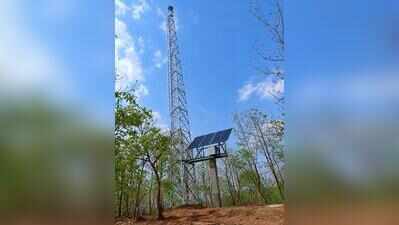
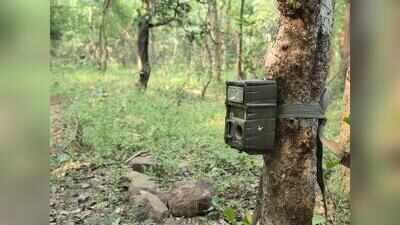
Bhubaneswar: In a first for Odisha, Debrigarh wildlife sanctuary has deployed AI-enabled on-demand camera traps powered by a Convolutional Neural Network (CNN)-based Artificial Intelligence (AI) engine, marking a significant technological advancement in wildlife surveillance and conservation management.Unlike AI cameras primarily used to detect human movement and curb poaching activities, the new system is designed to identify and monitor wildlife species. The AI engine can currently recognize eight species, including gaur, leopard, sambar, spotted deer, wild pig, sloth bear and nilgai. By processing images directly on the device, the system filters relevant wildlife records, reducing the need for manual scrutiny of thousands of images and enabling faster analysis.The sanctuary has also established a central control room where live feeds from surveillance equipment are monitored in real time, strengthening protection efforts and helping officials track wildlife movement more effectively.While traditional foot patrolling continues to be the backbone of forest protection, wildlife officials say the AI-integrated system has considerably enhanced monitoring capabilities. “Foot patrolling remains our topmost priority. However, AI-based wildlife monitoring through AI-integrated camera traps has significantly strengthened wildlife monitoring in Debrigarh,” said Anshu Pragyan Das, divisional forest officer, Hirakud wildlife division.“This technology has improved our surveillance efficiency, enabled quicker responses to unusual movements or potential threats and supported better-informed decisions for wildlife protection and habitat management. It has made our conservation efforts more scientific, proactive and effective,” Das added.As part of the surveillance network, an AI surveillance tower has been installed in the Chourasimal area. The tower has a reported data-capture radius of around 5-6km and covers approximately 70sqkm of the sanctuary.To complement tower-based surveillance, forest authorities have deployed 18 AI camera traps across a 2-3km forest stretch, with each unit placed about 200m apart. The distributed network allows monitoring of forest interiors and remote locations that are difficult to cover through conventional surveillance systems.Officials said the on-demand functionality enables field personnel to remotely activate individual camera units and access information, subject to connectivity and operational conditions. During the day, the cameras capture photographs and videos, while thermal imaging technology is used at night, ensuring continuous monitoring under varying light conditions.The AI camera traps operate through a wireless mesh network, allowing cameras to relay information to one another without depending on cellular SIM cards. This eliminates reliance on mobile network coverage and facilitates data transmission from remote forest areas where connectivity is weak or unavailable. Wildlife officials believe the technology will contribute significantly to documenting species presence, understanding habitat use and identifying areas requiring focused conservation attention.