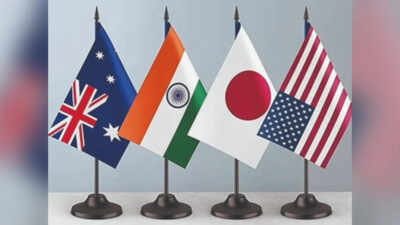
Leaders of four nations meet in Manila after two-year gapNEW DELHI: Reflecting Beijing’s long-standing opposition to Quad, the Chinese state-backed media has dismissed the upcoming leaders’ summit in Manila as a hasty geopolitical manoeuvre and warned against internationalising the South China Sea disputes. The leaders of India, Japan, Australia and US are expected to meet on the margins of the Asean summit starting Nov 16 for what will be the first such meeting in two years.While an official announcement about Quad leaders’ summit is still awaited, US secretary of state Marco Rubio has said the leaders of the grouping will meet in the Philippines. Significantly, President Donald Trump is scheduled to travel to China from Manila for the Apec summit.An opinion piece in Global Times said, “this small circle, which had been dormant for two years, has finally been dusted off and brought back from the freezer by the US administration”. “If certain countries seek to use a small-circle summit to openly demonstrate their intention to interfere in South China Sea affairs, China will inevitably oppose it resolutely,” it said.The leaders’ summit takes place amid renewed China-Philippines maritime tensions, allowing the US to reinforce its continued presence in the region. Both Beijing and Moscow see Quad as a China containment alliance.This will be the first Quad leaders’ summit since PM Modi’s meeting with Chinese President Xi Jinping in Kazan in 2024 that opened the door for normalisation of Sino-Indian ties. India sees Quad as an initiative based on democratic values and respect for rule of law that is working towards a free, inclusive and prosperous Indo-Pacific region.The Global Times piece also said India’s approach bears clear hallmarks of balance-of-power manoeuvring.“New Delhi is unwilling to jeopardise improving the China-India relationship by aligning with other nations’ efforts to contain China, nor is it willing to make unilateral concessions on trade tariffs and market access,” it said.The same view was expressed by a Global Times editorial that said India emphasises strategic autonomy and hopes to use multilateral cooperation to create opportunities for industrial development, rather than “simply fall in line with an economic containment strategy against China designed by other countries”.